>Candida

>

Candida is a type of yeast that is commonly found to be a problem in children with Autism. It resides in the digestive tract and candida can get out of control and grow if the immune system becomes dysfunctional. Many children show significant improvement when their yeast issue is treated. Some children have a really huge problem with yeast overgrowth and anti-fungal treatment is crucial.
Fungus is a complex issue because they are present in our food, air and our digestive tract. Excessive use of antibiotics means that numerous bacteria are becoming resistant to antibiotics. Antibiotics also kill protective bacteria (probiotics) in the gut as well as the pathogens. Candida will spread when there are less good flora in the gut. A diet rich in sugar and carbs also feeds the yeast thus resulting in over-growth. Also, watch out for a `mouldy’ environment, mildew and fungus grows in dark, moist places – you may find it in air conditioning units, old carpets and growing in certain parts of our homes.
Fungal and yeast infection may reside in many parts of the body, however we commonly hear about thrush where there are white patches in the mouth or tongue, vaginal yeast infection (such as candida) or athlete’s foot. In our kids, the yeast issue is predominantly in the gut or digestive tract.
Urine tests may determine the presence of yeast/fungal overgrowth. However, historical findings (parents observation) should never be ignored, most parents can tell when our child has a yeast flare-up by both physical and behavioral signs.
Some of the more common complaints reported by parents are rashes, eczema (body, scalp), funky-smelling scalp, itching, redness, scratching, climbing all the time, ‘standing’ on the head (bending upside down), bloating, flatulence, constipation, diarrhea, change of smell in the stool (yeasty, bready, foul or sweet). Itching and redness may be perianal, genital or anywhere in the body.
Other behavioral signs of yeast issues are demanding behavior, noncompliance, giddy and silly behavior, aggression, inappropriate laughter, sleep disturbances such as waking up in the middle of the night and laughing, stimming, hands over ears, chewing, teeth grinding, brain `fog’, seemingly `out of it’, loss of energy, cravings for carbs & sweets.
Yeast treatment
A combination of diet, probiotics, digestive enzymes and anti-fungal treatment is required. A doctor will need to prescribe a course of anti-fungal medication, commonly Diflucan, Nystatin or Sporanox. Diflucan seems to be the most effective in our kids. Most children require a long period such as a month on anti-fungals, a short course will not be effective. Some children will need anti-fungal treatment several times throughout the period of recovery because yeast & fungal overgrowth tends to reoccur.
A diet rich in carbs and sugar will `feed’ the yeast, so cutting down on carbohydrates and sugar is crucial. Reducing fruit & juices in the diet may be necessary. Yeast will feed on any form of sugar, irregardless if it’s organic honey, organic brown sugar or organic juice. Sugar feeds yeast, and it’s very addictive. Exposure to molds and fungals should be minimized, so check your home thoroughly for hidden sources.
Die-off period
During anti-fungal treatment, you will find a period of regression in your child; this is called the die-off period. The die-off reaction (also known as the Herxheimer reaction) shows that the treatment is working! Also, your child will probably have an incredible craving for sugar & carbs. This addiction to sugar is the body’s reaction to feed the yeast. Some of the behaviors of yeast die-off include irritability, lethargy, hyperactivity and stimming. Your child’s Autism behaviors will seem worse. Some parents report headaches or bowel cramps.
If it gets so out of control, you may need to cut back on the medication or `mop’ up the toxins with charcoal. Giving your child activated charcoal is one of the best ways to control yeast die-off. Charcoal absorbs the toxins that are released during the yeast treatment and will help to flush it out of the system.
Maya tested low for fungal & yeast, but her behavior at times just screams out Candida. She would climb everything, furniture, windows, cabinets and she would hurl herself of it jumping onto the hard floor. We could never keep our guard down, within seconds she’d jump on the edge of the sofa, jump down and I had visions of broken legs and limbs. She would scratch her bottom till it was red, she’d scratch her back till it bled. Occasionally we’d see big great spots on her face or body. She’d pick and bite her toes incessantly. She’d bend over with her head on the floor often, we thought she was looking at us upside down. Our doctor and I discussed Maya’s test results as well as her behavior. We made the executive decision to go ahead with anti-fungal treatment.
We are now on our 2nd course of anti-fungal treatment, her die-off reaction has not been as horrific as I expected it would be. Maya’s climbing has much reduced, her dare-devil feats of jumping off great heights have thankfully ceased and even though she’d pick at her feet at times, it has reduced greatly. Candida will be a pesky little monster that we’d have to deal with from time to time, if untreated it will go on to be a great big monster of a problem, resulting in more Autistic-like behaviors.
Jenny McCarthy’s son Evan had such a huge problem with Candida, and one of his core treatments was anti-fungals. They had to undergo several courses of anti-fungal and his doctor went all out to help Evan fight it. In fact, they underwent what is affectionately known as the Anti-Fungal Parade in DAN circles. And that was the key to his recovery.
>How to Be a Domestic Goddess

>

The best source of food & nutrition is always home-cooked meals with organic produce. But not all mothers are full-time domestic goddesses. And trying to achieve GFCF whilst juggling family, careers & part-time medical research necessitates us taking several shortcuts. High-fives to those mums who are able to do all that and more. But for us mere mortals, I’d like to share some of my tips and tricks on faking it as a domestic goddess.
We don’t get as many brands as in the U.S especially of the gluten-free, casein-free and organic variety. However, there are several substitutes that we’ve found in our Malaysian supermarkets & health food stores. But I find that most of the imported products are more easily found in expat-oriented shops like Village Grocer in Bangsar Village 1 and Cold Storage in Bangsar Shopping Center. My other favorite shops include Body Basics in Bangsar Shopping Center and Vitacare in LG, The Gardens. Here’s a few of my girls’ favorite snacks & GFCF substitutes;
Freedom Foods – they have several types of cookies and breakfast cereals
Biologique – cornflakes, rice puffs & other cereals
Ogran – bread mixes, cake & muffin mixes, vanilla & chocolate ready made cookies, pastas
Red Bob Mill’s – bread mix (contains yeast), brownie mix, pancake mix & gluten-free flour, chocolate chip cookie mix (I would make up a batch, bake 1/3 and freeze the rest. When needed, I let it defrost, get the kids involved in rolling it into balls & press into the baking tray)
Lay’s Classic Potato Chips – only Classic flavor, the other flavors contains non GFCF ingredients
Pacific Rice Milk – Original & Vanilla flavor rice milk (I can no longer find CF chocolate milk)
Aussie Dreams Organic Rice Milk Original Flavor – RM2.00 more expensive than Pacific, but it’s organic. Only comes in original flavor.
Japanese rice crackers – there are many brands, read the labels carefully
Frozen french fries – many brands & again, check the ingredients. Chicken nuggets & potato wedges are usually coated in wheat.
Whenever in Singapore, I stock up at Brown Rice Paradise in Tanglin Mall. They stock many brands of GFCF foods, organic cleaning products & personal care products. I try to cook home-made meals for breakfast, lunch and dinner. However, when going out or for teatime, packaged snacks are the easiest option. However, a friend pointed out to me recently to watch out for trans-fats. Yes, there’s always something to watch out for.
Paul is Australian, I’m Malay and our maid is from the Philippines. So with 3 adults from 3 different countries and 2 little girls who are very picky eaters, planning a meal is pretty challenging as every one has different preferences. Starting the girls on GFCF was pretty hard initially, but as time went by it does get easier and easier.
Here are some of our favorite crowd pleasers;
Stirfry one dish meal – We would vary the stirfrys with different meats & vegetables. Garlic, ginger, onions, thai red curry paste, lemongrass, galangal, tumeric, soy sauce occassionally or sesame oil for variation. Serve with rice.
Fried Meehoon – pre-soaked meehoon with onions, garlic, chicken & veg.
Local dishes like ayam masak merah, pumpkin & spinach in coconut milk, masak lemak ikan, fried cod fish with tumeric or tamarind, beef curry, dalca, lamb kurma, steamed fish, local chicken & veg soup
Rice dishes – I would vary different types of rice, eg. basmati for veg & lamb pilaf or briyani, jasmine rice for nasi lemak (rice with coconut milk, pandan leaf, ginger & shallots) & fragrant rice for stir fries, local dishes & fried rice, arborio for risottos (Paul makes an exquisite chicken, pumpkin & sage risotto) I’d like to introduce brown rice to the girls diet soon.
GFCF pasta – spaghetti or spiral pasta served with bolognese sauce (organic mince beef, chopped onions & organic pasta sauce) or olio style (olive oil, onions, garlic, mushroom, chicken & zuchinni)
Sandwiches – GFCF bread with fillings such as peanut butter (unless you have peanut allergies) roast chicken with mayo (this used to be a favorite but Maya tested allergic to eggs. I got the egg-free mayo, but the taste is quite tangy, will have to get her used to this) I’d love to introduce hummus or chicken & avocado soon.
I have served lambchops, steaks, roast chicken, chicken with BBQ sauce or roast beef and a side of steamed veg with mashed potatoes for Paul and I but for the girls I serve it with rice. We’re constantly trying to expand the girls diet with some success.
Take it step by step and start with the GFCF first, then concentrate on eliminating yeast & sugars. If you see adverse reactions to soy & corn, target that next. You will never know for sure what diets are suitable for your child until you do the IgG test. There’s Specific Carbohydrate Diet (SCD eliminates most carbs including rice, corn, potatoes), low-oxalate diet, feingold diet, low-phenolic diet and many more which are much more restrictive than GFCF.
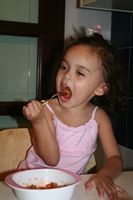
6 months ago, Maya will only eat plain white rice, toast and occasionally fried rice. And she would fill up on gluten-free chocolate biscuits, cakes & muffins. Slowly I weaned her off chocolate flavors and sugars and she would get a sugary treat maybe once a week. Also, we make more effort to eat together, setting the table with adult-type plates & cutlery made the girls feel grown up and excited to join us. Doing individual small portions helped, so the girls didn’t feel overwhelmed about having to finish it all. We try to eat the same things as they do, we play games like `Monster Bites’ and ‘Princess Eat’ and ‘Everybody Drinks’ to encourage them to eat more. And occasionally we resort to putting on the video to encourage the girls to sit at the table a bit longer.
So for the mothers out there who are going through the very difficult process of changing your child’s diet and worrying about what to cook and the frustration when your child refuses to eat anything – you are doing one of the most important changes in your child’s life, you will have to experiment with different recipes and you will need tons of patience. Slowly but assuredly, you WILL become a Domestic Goddess of the GFCF variety.

>Going Green

>
In our continuing efforts in removing all the toxins in Maya’s body, we’re now at the phase where we are able to do more. Removing her food allergens was our number one priority and unfortunately time and financial constraints put a halt on us going further. But now we are able to do more and we are trying to remove as much environmental toxins in our home as possible.


By now, most of our foodstuffs are organic, all of our cleaning products including laundry detergent, dishwashing liquid and floor cleaner are organic and environmentally friendly. Even the girls’ shampoos and soaps are organic.

Currently we are renovating the girls’ room – doing home renovation is actually a contradiction to the principles of eco-living. The dirt and air borne pollution and chemicals used are very harmful, however this is a risk that we felt we had to take. We have built-in carpeting in the room, which is chock-ful of accumulated dirt and harbors so many bacteria and emitting toxic gas. The old air-conditioning unit is a breeding ground for fungus & mold as well as the old ducting.

Again, this was one of the many many things we wanted to tackle when we first learnt about toxic elements in Autism. However, practically prevailed because we need to plan our finances carefully and there was no way we could afford to redo the girls’ room AND do the medical testing AND buy organic food AND afford organic cleaning products AND go gfcf AND afford the supplements all at the same time.

We are also looking at safer cookware – all our pots and pans are teflon and all scratched up. Teflon and all non-stick coating are harmful to our health, they emit noxious fumes when heated up. The chemical, perfluorooctanoic acid (PFOA) is used in non-stick coating and when heated up to high temperature enters our body easily through cooked food. And remember those old-school tin pots and woks commonly found in Malaysian homes? It’s made of aluminum, another toxic chemical that does not belong in our body. Stainless steel and cast-iron ware are recommended as the safest alternative. We’ve stopped using aluminum foil when baking and are slowly reducing our usage of plastics. And soon we will invest in an air purifier for the room.

It’s scary when we read all those articles and reports about the many harmful things in our environment. It’ll make you go crazy thinking about raising your child in a houseful of toxins! Some families have made extraordinary effort in going green and I admire those eco-warriors for their commitment. There has also been an increase in the availability of organic produce and household cleaning products and personal care products in Malaysia.

So yes, back to the carpeting. When we ripped up the carpet, we found that the flooring was 1/2 teak wood, 1/4 marble and 1/4 concrete!! Yeah, that’s Malaysian home construction for you. Compressed wood flooring is not recommended because they emit toxic gasses, however solid wood and tiles are safe. Because we can’t afford the time and money to hack up the whole flooring, we’ve taken some shortcuts. Very soon the girls’ room will be all solid wood flooring; however it will be a bit uneven but I think the girls will love the dips and bumps.

>Long-Term Investment

>
Here are the top 3 reasons I hear from other parents on why they choose not to try biomedical


1. GFCF diet is so hard – “I don’t know what to feed my child, it’s so expensive, my kid will only drink milk and eat chocolate biscuits, I don’t know where to buy GFCF substitutes, I’m frustrated because my son doesn’t like the taste, it’s taking so long to convert him fully to rice milk because he can taste the difference, it’s so hard to do this diet because we don’t have the brands like in the U.S.”
Yes, it is hard. The first couple of months are really tough. But once you find your favorite brand of milk, your son is happy because those GFCF chocolate animal cookies and rice crackers are yummy, you serve him more rice based meals rather than pizza and cheese sandwiches and you’ve successfully converted him fully to casein free milk, it eventually gets easier and easier. It’s actually easier for us in malaysia, there’s GFCF foods all around us. Asian foods are traditionally rice flour based and uses coconut milk instead of dairy. The benefits are huge and well worth the effort. Many parents have successfully implemented the diet, so can you. Check out this link for more info on GFCF diet

2. It’s a bunch of quack – “These doctors are all quacks and just trying to scam your money, there’s no evidence that biomedical works, I’m afraid it will make my child worse, my friend told me it didn’t work for her son, biomedical is expensive, I tried it for a couple of months and I didn’t see any improvements”
75% of children will benefit from biomedical intervention. A number of them go on to recover fully from Autism. Please read this wonderful article by the Autism Research Institute on the causes of Autism and the treatment options http://www.autism.com/autism/first/adviceforparents.htm

Before you discard biomedical treatments, please read through all the research that has been done by the Autism Research Institute http://www.autism.com Please watch the videos of parents testimonials of how biomedical intervention recovered their children http://www.recoveryvideos.com Please read the books on how these parents recovered their kids – Mother Warriors by Jenny McCarthy. Read the medical treatment guides such as Children with Starving Brains by Jaquelyn McCandless and Effective Biomedical Treatment by Dr Jon Pangborn.

Insurance will not cover anything that falls under Autism. However, your insurance will cover medical costs for gastrointestinal issues, allergies and other medical issues. But mostly the financial burden will be borne by the parents. The treatment costs will vary and yes, they can get very high. However, Paul and I view it more as a long-term investment in our child’s future. The gains are huge, but it takes time to mature. Everyone has to work within their means, the financial burden is staggering for any family with a special needs child.

Just because a particular treatment helped my child, doesn’t mean it’s right for yours. And if it didn’t work for your friend’s son, doesn’t mean it will not work for yours. Autism is such a complex disorder that 2 months is not going to cut it. GFCF diet alone is not enough, you must take the baseline supplements, consult a DAN doctor, do all the tests, faithfully take the 2nd tier supplements and much more. Commit fully for at least 6 months to 1 year before giving up. You need to meticulously keep a journal and always keep going to the next level. Finally, you will never know if biomedical intervention will help your child if you never try it.

3. Biomedical is dangerous – “Chelation caused a child’s death”
Chelation (pronounced key-lay-shun) is the process of detoxifying heavy metals from the body. It’s the most `controversial’ and unfortunately the most well known treatment associated with biomedical. Most people think that biomedical is chelation only and tend to stay away from biomedical because of the risks involved in it. Yes, there is always a risk in any medical treatment. However, chelation is only a part of biomedical. There are many other treatments that constitutes biomedical intervention. Chelation is usually a treatment left last or at least to be considered only after undergoing many other initial treatments. Some children improve so well on the other treatments that chelation was not necessary.

Even with the help of an experienced DAN doctor, the parent should always do your own research. Don’t be afraid to question the doctor, double check everything. Paul and I are lucky to have finally found a wonderful and trusted doctor in Dr Erwin Kay in Singapore. And we also consult with a very experienced and senior doctor in Dr Mark Westaway who was previously based in Australia but is now a consultant in a prestigious hospital in the UK. We get second and third opinions on just about everything. We take meticulous notes and keep a journal on every supplement Maya takes and her reaction to it. And we learn from other parents who have gone through this journey before us.

The case of 5 year old Abubakar Tariq who died whilst undergoing chelation treatment needs to clarified. Most don’t realize that the child’s death was due to human error – the medical practitioner gave him the wrong medication. The chelation agent Calcium Disodium EDTA was supposed to be used, instead the doctor administered Disodium EDTA instead. Both medications have similar names, both are colorless and it was a mistake resulting in his death. This is an unfortunate and extremely sad outcome for Abubakar’s family and my heart goes out to them. Please read the full report here http://www.autism-pdd.net/testdump/test5198.htm

Some of the treatments I’ve tried brought no changes, some made Maya sick or regress, but some
have made significant improvement in her. Treat your child’s underlying medical issues, prioritize
which to treat first, start one at a time. Don’t give up on biomedical when a treatment failed to show
the results you expected – educate yourself, implement, keep a log, investigate, try again, move on.
It is a long-term `investment’, so expect highs and lows. Accept the fact that there will be infractions
and mistakes made by yourself and others. Forgive and move on. The cost of biomedical treatment
is never ending. Prioritize, budget and give yourself realistic goals.


>Alert – Not for the faint hearted!

>

One of Maya’s most pressing medical problem is chronic constipation. Infrequent bowel movements, light colored, pebbly, dry, hard and stinky.

Her constipation got so bad at one point that she didn’t poo for 3 days. When she finally did, she was straining and straining for so long, but nothing would come out. She was crying in pain and in desperation Paul had to hold her under her armpits and position her squatting with her feet on the toilet seat. I looked up her bum, and I saw that the stool was so big it couldn’t possible come out.

With my fingers wrapped around a wet wipe, I had to dig in and literally pry off bits and chunks of it out of her. Eventually, she managed to empty her bowels once I cleared the obstruction. Her stool was so hard and dry like hardened clay. At that time, we were in the disabled toilet in Terminal 2 Singapore Changi Airport, so no surgical gloves on hand. Maya was in such agony, it was an act of desperation for Paul and I.

That was one of the worst memories I have, tears was running down my face the entire time I was on my knees on the bathroom floor trying to help my daughter. That experience makes Paul and I even more determined to keep going with biomedical treatments.

We keep to a strict GFCF diet, very limited sugar, eliminated all her food allergens according to the IgG test results, high amounts of probiotics (50 billion CFUs a day), vitamins and minerals, DPP-IV digestive enzyme and phenol assist enzyme at every meal and many more. (See Maya’s Daily Log for a full list of her supplements)

Maya doesn’t have constipation issues anymore and she is no longer in pain.

>Scratchy Bottom & Itchy Feet

>

Maya had GI issues such as constipation, bloating, gassiness, very picky eater, a lot of pain behavior as well as yeast & fungal related behaviors. She would scratch her bottom all the time, occasionally there are peeling skin at the bottom of her feet and sometimes she would bite the skin off her toes. She hated wearing shoes and sometimes she would scratch her back till it bled.
Treating her GI issues was our most immediate concern, and we finally figured out that some of her behavior such as scratching and biting was due to yeast overgrowth.
One of the focus of biomedical intervention is to heal gastrointestinal disorders. 91% of children with Autism has gastrointestinal (GI) issues. Examples of GI distress include inflammation of the gut, abnormal intestinal permeability (also known as leaky gut syndrome), malabsorption, maldigestion, reflux esophagitis, colitis, yeast or fungal overgrowth and others. 70% of the body’s immune system lies in the gut, making it a very important part of your biomedical protocol.
Symptom –
GI symptoms usually presents itself as chronic constipation, diarrhea, abnormal stools, foul smelling stools, bloating and gassiness. Obvious symptoms such as these are easier to detect, however some children do not present these symptoms.
There are also other subtle symptoms or clues that a child has GI issues. Historical clues may include difficulty breast feeding, persistent colic, reflux, eczema, food sensitivities, picky eater, frequent antibiotics, abnormal posturing, self-injurious behavior and poor sleep. Our children may have a combination of these symptoms.
Some of the behavior linked to gastrointestinal distress include confusion, hyperactivity, short attention span, lethargy, irritability and aggression. It also causes headaches, stomachaches, constipation, gas pains, fatigue and depression. Reflux and intestinal discomfort may also be a reason for your child’s sleep problems.
You may require to do stool and urine tests for this, please refer to my previous blog on testing.
What causes it?
Gastrointestinal dysbiosis (imbalance) may occur in Autism through different means; frequent use of antibiotics causes a depletion of the good flora in our gut. The lack of beneficial flora will lead to an overgrowth of bad flora & bacteria such as clostridia. Damage caused by other environmental toxic assaults such as pesticides, heavy metals and chemicals may result in nutritional deficiencies. Food sensitivities such as gluten and casein causes damage to the intestine and the mucosal lining, which results in leaky gut and painful inflammation. Parasites and viral infections are also commonly reported in Autism children.
Yeast overgrowth
A combination of the lack of good flora and a bad diet results in yeast and fungal overgrowth. Foods such as sugar and simple carbohydrates keeps on feeding the yeast. Yeast or more commonly candida usually resides in the digestive tract. When the yeast multiples, it releases toxins in the body. And these toxins also impair the central nervous system and the immune system. Apart from rashes, yeast and fungal overgrowth may also present itself behaviorally.
Healing the gut
The basic protocol involves removing the allergens in food- the IgG food sensitivity test will help to identify what foods your child is allergic to. The GFCF diet is a very good start, also avoid yeast, sugars and artificial colors, flavorings and preservatives.
It’s important to replenish essential vitamins and minerals, give probiotics and start taking enzymes. Super Nu Thera, calcium and vitamin C is a good base to start with. Make sure you get the refrigerated type of probiotics – ask a pharmacy for probiotics multi-species at the highest CFUs you can find. I like to start at 10 billion CFUs a day, then work up to twice a day. A digestive enzyme of the DPP-IV variety is recommended with every meal. You can implement the diet, baseline supplements, probiotics and enzymes yourself.
Only take antibiotics if it’s absolutely necessary. Please make sure to replenish with more probiotics when taking antibiotics. Apart from killing the virus it’s supposed to, antibiotics also kills up to 90% of the good flora in the gut. When there’s less good flora, there’s more room for the bad flora to grow.
You will need the help of a doctor to prescribe a course of anti-fungal treatment to get rid of candida, some may need to treat clostridia, also anti-viral treatment for the viral infections and anti-inflammatory supplementation.
Healing the gut takes a long time but the benefits are enormous. Just by treating the GI alone does not mean that it will recover your child from Autism. It will take away the discomfort, allow him to concentrate and perform during therapy, it will regulate the immune system, give him a healthy body, improve his quality of life and most importantly it will take away the pain.
Nowadays, Maya is a happier girl, she has regular bowel movements, enjoys her food and is open to new textures and flavors. She is sleeping through the night, doesn’t crave for sugary treats and she no longer has dark circles under her eyes or red rimmed eyes due to food allergies. When Maya’s language improved, I asked her recently about her feet. She replied softly “It’s painful”. Now, Maya has a love for shoes and never ever scratches her bottom at all.

>Mind Your Language

>
Most children with Autism are non-verbal. They cannot talk, they cannot pronounce proper words, some make unintelligible sounds. Some children develop speech and language normally and then would eventually regress and lose their speech functions. For some, they never acquired any language at all. Language impairment is one of the main symptoms of Autism.

Maya developed language at the appropriate milestone but unlike most children with Autism, she didn’t lose her language skills. Instead, her language development stagnated at a 1 1/2 year old level. At 9 months she said her first word “duck” and pointed at her rubber duckie in the bathtub. By 12 months old, she knew all the alphabet and could say and point at the appropriate letters. And she knew her numbers from 1 to 10. She could pronounce and label many words, she knew all the colors of the rainbow and all the animals. She would happily sing several nursery rhymes. By 1 and 1/2 years, she could count to 20. When asked “Where’s Mummy?” she would happily point at me. When we point to Daddy and ask her “Who’s that?” she’d yell “Daddy!”. Her vocabulary was more than 200 by that point.
However, she never ever called me Mummy, even though she knew the word. She knows the word milk, but when she wants it, she’ll throw a tantrum. She quickly learnt the names of her favorite snacks eg. cookies, biscuits, crackers, ice cream; but when she wanted them, she’d either scream in front of the kitchen cabinet or take our hand and point it to the item she wanted.
She would memorize sentences from her favorite cartoons and repeat them over and over again. This is called echolalia; echolalia is another symptom of language impairment. She would repeat certain sentences all day long. Often, she wakes up in the middle of the night and talk to herself. She would stay in bed sitting up in the dark and we’d hear her talking. “Hello Pocoyo” or “Let’s make a house under the table” or “It’s a blue car” and would repeat it again and again for 2-3 hours. One of the few words she would say appropriately was “Bye bye”. Sometimes to say good bye to someone but more often it was her way of telling someone to go away.
1 week after starting the GFCF diet, she made 1 word requests. 2 months after the diet and ABA therapy, she started to request for things appropriately in 2-3 word sentences. Since we started implementing all the supplements and other biomedical treatments, her language has improved tremendously. And doing more intensive ABA therapy definitely contributed to her growing language (we now do 30 hours of ABA a week). Every morning she’d run to our room with a cheery “Good morning Mummy”. Every time she sees us, she’ll greet us with “Hi Daddy”. She greets all her teachers in the morning and says goodbye to all her school friends. I’m happy to say that we often hear 7-8 word sentences these days.
Here are some famous words from Maya recently;
When she couldn’t find her favorite shoes before going out she said “Let’s go to Singapore and buy some shoes”
When she was playing and one of her dolls were missing she said “Mummy, you better go look for the doll”
One day, she grabbed my hand and dragged me to the bathroom and said “Mummy, let’s go take a bubble bath together”
“Daddy, let’s go to the glass slipper shop” when her Cinderella doll lost her shoes
“No, I don’t want that. How about the princess dress?” when she refused to wear pajamas to bed.
When arriving at her school one morning, Maya said “Oh no, this isn’t the ice skating place”. She was dismayed because recently we took her to Disney Princess on Ice show and loved it.
One day, Maya quietly did a poo and a `pebble’ of it fell out of her nappy. She picked it up, threw it into the dustbin and said “It’s dirty”. And when we discovered what had happened, Paul was so shocked he yelled out “She did a crap!!” and Maya started repeating “I did a crap, I did a crap, I did her crap” until we quickly distracted her with her favorite cartoon. So now Paul and I are ultra-careful with our language, no more cursing in the car when in traffic.

>18 Supps, 3 Rubs, 1 Shot and a Bath

>

Since coming back from another appointment with our DAN doctor, we have added on more supplements to Maya’s daily intake. As of today, there are 18 supplements, 3 types of creams, 1 bath and 1 injection.
The biggest challenge is our daily struggle to get all of these important and costly supplements into her. We mix liquids into juice, open up capsules and mix to her milk, grind up tablets and dissolve in a drink, we have pretend tea parties in the bathtub trying to encourage Maya to soak in the Epsom Salts bath for up to 30 minutes and we play silly games to overcome her sensory issues with us rubbing cream on her. We sometimes chase her around with her sippy cup to make sure she finishes the dosage. We’re starting to train her to drink from a straw now, it’s still hit or miss whether she’s in the mood to drink.
Adding supplements to her milk is probably not the most recommended method according to the experts, but the experts don’t have kids who are too young to swallow tablets or capsules, with hyper sensitivity to texture and taste, and Maya has a serious dislike of syringes. She catches a glimpse of a syringe and she runs screaming from the room.
As parents, we gotta do what we gotta do. Every time she doesn’t finish her juice with the vitamins in it, I have to force myself not to calculate how many ringgit worth of vitamins just went down the drain. Every time Maya spits out a milk that tastes funny because of a new supplement, I’m mentally calculating the cost of the expensive casein-free milk and the supplement that we had to mail order from the U.S at great expense.
We learn not to add probiotics to warm milk, because the heat will destroy the good cultures. We learnt not to mix the probiotics and enzymes into the same drink, lest the enzymes `eat’ the probiotics. We know not to mix supplements with medication. And we learn that some supplements are meant to be taken on an empty stomach and some after meals. I’ve created my on checklist & journal, with every supplement Maya successfully takes, I make a tick to it. We take note of the foods she eats that day, her bowel movements, her sleep, her behavior and any new language improvements.
When starting your child on supplements, always start with a low dosage, mix it with your child’s favorite drink. If you child rejects it, try again with a lower dose or changing it to a different drink. Maybe experiment if your child would welcome taking it by syringe or from a different colored cup. Every few days increase the amount till you get to the desired dosage. Always keep a journal to keep track of any behavioral changes or bad reactions, this way you will know which treatments work for you child, which made the greatest improvements, which didn’t do anything for him and which ones your child react badly to.
There’s nothing more satisfying at the end of the day and I review Maya’s daily journal and I see a tick in every column. If she ate well at every meal that day, had a good poop, slept well last night, played chasing games with her sister and said an 8 word sentence makes me feel like I’m on the right path. Knowing that it’s been a productive day makes me feel a step closer to Maya’s recovery. It’s a good day when all the columns are ticked.

>Music in the Morning

>
Sensory integration disorder is a side-effect of Autism, where their hearing (auditory) and vision (visual) are not in-sync with their senses and perceptions, which in turn affects their behavior. Some children react aggressively to it, some children tune-out and retreat into themselves. 

This is why Maya falls down to the ground, rolling around and moaning in agony or screams her heart out whenever she’s in a busy and loud environment. This is why Maya used to run with her head tilted sideways and looking out of the corners of her eyes. When Maya was a newborn we just sensed that she had sensory overload. A trip to a noisy mall in the daytime would result in Maya screaming and screaming for hours until midnight. 

Gentle ambient noises would be too much for her. Being in a room full of people having conversations was unbearable. Crossing the street is excruciating to Maya, the sound of traffic, construction noises and crowds freaks her out. 
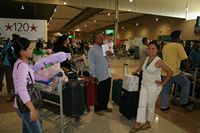
For anyone who’s had the pleasure of flying Air Asia out of their low cost terminal, passengers would have to walk across tarmacs with the sound of jet engines blasting. For someone with auditory integration disorder, this is absolute hell on earth for Maya. When she was 9 months old, our whole family took an Air Asia flight to visit my brother in Labuan. The noise and hustle of the airport was too much for her to take. For the whole 2 and half hour flight, Paul and I, our maid and both my parents took turns to comfort her. Maya was uncontrollable, she screamed and fought us with all her might. The other passengers on the flight were very kind and understanding. Everyone sensed that we were trying our best, it took 5 adults to calm her down, and not very successfully at that. 
Some people from our flight actually recognized us when we went sightseeing in Labuan, they came up to us and said “you were the guys on the plane, the one with the noisy kid”. They kindly gave us some advice on how to calm her down on flights – to put some water on her head (in order to cool her down). We just smiled.
Today, Maya has conquered her fear of the vacuum cleaner. And when I turn the blender on, instead of crying, she just leaves the room. When before, she couldn’t bear to have the radio on in the car, now she just tells us to turn it off. Recently, when driving Maya to school, I asked her if I could turn the radio on to hear some music, and now she says “Let’s listen to some music on the radio”. Now we listen to music every morning on the way to school.
On our last trip to Singapore, budget necessitates us to fly Air Asia. Amazingly, Maya walked the whole way from the aircraft on the tarmac all the way to the terminal. It was hot, noisy and busy; she just kept on walking with her hands over her ears. I’m so proud of her. 
We did not do any specialized sensory integration therapy, time and other priorities did not permit it. However, with a combination of ABA therapy and by healing some of her medical issues, Maya has reduced her sensory disorders. It took us a long time to get here, but the music sounds all the more sweeter.