>A Good Night's Sleep

>

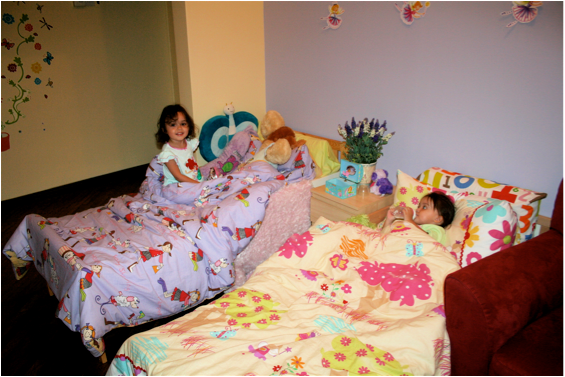
I was recently reminded by how good sleep is generally in our home right now. It served to remind me to appreciate and not take for granted the good night’s sleep that we have all enjoyed for the past year or so. For the past 3 months, both the girls have been falling ill constantly. As usual, when children are sick, it also affects their sleep as well as the parents sleep. Having just come back from a quick little holiday with Paul, just him and I alone, we both enjoyed 2 nights of great sleep. Looking back, the sleep fairy has been extremely good to us in the past year. I had forgotten all the sleepless nights we had and how I used to crave even a straight 3 hour stretch to sleep. As a Mum, if your kids don’t sleep, YOU don’t sleep right? Since sleep disorders are a common issue for most ASD kids, I needed to remind myself of the luxury and privilege that I now have, a guaranteed good night’s sleep most nights. Nowadays, if they’re not sick, both girls would be in bed by 7.30pm and would stay asleep until 6.30am. Usually they will fall asleep by themselves without much fuss, but occasionally they would cheekily get out of bed again, so we would have to tuck them into bed again a few times, read countless bedtime stories and sing lullabies. But being the ungrateful parents that we are, Paul and I would moan over the 6.30am wake-up calls of them jumping on our beds, giving us kisses and cheerful “Good mornings !” How times have changed, how easily we forget…….


When we first started intensive Biomed, we worked out our priorities together with the doctor. This determined the first course of action and treatment and addressed our most pressing issues. First and foremost was sleep! Throughout Maya’s entire life, even from the day she was born, she always had sleep issues. A typical newborn would stay asleep for 23 hours a day, whereas Maya would be awake for 12 hours a day. For the first few months of her life, she hardly ever stayed asleep long enough like other kids. She would fall asleep while breastfeeding and I remember having to wake her up so that she could drink her fill. When she was a baby, she hated sleeping in her cot, preferring to sleep in our bed, tucked between the 2 of us. Unfortunately, though she would sleep, Paul and I couldn’t for fear that we would accidentally squash her.

When she was born, we had 4 main issues to deal with. I had difficulty breastfeeding her, getting her to sleep or stay asleep, dealing with constant pooping and her constant crying.This was going to be a pattern for much of her life.  Breastfeeding was hard!! She had difficulty latching on, she couldn’t suck properly, the milk flow would be too much for her causing her to gag, she would scream for milk, but when trying to feed, she’d scream as if in pain. I had mastitis twice and was on antibiotics while breastfeeding her. Her feeding was so erratic that it affected my milk flow, there were 2 occasions when my milk supply dried up. I had to painstakingly express milk all day long for up to a week trying to get my milk supply up to the previous level. Even when I expressed milk and fed her by bottle, she needed the slowest flow nipple and could only drink not more than 2oz at a time.  If she drank too much or too fast, she would projectile vomit. I remember many many times of cleaning up the car, the bed, the floor and changing her outfit and mine many times a day due to her throwing up. She required small feedings very frequently. I remembered breastfeeding her every hour for the first 3 months. When she was 4 months old, she only needed feeding every 2 hours. 


At that time, I knew that the mother’s diet would affect the breastfed baby, thus I was careful of avoiding caffein during and after pregnancy. Also friends and family had reminded me to stay away from foods that caused “angin”. However, in hindsight if I had known to stay off casein and gluten too, things may have been different. Even though at that time Maya was never fed any formula or milk-based products, I didn’t realise there was a lactose, dairy or casein issue involved. A child can still ingest it through the mum’s breast milk. When I was breastfeeding, I was constantly hungry, I craved chocolate milk and yoghurt. There were many varieties of yoghurt in Sydney and I loved the  fresh greek yoghurt with mixed summer berries from David Jones, Paul would buy me tubs of it. I also ate freshly baked gourmet breads and pastries everyday, now I know better…….. 


After 7.5 months of breastfeeding, Maya refused to drink from me and preferred the bottle so we moved her on to formula. I envied those other mums whose kids would drink a huge bottle of milk in one go, then fall asleep for hours. With Yasmin, it was so different. She slept well, she fed well and we only had to change her nappy 6 times a day. Because Maya was my first born, we didn’t know any better. We thought 12 poopy nappies a day was normal. We thought feeding every hour was normal for a 3 month old baby. But what I knew was abnormal was her sleeping only for 20 minutes at one time. However, no one could give us any insight on it. 

Since she was 3 weeks old, Maya would scream and scream from 6pm until 10pm every night. This went on for 4 months! We would try to feed her, change her, rock her, swaddling, anything that would calm her down. Usually, swaddling her very tightly and rocking and swaying her hard whilst walking around and around very fast would help. For 4 hours every night, Paul and I would take 1 hour shifts, both of us trying to soothe her. Yet, she would continue to scream bloody murder. Doctors would tell us it was colic and gave us some anti-colic medication which didn’t work. We were exhausted and worried about our child, but we could’t find any answers. Her crying was always high-pitched at the loudest volume, her cries were so blood-chilling that people were afraid to come to our house or invite us anywhere. We finally had an inkling that Maya had sensory issues, whenever we took her out to the shops or for an outing in the day, at night her screams were more frantic and lasted longer. If we kept her at home all day long, with no distractions or visitors, she would have an easier night. She’d still be screaming, but it was only for 4 hours, rather than 6 hours straight. This eventually got better, especially since we finally got a maid when she was 4 months old. For the first time ever, Paul and I managed to sit down to eat together while the maid would rock and soothe Maya. I remember days when I never had a chance to sit down, because Maya needed to be carried and rocked all the time.

When we finally weaned her on to solid food, it was a struggle. She did not like to eat. Mealtimes would take up to 1 hour, just to coax 2 tablespoons of food into her. She continues to be a picky eater up to this day, with a very small appetite compared to other kids. However, when she was 1.5 years old, I moved her on to fresh milk. She loves it so much and could drink up to 1 litre a day, which is a lot for her. And she loves bread, she would happily eat bread and drink milk all day and nothing else. We noticed the addiction, but nontheless we were happy that we could feed her nutritious meals by making pizzas and sandwiches which also contained protein and vegetables. We noticed her love of milk, but we have been taught that fresh milk is good, lots of calcium and nutrients right? She would drink a 6oz bottle, then she would be all dopey and sleepy and goofy. She acted like someone on drugs, all high and woozy. Initially we thought it was funny, until years later we learnt about the opiate effects of casein and gluten. 

She would have explosive bowel movements 12 times a day in the first 3 months. We did not know this was abnormal. And once a day, every day, her poop was so explosive that it would burst out of her nappy and cover her entire body. Her little bodysuit would be soiled from the knees up till halfway up her back, sometimes she would be covered in her poop from her neck down to the ankle. We threw out so many outfits because it would get so soiled.  She also had nappy rash, again and again. We were still in Sydney at the time and when I showed her poopy nappy and her red sore bottom, our well-respected and experienced Australian paediatrician said fully breast-fed babies are not supposed to have diarrhoea and they are not supposed to have nappy rash. Errr……… “Doc, I don’t care whether they’re SUPPOSED to or not, but you can see for yourself the diarrhoea and the nappy rash. I fully breastfeed her, yet she still has diarrhoea and she has bad nappy rash”. He didn’t have any answer for that, just kept saying that she’s not SUPPOSED to have them. I don’t care what medical books say, she DID have them, so help me out here will ya? Can you explain this doc? Can you help my baby? 

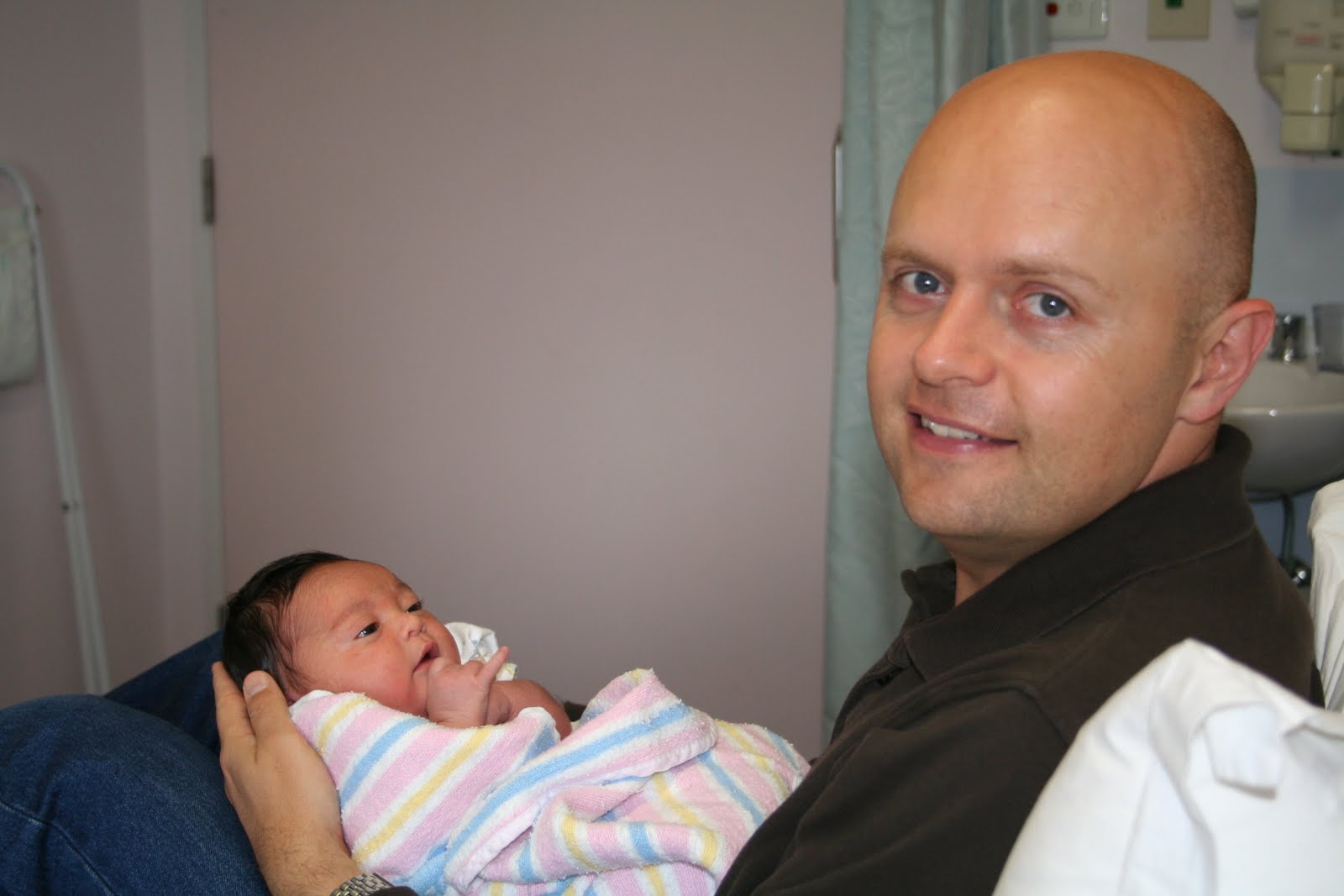
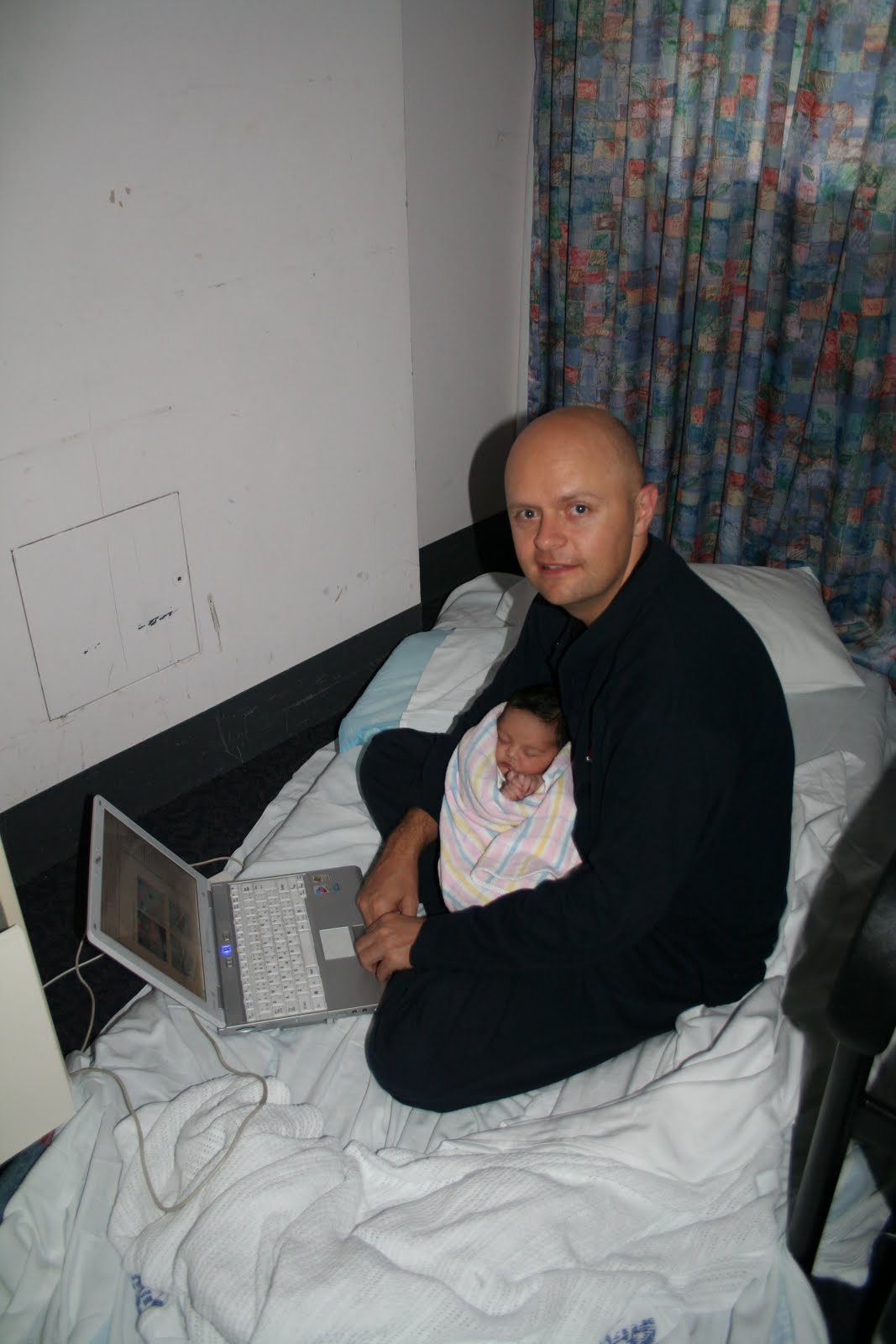
From the very first day she was born, Maya didn’t sleep well. Paul spent the 4 nights in hospital with me, sleeping on the floor.  The hospital advocated the baby sleeping or rooming in with the mum immediately from birth, in order to facilitate bonding. There were no nurseries where babies are placed, all babies roomed in with the mums unless they were in ICU or if the mum had complications. The nurses would always be on hand to help, but Paul was and still is an amazingly hands-on dad. Because I couldn’t get up from bed for a few days after the Caesarean birth, Paul took charge of changing her nappy, rocking her and burping her. He even gave her her first bath, even for the next few weeks after because I was afraid to bathe her myself. In hospital, Paul would hand Maya to me whenever she needed to be fed. She would not sleep in her bassinet, preferring to sleep cuddled up next to her Daddy even from her very first day. She loved being held by Paul, he would sleep on a mattress on the hospital floor in my private room. She would cuddle up to him, her little face tucked against his chest. Only then, she would sleep peacefully. I remember nights in the hospital when she would scream and scream and I was not able to get up from my bed. Paul would rock her all night long, walking down the dark hospital corridors while trying to soothe her. Even while we were all holed up in hospital, Paul still had work to attend to and would try to catch up on his emails. He would sit on the floor in front of his laptop, Maya cuddled up in his arms whilst typing out an email. 


As a young baby, Maya would fall asleep for 20 m
inutes and stay awake for 1 hour, then sleep for another 20 minutes and so on. By the time she was 2 months old, at night she eventually managed to sleep for 2 hours straight. Then wake up again for another hour to drink milk, a nappy change, then another half hour of rocking her back to sleep and she would sleep again for 2 hours. Usually, she would wake up cranky and crying, even after a somewhat long sleep. This was how life was like in the first years of her life. 
However, when she was 1 years old, she finally managed to fall asleep by herself without much difficulty and would sleep for 12 hours straight at night. We would limit her daytime naps to only once a day, and then only for 1 hour. We wouldn’t let her nap too late in the day, otherwise she would be up all night. It was mean, but that was the only way we could cope. However, even though she slept well at night, during the day time was very tough. We had to deal with her tempers, meltdowns and mood swings. It wasn’t quite as bad as after she regressed into Autism, but it was taxing enough for us. 


But throughout all the difficulties and challenges, Maya developed and achieved all the milestones at age-appropriate levels. Her growth chart and well-baby visits recorded normal development. She received all her vaccinations on time and we combined both Australian and Malaysian vaccination schedules. Therefor Maya received more vaccinations than the average Australian or Malaysian child. Her last vaccination was for Meningococcal C. She was 1.5 years old then, about 4 months after her MMR and Varicella vaccination. We were living in Sydney then, the vaccination was give 1 week after Yasmin was born. Before that, there were many videos and photos of how happy and interactive Maya was. She didn’t really talk spontaneously, but she would label things on the posters for us, when asked where’s Mummy, she would point to me. When asked who that was, she would happily tell us their name. She had a big vocabulary and could count to 20, she knew all her alphabets. Though she never did call me Mummy ever, she knew where I was and would always want my attention and be with me. She had a sparkle in her eyes, she was full of fun and played well with other kids.

Looking back, we realised she started to plateau developmentally and she slowly regressed. She talked less and less, her tantrums and aggression were worse. She retreated more and more and preferred to be alone and her sleep deteriorated. Maya constantly would wake up in the middle of the night and stay awake for 2-3 hours, singing, laughing or talking to herself. Or it would take her a long time to fall asleep. She also kept getting constipated, medical records showed many visits to the doctor with a prescription for more laxatives. And her behaviour and condition deteriorated until she was finally diagnosed with Autism.


Unfortunately, only years later with the hindsight I have now, I now understand why Maya was such a difficult baby. And why she eventually regressed and became the 1 in 100 to get Autism. 

Obviously, when we started biomedical, sleep was our first priority, years of sleepless nights has taken it’s toll on us. So getting her sleep sorted out was by far the most important thing for us, rather than the Autism behaviours. Dealing with her behaviors was extremely challenging enough, but doing it day in and day out on very little sleep was just too much for us. The GFCF diet helped by reducing some of her food cravings. By eliminating casein and gluten, this also caused a reduction in gut issues. A lot of sleep issues are directly related to GI disorders. Since we took out casein and gluten, and later introduced digestive enzymes, she could process her food better. Thus reducing her reflux and colic, which are frequent culprits when dealing with sleep issues in kids. We also used melatonin for the first few months to help regulate her sleep patterns. However, melatonin alone will not resolve the underlying sleep disorder. Once we started intensive biomedical treatments, we eliminated all the IgG reactive foods including soy and eggs, based on her IgG Food Intolerance Test results. We replenished her with magnesium, which has a calming effect and gave her high doses of casein-free multi-flora probiotics. Magnesium and probiotics also relieved her of constipation, another culprit to consider if your child has sleep issues. However, only when we started doing several rounds of anti-fungals, then her sleep issues were totally resolved. Fungal or yeast overgrowth is a common cause for night awakenings followed by laughing and giggling. Yasmin however had sleep issues whenever she had bacterial overgrowth, this would also include bloated tummy, crankiness and smelly abnormal stools. 

Therefor, whenever my children have sleep issues, I always go through my checklist;
1. Diet – were there any casein, gluten or other infractions such as MSG, preservatives, colorings, high salicylates, too much sugar etc
2. Is she constipated? If yes, then check the possible causes eg if she’s getting enough magnesium, diet infraction or yeast overgrowth. With Maya, once we resolved her constipation and yeast overgrowth, her sleep improved 100%
3. Is it due to yeast-overgrowth? Possible clues for my girls include laughing middle of the night, during the day there is giddy, silly behavior, standing upside down, lots of climbing and jumping off furniture, eating too much sugar or yeast feeding foods, scratching bottom, biting toes, rash, itchiness, constipation
4. Melatonin – would a few nights on melatonin resolve the issue? If no, then check the other causes. Also, hyper kids are not able to regulate serotonin levels amongst other things, serotonin is the precursor of melatonin. At one point, it took a long time for Maya to fall asleep, usually we would need to rock her for 1-1.5 hours every night! During those moment, melatonin helped her to fall asleep faster and easier.
5. Magnesium deficiency – increasing magnesium may be calming
6. Folinic Acid – for some kids on MB12, it may cause hyperness. Tempering it with folinic acid may have a calming effect. Some may need certain amino acids if they are deficient.
7. Is it GI problems such as bacterial infection? Bloated tummy, low appetite, tantrums and diarhhia are usually followed by sleepless night in my home.
8. Are they ill? Perhaps they have a virus, sore throat or fever or colds and flus, these would affect sleep. Especially if their nose and sinuses are congested and it affects their breathing at night. 
9. Is there enough calming treatments? Warm epsom salt baths at the end of the day is usually calming for our kids, gentle massages by mummy also helps to calm them down.
10. Sleeping arrangements and routine: is the room temperature too hot or too cold, is my child shivering or sweaty, is the room too dark? Maybe your child may be comforted if there’s a nightlight. For my girls, I installed blackout curtains so that the morning sun would not shine so brightly waking them up too early. Do they share a room, is their sibling waking them up? If they share a room with the parents, is the child being awakened by your husband’s loud snoring? Most kids respond well to a set routine, therefor try to establish a good night time routine .
11. Sleep pattern & habits – do they still have an afternoon nap, is the nap too long or too late. Is it possible to either limit the time they nap or take away nap time completely. Remember, anyone child or adult, if we have a nap in the afternoon, chances are we will be well rested and won’t feel sleepy until midnight. If we are only able to sleep a total of say 10 hours a day, then if we take a 3 hour nap in the afternoon waking up at 5pm, chances are we won’t go back to bed until 12 midnight, and will wake up fresh and rested at 7am. Simple math right? 


The challenge here is when the child is so exhausted in the day time after several hours of intensive 1 on 1 therapy, they really really need to nap. It seems cruel to take it away from them. However, in the end the mum ends up utterly exhausted too because they have to deal with a wide-awake active child until midnight. Therefor, we have 2 choices. Either follow the child’s routine ie. accept the nap time and hopefully you get a chance to nap and rest when they do, accept the fact that you will only be able to go to bed at midnight every night. Or the 2nd choice is to try to change your child’s sleep pattern, this is quite difficult according to most parents. However, due to desperation, this is what I did. We started home based ABA when she was 2y9m, she still needed a 2 hour nap everyday at 1pm. So after the morning ABA session, she’d have a quick lunch and have a nap. However, sometimes she wanted to sleep longer. Many times we had to wake her up because the therapist had arrived. However, if woken up prematurely she would be extremely cranky throughout the day, even during therapy times. Also, because of this, we couldn’t get the maximum amount of hours of ABA that Maya required. 


Therefor, I tried all means possible to keep her awake during the daytime with tv, toys, snacks, playing games, ANYTHING that would keep her entertained and not want to go to sleep. And usually by 5pm, she would be dead on her feet and try as we might, she would fall asleep for 5 hours straight and wake up at 10pm! Of course, whenever this happened, she wouldn’t go back to sleep till 3am. After a few weeks of this extremely exhausting pattern, we eventually managed to keep her awake till 6pm, then 7pm. Simultaneously, I would give her melatonin WHILE she was sleeping, in the hopes that it will keep her asleep for a few more hours. When she was overtired, it also took a long time to calm her down enough to fall asleep. It took a couple of months of even more worse broken sleep though, but eventually we got there. By the time she was 3y1m, she could stay up the whole day even with a full day of ABA with no nap. She
would be cranky, overtired and irritable in the late afternoon and always falling asleep, but we persevered and cruelly kept waking her up and keeping her awake until  she’d fall asleep exhausted at 7pm. After that, I’d sneak in a small bottle of milk with 2mg of melatonin around 11pm and she would only wake up at 7am the next morning. 


However, as she grew older and her body grew healthier and stronger, she was no longer as exhausted by 7pm. She no longer needs melatonin after the first 3 months of us regulating her sleep cycle. Though it seemed cruel at first, eventually Maya got used to the routine and was well rested and had enough energy to get through all her therapies and the demands of the day. Best of all, Paul and I get to have the evening together. We get to have some quiet relaxing time together and can look forward to a good night’s sleep. 

For my girls, after we have successfully taken away their nap times and they are able to sleep from 7pm – 7am or so, we try to have this routine for the past year. After dinner, they have a warm epsom salt bath together, often with me included, we brush our teeth together and we all choose our favourite pyjamas or nightie. Then when I can, a nice massage by mum with perhaps glutathione lotion, MSM cream or magnesium cream. If not, a simple lavender based oil or lotion is calming too. Then the girls get into bed, the air condition at a nice cool temperature, the air purifier switched on, curtains shut tight and a soft nightlight on while Daddy reads a bedtime story. Then, they have a nice bottle of rice milk with melatonin perhaps. I tuck them into bed and I kiss and hug them every night ever since they were newborns and I always tell them how much I love them, how proud I am of them, I say thank you to them for a lovely day, and that we’ll have another happy day tomorrow. I let them know how happy they make me feel and that I hope I made them happy too. I tell them how brave and clever they are. I tell each girl private words of love and affection. I tell them to have sweet dreams and that I’ll see them in my dreams. Every night whenever I tuck them into bed, I never fail to tell them this. After years and years of whispering my love to them in their ears, eventually Maya and Yasmin started telling me good night and that they love me too. Good night and sleep tight everyone………


>Survivor, Not Victim

>

A parent had recently asked me if I was scared, she had written to me with such stark honesty about her fears and desperation. She wrote of her life, her child and how twisted her world had become. I can still remember living in a twisted world and I’m sure I have scared off a lot of friends and alienated many people around me with the intensity of my pain. Though I got a lot of sage advice, I was deaf to it because of the roaring of the pain in my soul.

To most people, listening to an Autism Mum can be quite challenging. It is hard for most people to truly understand what life is like with a child with Autism, most think that it’s like the movie Rainman or what is commonly yet wrongly portrayed in TV as what Autism is. For a lot of us Autism Mums, we learn the hard way not to talk about it with most people, otherwise you end up alienating yourself and lose friends. How often can a friend or even family members listen to you about the stimming, the spinning, the lack of speech, the poop smearing, the obsession to lick every single thing or the bad nights that the mum has had? The ASD symptoms can be quite bewildering to non-ASD parents, most of them don’t understand why we obsess over the seemingly small things. So what’s the big deal about lining up toys, waking up singing in the middle of the night, climbing on the television, biting the teacher, spinning in circles, lack of cooperation or speech that is slow to come? What’s the big deal about a child’s constant drooling, lack of eye contact, repeatedly tapping on the walls or standing upside down? No one wants to hear about the insane screaming and tantrums that used to go on in my home (except maybe you guys who are reading this!) When I talk about the meltdowns and anxiety, the picky eating and the non-compliance, usually I get blank looks or condescending remarks on better parenting.  

My friend had poured out her soul into her email and wondered why I hadn’t replied to her. I finally wrote back and apologised, explaining that both my girls were ill and so was I, thus the late reply. I also wrote “You asked me before if you scared me; I have been in situations a lot scarier. I don’t scare easily.”

As a parent with a child with Autism, you would understand what those scary moments are. I have been scared when my daughter would bang her head so hard against the floor that I thought her skull would break. I remember the fear when I heard Maya laughing insanely in the dark at 3 o’clock in the morning. I have let fear stop me from getting treatment for my child. I have been afraid of being left alone with her because I was not able to control her. I was scared of taking her out in public because she would scream so loudly as if she was being tortured that everyone would stare. After what my family and I have been through, an emotional email from a distraught mum doesn’t scare me. I have seen fear in my childrens’ eyes; that’s when I knew that just because Mummy is scared, it doesn’t mean that Mummy doesn’t have the courage to keep fighting for her baby.

I am guilty of holding my child back, for fear of her failing. But if I never allow Maya to be challenged, how will she ever learn and grow? The future was full of unknown fears, because Autism has such a bleak prognosis, I didn’t know how I should plan our future. Leaving her in a room with a therapist was difficult, so was letting her go to school for the first time. 

Doing the first blood draw was so traumatizing for Maya and us that it actually stopped us from pursuing biomedical treatments further. I was scared that doing biomed would require us to do more blood tests, the memory of that first blood draw still brings shivers through Paul and I. It took 6 people to hold Maya down, drop after drop of blood was squeezed out of her arm. Vials and vials of precious blood, to the sound of Maya’s horrific screaming. I swore to never let her go through that again.

Ironically, that horrific blood draw was not even for Biomed, it was actually for mainstream medical screening tests. The worst thing was, all those tests came back negative or inconclusive. The doctor didn’t find anything “wrong”, there were no treatments to follow up with except some vague remarks about giving cod liver oil. All that trauma for nothing, it imbedded a deep mistrust in the medical profession in me for a long time. 

I kept making excuses and delaying to see a DAN doctor for several months. We’ll see the DAN doctor when…… her ABA program is well under way, when she gets over this cold, when she’s healthy, when she is more compliant, when she can listen to us and not meltdown when we travel with her etc. Then when both girls were hospitalized for Rotavirus, it suddenly hit me that if I were to wait to travel to see a Biomed doctor only when Maya was healthier or when she was more manageable, it will never happen. She was having colds, flu, fever, coughs and tummy aches constantly. She was still non-compliant, there were still epic tantrums and meltdowns whenever she wasn’t doing ABA. There were very few moments when it was convenient for us to take time off to travel to the doctor. There were always important ABA programs that we couldn’t take time off from, there will always be chores and meetings. There was never a perfect time to travel, there were always other commitments that took precedent. It was a lightbulb moment for me, I really understood then that my child was sick. She will not get healthier nor will her behaviour improve until I get her treated. I finally understood that taking care of her underlying medical health should be our foremost priority. 

I finally got up my courage to take that step and make an appointment with a real DAN doctor, someone who was listed in the ARI website. 6 months of wasted time, only doing ABA and not doing anything about her medical health. I finally realised that I was scared of the blood draw, that this fear was holding my daughter back from getting the medical treatment she needs. That fear held us back for so long, that when we finally met our first and then our 2nd Biomed doctor, I felt so foolish. Because the fear that I was so afraid of was unwarranted. There were no blood draws involved! Only a prick on the finger for a blood spot. 
Months later, we were required to do blood draws for certain tests as we were doing more and more complex treatments. However, we took it all in stride. Sure, it was difficult and painful to go through. But we realise that Maya got over it much quicker than we did, it was foolish of us to hang on to that fear when the pain has already worn off long ago. We just did another round of blood tests a few days ago. Maya cried, Paul went a little pale and I got choked up when I saw Maya’s blood spurting out of her vein. But we got over it. We know that in order to ensure that we do all these treatments as safely as possible, we do need to go through a blood test once in a while. A small amount of pain now, for a lifetime of happiness right?

This morning, I was sitting in the lobby of a dance school, waiting while Maya is having her ballet lesson. She has been pleading with us for months to go to ballet class, but I always held back because I felt that she was not ready for it. After some time, we finally took Maya in for a class. As always,
whenever we felt that we were pushing her over her limit or demanding too much from her, she always exceeded our expectations. Again and again, she has shown us how high she can soar. I am in awe of this beautiful daughter of mine, her heart is so big, her strength and courage puts me to shame. And yet, I still tend to hold her back for fear of failure. Whether it’s hers or mine, I’m not sure.
She did so amazingly well, in a class of a dozen little girls in identical pink tutus, you would not see her any differently from the other ballerinas. Except for her huge smile and graceful arabesques. She has had several classes and her enthusiasm and love for dancing is apparent. She pays attention and obeys everything the dance teacher says, points her toes and follows all the moves. She is dancing in a group with other tiny adorable ballerinas, stretching on the barre bars and standing at first position like a prima ballerina. I was surrounded by other mums who, though proud of their little girls, seem to take it for granted that their girls are fine. I’m so freaking proud of Maya that I had to stop grinning like a fool in the lobby, my heart is so full of pride for her I feel it would burst. They are chatting about family vacations and private schools, while I still can’t let go of the grip of Autism just yet. 

In the first few months after Maya’s diagnosis, the fears and the tendency to hold Maya back was turning me into an Autism Victim. When I discovered that about myself, I swore not to be a victim, that my daughter and my family will not be a victim to Autism. Instead, together we took the journey to be Autism Survivors. Sometimes we need to go through a war in order to survive. Though the war on Autism is over in our home, we still feel like we’re living in a war-torn zone. It will take time to rebuild this family, though we are well on our way. It will take even longer to recover financially, though our initial investment has multiplied ten-fold in other ways. We have kicked the enemy’s ass and regained our country. We are no longer Autism Victims, we are now Autism Survivors. 

>Autism Biomedical Events in May 2010

>There are 2 exciting Autism Biomedical events in Asia this month.

The World Autism Congress 2010 is being held in Hong Kong 15 -16 May 2010. Please visit www.worldautismcongress.com for more information. World-renowned biomedical experts such as Dr James Neubrander, Dr Andrew Wakefield, Dr Kenneth Bock, Dr J McCandless and many more will be presenting at this 2 day world-class symposium.

Conference on Autism: A Holistic Approach to Treating Autism is being held on 23 May 2010 in Singapore. Dr Kenneth Bock will be presenting as well as Dr James Partington. Please visit www.autismrec.net for more information.

Don’t miss this opportunity, it’s not too late to register.

>DAN Doctors in Malaysia

>

Please refer to https://spectrummum.wordpress.com/2011/02/21/more-biomed-doctors-in-malaysia/ for the latest information regarding biomedical doctors in Malaysia.

Good news for Malaysian parents and children, there are now 2 biomed doctors in Kuala Lumpur!

Dr Ng of Gleneagles Hospital, KL is a Pediatric Neurologist. She attended the Defeat Autism Now! Clinician’s Training Level 1 in February 2010 (Phone 03-42571300)

Dr Eddie Chan of Dr Chan Specialist Clinic is a Pediatrician practicing in Puchong, Selangor. He attended the Defeat Autism Now! Clinician’s Training Level 1 in April 2010 (Phone 03-80623925)

Please consult with a biomed doctor in managing your child’s biomedical treatment. Autism is Treatable, Recovery is Possible!

>DAN Conference April 2010, Baltimore

>
I came back from my 2nd DAN Conference in Baltimore full of hope, resolution and strength. It is a long way to travel ‘just’ to learn about how I can treat my girls, the cost alone could have paid for a few months worth of consults and supplements. A couple of months before the conference, I had read the list of speakers and topics they would cover and I found that 90% of it were materials that I had a special interest in. After doing biomedical treatments for Maya for 1 year, she has improved tremendously and we know that her Autism days are far behind. However, I am now trying to resolve her residual health issues.

I was also motivated by the need to address Yasmin’s issues. After doing biomedical treatments for 9 months, we have yet to see real progress in Yasmin. Though she is no longer in a fast-track downward spiral into Autism as before, we are dissatisfied by the lack of breakthroughs. We have consulted several mainstream and biomed doctors for Yasmin, yet no one has been able to address the root cause.

Paul and I worked out our budget trying to squeeze in that extra bit to finance my trip to the US. Again, I went alone as we could not afford for both of us to go. I planned it as carefully as I could, not wanting to leave my girls longer than necessary. No extra day’s grace to get over the jet lag or tiredness from the journey, no extra days for sightseeing or shopping. I was there and back in 6 1/2 days. Looking back, I don’t know how I did it, 27 hours trip to Baltimore and checked into the hotel an hour before the sessions started, and went straight into a 2 hour workshop on Thursday evening. I flew back on Sunday evening immediately after the last lecture, it took me 29 hours to get home. I am blessed to have such a supportive husband, I left my girls in his care and never had to worry if they were ok because I knew that they have a great daddy.

There were several workshops that evening, last year I chose the Family to Family Workshop by Lisa Ackerman, the founder of TACA. So this year, I chose Introduction To Biomedical by Dr Kyle Van Dyke. I felt that I needed to get back to the basics as I felt that there were some gaps in our treatment plans. A frequent speaker at many Autism and biomed conferences, Dr Van Dyke treats children with Autism as well as their siblings. He mentored and worked with Dr Elizabeth Mumper and now runs his own practice in Wisconsin. He became involved with DAN when his son was diagnosed with Autism in 2004.

From then on, the lectures and sessions just got harder and harder, it was the start of 3.5 days of the most intense biomedical and biochemistry lessons I have ever had to do. Friday, Saturday and Sunday was packed with lectures by the heroes of biomed; Dr Sidney Baker, Dr Jeff Bradstreet, Dr Kenneth Bock, Dr Anju Usman, Dr Bryan Jepson, Dr Dan Rossignol and many many more. Everywhere I turned, there was another familiar and famous name next to me. I also had a chance to catch up with Dr Mark Westaway, he is now doing full-time research with Dr Martha Herbert in Harvard for the prestigious TRANSCEND project. I made many new friends, mothers just like me and caught up with old friends too. I had a chance to talk to others who are part of the biomed community, namely compounding pharmacists, biochemists and speciality supplement manufacturers. I met many great mothers from TACA, they are generous with their time and advice. These women are strong and inspiring, no wonder their children are recovered.

Understanding biomed and medical treatments are especially difficult for me as I have never had a head for the sciences. During my high school years, I scored well enough in my SRP to be placed into the Science Stream. But halfway during Form 4, I kept failing Chemistry, Physics and Biology and my mother decided to move me to the Arts Stream. There, I thrived and did well in my studies. So, if I continously failed high school science, how was I going to learn all this? But the desire and motivation to learn this time was far far stronger than 20 years ago. The health of my 2 girls were at stake as well as a great deal of money invested. I had to make sure that I did my best and come back with at least something to show for it.

I came back not only armed with more knowledge on treatments, but also empowerment and strength. It is rare for an Autism Mum be part of the crowd, we are usually the ones hovering on the edge of society and social function because our kids behave atrociously in public. Our choices on how to treat our kids are often questioned, we face censure and judgmental opinions often as others feel that they know what is best for our kids. We are known as Autism Moms, a label I both dislike but am proud of. Here at the conference, WE are part of the norm, everyone I sit next to understands what I’ve been through, everyone I speak to doctors and parents alike do not treat me like an overanxious mother. Even amongst Autism Mums in Malaysia, I often felt isolated because I chose to do biomedical treatments for my child. However, now I’m blessed to have made many close friends as more and more parents are doing biomedical intervention in Malaysia. They are in the unique position of not only being an Autism Mum, but they too are Autism Biomed Mums.

They understand the excitement I felt at acquiring a painting by Mark Rimland, they understand it when I say that I got to bring a piece of Dr Bernard Rimland into my home. They shared in my happiness when I managed to get consults with Dr Kyle Van Dyke. They shared in the excitement when I spoke of talking to Dr Jeff Bradstreet, when Dr Sidney Baker took the time to answer my questions, of bumping into Dr Kenneth Bock every day at the conference. They understood of how I jumped for joy when my shipment of MB12 and DMSA arrived at my hotel. And they understand why I would go to great lengths to keep seeking answers for my children.

Our mother’s instincts is a gift that all mothers have, so use it wisely. Keep on going, don’t stop looking for answers for our kids, travel across oceans if need be. Act with bravery, courage and caution my friends.

>KL Biomed is Live & Networking

>Malaysia’s biomedical website is now live, please visit www.klbiomed.com . The website is a resource for Malaysian parents doing biomedical treatments. You can also be a Friend of KL Biomed on Facebook. Sign up here at www.facebook.com

The KL Biomed Online Forum is going stronger than ever with more parents joining in every day. Sign up to our online forum at KL Biomed Yahoo group

Please forward these links to anyone you feel may benefit from biomedical intervention for Autism Spectrum Disorder, ADHD, PDD-NOS, Aspergers, Apraxia and other related disorders.

>Favorite Subjects at School

>
We are gradually transitioning Maya into a mainstream kindergarten for the past 2 weeks. Together with a shadow, we started Maya for 1 hour a day every day at the new school. Meanwhile, Maya still gets at least 5 hours of intensive ABA everyday. She immediately liked her new teacher and she has enjoyed every new experience. So far, she has done a science experiment, a music and dance class, a speech and drama session, learnt Mandarin in school and gone on a field trip with her classmates.

In the past 1 week, Maya has mastered writing her name, day and date on top of her worksheet. Maya has learnt to write her name a long time ago, but she only learnt the days of the week and month only a few weeks ago with ABA. She learnt the names of the day and month, but she has never learnt how to write it down. We have not taught her how to write numbers either. Initially, she needed a bit of prompting writing down the date, but once she learnt how to look at the blackboard and copy the words and numbers down, she is doing well.
Writing is a difficult task for her, her fine motor skills are still something we are working on. She surprised me a few days ago when I asked her what day it is. She said “Today is Thursday” and I asked her to write down the word. There was no prompting or visual guide, yet Maya was able to write and spell it correctly. We are also working on reading during ABA, she can sight-read quite a few words already, mostly 3-4 letter words.
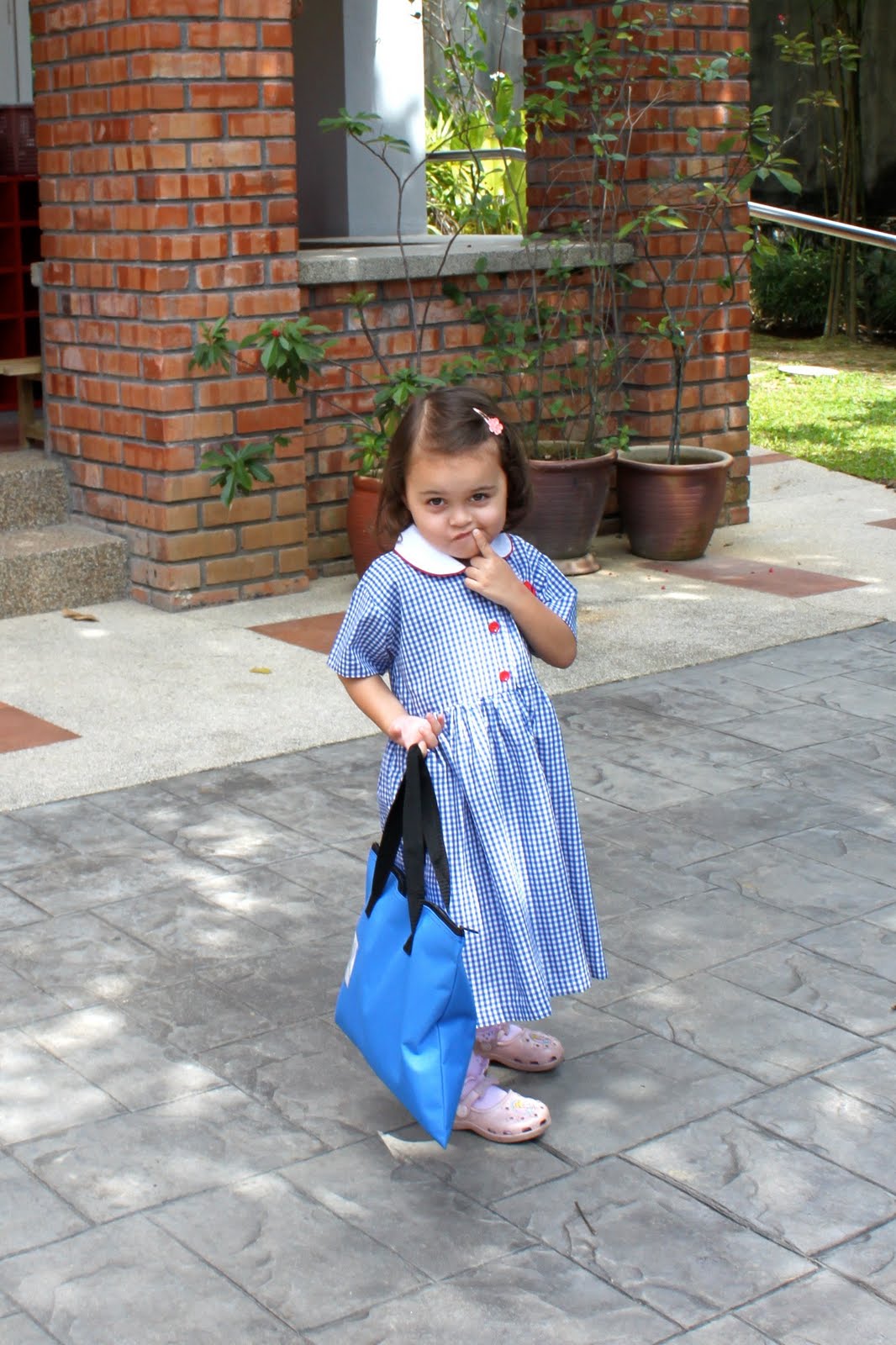
She communicates well with all her teachers and happily takes part in all the activities. She interacts well with the other kids but she has yet to make a best friend in class. She raises her hands to answer questions and always gets the answers right. She loves going to the school library and borrowing a book. Maya is compliant with wearing the school uniform and socks everyday, even the PE uniform which is a round neck white tshirt and plain red shorts. As you may know, this is not an outfit that Maya would ordinarily want to wear.

Last week was Maya’s first exposure to science and she learnt about soluble materials. She listened to the teacher’s instructions and carefully did her experiment without any help from the shadow aide. She was extremely excited and told me all about it after school “Mummy, I made a soluble!”
Maya has always loved music and dancing, but as this was her first time with a new music teacher I was naturally apprehensive. There were also more children there, the acoustics of the room was louder and more echoey and the format was different. I peeked in and saw Maya happily joining in on the fun, dancing around the room with the other kids, waving a handkerchief on a stick in time to the music. Later on in the car, Maya said to me “I did a handkerchief dance, Mum! The music teacher’s name is Ms ****”
The school had organized a field trip for Maya’s class to the fire-station. We were keen on Maya joining in all the activities and our ABA team helped prepare Maya for this big adventure. As much as I wanted to expose Maya to the real world, I was still apprehensive about the school trip. She had never been anywhere without us before apart from with her grandparents. She would be going on a big schoolbus with 25 other kids. Even though she will be accompanied by her shadow aide, I worry about the strange environment, the many kids and the fact that Maya had never been on a bus before. Also, she has had a lifelong fear of men, we were not sure how Maya will react to the firemen.
We were told that Maya really enjoyed the bus ride and the singing with the other kids. She made immediate friends with other girls that were in the other class (same age group, but different class). She listened carefully to the fire safety lecture by the fireman and watched a demonstration of the fire extinguisher. She did not want to climb on the fire truck but most of the girls didn’t, mostly the boys did this. She didn’t want to try on the fire helmet either, but neither would I, who knows how many sweaty smelly heads it’s been on!
When the firemen demonstrated how they slide down the pole, she told one of the fireman to do it again! And she also tried out the water hose with a little bit of help from the friendly fireman. It was hot, noisy and strange and my daughter took it all in stride. Not only did she conduct herself well, she also enjoyed herself. It was a big big milestone for us, words cannot express how proud we are of Maya.
Today, we extended the school time to 2 hours. It was her first time with a new subject, Mandarin. The school has a multi-lingual curriculum, English is the primary language however there is a Mandarin class every day. There are always 2 teachers in the class, one who speaks and teaches in English and another teacher who only speaks in Mandarin. However, for students whose parents do not wish to emphasize on Mandarin language skills, the school has a more relaxed policy for those kids.
There is also a Bahasa Malaysia class 3 times a week, but we will introduce Maya to that a little bit later as the time of the class is not suitable right now. A year ago, Maya could barely even speak English, now we’re introducing her to a 2nd language and soon a 3rd language! Even though Maya is half-Malay, I have never spoken to her in my mother tongue. Unfortunately, due to her language delays, it was better that we only speak in one language so as not to make it harder for her to learn how to speak.
However, because we live in a multi-cultural city, Maya has been exposed to many languages. She hears me talking in Malay to my parents, our maid speaks Filipino to her friends, we hear Chinese and Tamil spoken on the street every day. One of the many joys of living in multi-lingual Malaysia, many of us speak 2nd and 3rd languages. So I assume that she won’t be fazed by a strange language. Right enough, Maya really enjoyed Mandarin class. She has excellent intonation and could pronounce all the words really well, said her teacher.
Our immediate goals now will be to extend her school hours till she is able to attend the full session everyday. And gradually we will phase out the shadow aide. Our ABA team has done a wonderful job preparing Maya for this big transition. They continue to support us daily by brushing up on skills that Maya has never been taught before yet are essential in a typical school environment. A comprehensive ABA program combined with intensive biomedical treatments have brought us here, we are closer and closer to recovery every day. For a child who was diagnosed with Autism 1.5 years ago, Maya is definitely proof that Autism is Treatable. There is always hope of recovery.
In Speech and Drama class last week, all the kids made a little speech about what they did during the holidays. Maya listened carefully to all the other kids’ stories and listened to the teacher’s instructions. Her shadow aide did not prompt or assist Maya in her speech, all she told Maya was that soon it will be her turn to make a speech. When it was Maya’s turn, Maya talked about our holiday in Sabah, how we all played and swam in the pool and when we saw the orangutans! It was all unprompted and completely accurate. Her class teacher, the drama teacher and the shadow aide were there and they were amazed by how eloquent Maya was.
Later that day, Maya told me “I made a speech today, Mum! Ms Lizzie is my favorite teacher!” We went to Sabah in December, 2 months ago. It was gratifying to know that the effort and cost of going on family holidays was memorable to our little girl. I pray that she has many h
appy memories stored away in her mind, hopefully one day she will tell us all about it. I hope we will continue to fill her memories with good ones, may the bad ones be long forgotten in her mind.

>Which Probiotic?

>

When choosing a broad-spectrum probiotics, it is best to get one with multi-flora rather than single strain. The refrigerated kind are recommended rather than on the shelf. However, even if you do purchase unrefrigerated ones, do store it in the fridge at home to maintain freshness and potency of the live cultures. As most ASD kids are on the GFCF diet, make sure that your probiotic is a casein-free source. Most probiotics are cultured on dairy unless stated otherwise. Specialist GFCF probiotics do cost more however it is worth spending extra money on a quality probiotic.

The usage of probiotics in biomedical intervention Autism Spectrum Disorder is one of the first few supplements to start your child on. The benefits are too many to write here, please see Dr Kurt Woeller’s blog on the benefits of probiotics here http://drkurtwoeller.blogspot.com/2009/06/probiotics-growth-promoting-factors.html


Here are some of the probiotics that I have tried;

1. ProBio Gold 20 Billion CFU multi- we initially used this, it made a great difference because my girls were really low on beneficial bacteria. But after extended use, it doesn’t seem to be as effective and cause constipation for my girls. Contains 4 types of Lacto, 1 type of Bifido and 750 million CFU strep


2. Klaire Labs Therbiotic Complete 25 Billion CFU- contains more strep than Probio Gold but seems to be better tolerated mainly because it has more Bifido strains (Probio Gold only has 1 bifido type) Contains 7 Lacto strains, 4 Bifido strains and 1 Billion CFU strep.


3. Klaire Labs Therbiotic Detoxification Support 50 Billion CFU – high potency probiotic (not broad spectrum) specific for detox support. Has 2 types of lacto and 1 Bifido.

4. Klaire Labs Therbiotic Factor 4 10 Billion CFU- contains only Bifido (4 types). As an add on formula for those who require extra bifido especially helps with constipation.

5. New Beginnings Probiotic Support Formula 20 Billion CFU – multi-strain probiotic with added S.Boulardii. No strep included, contains 4 Lacto strains and 2 Bifido strains and 2 Billion CFU S. Boulardii. It ships out from manufacturer without refrigeration, however recommended to store in the fridge. GFCF compliant.

6. Three Lac – this is a proprietary blend of probiotics and other ingredients, usually used as a natural treatment for anti-fungals. However, it did not have much effect on my girls.

7. Culturelle – contains Lacto GG, good to kill clostridia in most kids. It is very effective in keeping clostridia from recurring. Though it contains very minute amounts of casein, it is generally beneficial to most kids.

8. Sacchromyces Boulardii – it’s a probiotic type of good yeast, that fights the bad yeast.

9. Klaire Labs Biotagen- this is a prebiotic, it encourages implantation of good probiotic as well as natural regrowth. Some children may not be able to tolerate this formulation due to it’s effect in raising sulfur levels, this is child specific.

All of the probiotics have been helpful and effective in some manner with my girls. There is no real favorites here as rotating it seems to work best for my girls. Currently we just started using New Beginning’s Probiotic, there doesn’t seem to be any amazing improvements, but neither is there a bad reaction. Most kids are ok with strep strains in the probiotic blend, however this is child-specific. For my girls, it seems that continued use of Probio Gold and Therbiotic Complete has built-up the strep levels to the point where it affected them, usually tummy ache, constipation, irritability etc. The strep strain here is Streptococcus Thermophilus which is actually a good probiotic, but some children may not be able to tolerate prolonged dosages of it. When first starting biomed without a DAN doctor, you can choose Probio Gold as it is GFCF, has a good range of probiotic strains, it is high potency and it is easily accessible from our specialist retailers in Jakarta and Singapore or to purchase online. 20-25 Billion CFU is a good amount for ASD kids. However, if your DAN Doctor carries a range of Klaire Labs products, then I would recommend Klaire Labs Therbiotic Complete. Klaire Labs products can only be ordered by a doctor, if your DAN doctor does not carry this or if you do not have a DAN doctor, you can try to persuade a local doctor to help you order this from http://www.klairelabs.com directly. However, if you suspect that strep might be an issue, then please find alternative types.

It is recommended to rotate probiotics, by rotating I mean finishing 1 bottle, and for the next bottle to purchase a different type. Not rotate on a daily basis. I would not recommend New Beginnings Probiotic for beginners to biomed as your child may probably not be ready for anti-fungals just yet. However, once you are ready for anti-fungal treatment, then you may try this. Again, this is dependant on whether your child can tolerate S.Boulardii. For higher potency probiotics – VSL#3 is a very high potency multi-flora formulation usually to treat severe gut issues such as ulcerative colitis and Crohn’s disease. It is also beneficial for those diagnosed with Inflammatory Bowel Disease and with high oxalates. Please use this under the supervision of a medical doctor.

There are other probiotic in the market, do not limit yourself only to my list. There is no perfect probiotic that I’ve found (so far) it’s best to rotate and observe which ones is more suitable for your child. Probiotics is high on my list of essential supplements for both my girls.

>Biomedical Treatments For Autism Spectrum Disorder

>

KL Biomed Invites You To:

A PRESENTATION BY DR RINA ADELINE, MD

A DEFEAT AUTISM NOW! DOCTOR


Time: 7:30pm – 9:30pm

Date: Tuesday, 9 February 2010

Refreshments will be served

Venue: Level 5, Matahari 2, Cititel Hotel @MidValley, Lingkaran Syed Putra, 59200 Kuala Lumpur


Registration Fee: RM100.00 per person

Family & Friends Special Offer:

Register for 2 attendees for only RM180.00

Register for 3 attendees for only RM270.00


About Dr Rina Adeline, MD

Dr Rina Adeline, MD, Dr.MS, Sp.MK is a dedicated member of the Autism Research Institute (ARI) and is trained as a Defeat Autism Now! (DAN!) Doctor. She is a Medical Doctor with a background in Family Medicine. She lectures at the Dept. of Microbiology, Faculty of Medicine, University Padjadjaran, Indonesia. She is head of Klinik Intervensi Biologis Medik, the clinic specializes in treating children with Autism Spectrum Disorder (ASD) and other related disorders. Dr Rina has treated over 1000 children with ASD. She has completed the following training with Defeat Autism Now! Completed Level I Clinician Seminar 2007, Completed Level II Clinician Seminar 2008, 2009.

What Is Biomedical?

Biomedical Intervention is an alternative treatment for Autism Spectrum Disorder and other related disorders. It seeks to treat the root causes of the disorder with vitamin supplementation and dietary changes. Find out the causes of Autism and the Interventions that can help. For more information on biomedical treatments, please visit www.autism.com

If you are a parent or a professional involved in the care of a child diagnosed with Autism, ADHD, PDD-NOS, Aspergers, Aspraxia and other related disorders, this presentation is for you.

“I would like other families to know that Autism is treatable, reversible, and in some cases curable. There is hope for any child, no matter how severely afflicted. All children, with intensive biomedical protocols, can improve and enjoy a better quality of life.” – Claudia, USA

To Register

Please RSVP by 2 February 2010. Register early, limited seats available. This event is for adults only. To register, please email us your name(s) telephone number and email address to klbiomed@gmail.com Payment details wil be sent out to you when you register.

>Bargain Hunters

>

A parent’s role in biomed requires us to move with caution, act with bravery and yet, race against time. Biomed, like everything else in Autism is a tough journey, full of dangers, pitfalls and requires deep pockets. It requires full family participation and you’re expected to hit the ground running. We need to be smart shoppers, compare prices and source alternative suppliers. In the end, we turn into procurement and sourcing experts.

In Malaysia, we have several options on where to source supplements. Mind you, it is a little bit harder to get, but the results are well worth it.

Option 1 – Purchase from your DAN practitioner. Depending on who your doctor is, he or she may be able to supply most of your supplements. Some doctors only supply Tier-3 supplements. Some doctors do not carry any supplements at all, some may depend on delivery and stock availability. Provided that you are able to travel regularly to where your doctor practice, this may be the most convenient option as it takes away the hassle of sourcing your own products. Some doctors are able to take credit card payment, otherwise cash flow may be an issue for some.

Option 2 – Purchase from a retailer. In Singapore, Back2Basics carries a good range of supplements from several trusted brands. They also sell food items and organic cleaning products. Visit them at www.b2bdiet.com.sg In Jakarta, Kedai Radita carries Kirkman’s and a few select brands. Please contact the owner Pak Agus for details at bagina@cbn.net.id . Both these 2 retailers are not able to deliver outside of their city/country. Cash terms only, no credit card facility with either shops. However, Back2Basics offers NETS payment facility for those who have a Singapore debit card. For those who are able to travel regularly to Hong Kong, please check out www.littlegianthk.com . Some countries may have higher taxes and duties, this will affect the cost of the product.

Option 3 – Purchase online. There are a few online stores especially in the United States that carries a huge range of supplements. This online store www.spectrumsupplements.com delivers directly to Malaysia. Their prices are competitive and they offer good rates for international deliveries. There may be other retailers, however you would need to do your own research and contact them directly regarding delivery. For certain specialist products from certain companies that are not able to deliver directly to Malaysia, you can overcome this by setting up a hub account. There are services that creates a USA mailing address for you; you then have the products delivered to the address provided by the Hub service. In turn, the service will then post it to you. This will incur additional delivery costs and may take a longer turnaround time. But it’s invaluable for certain niche products that you are not able to get elsewhere. Visit www.vshub.com for details. With any international deliveries, you are subject to Malaysian customs inspection.

I generally do not recommend purchasing online any supplements that require refrigeration. Even though the company may provide ice packs and insulated packaging, I worry that in case of undue delays especially at Malaysian customs, the ice may melt in the meantime and you end up with a product that has lost it’s efficacy and stability due to our hot tropical climate.

When shopping for refrigerated products, do bring your own insulated bags and ice packs to ensure you maintain the potency and freshness of your products. Some doctors and retailers may provide it, however they usually run out of stock.

When purchasing directly from the doctors or retailers in neighboring countries, it’s advisable to bring supporting documents eg. test results or doctors prescription when crossing the border or flying through the international airport. In the event where a customs official question you on the many many bottles of capsules and tablets, you’ll need to show proof that it is for personal use and not for resale. So far, I have traveled by plane as well as driven across the Malaysia/Singapore border with no issues at all. But, just in case…..

Depending on your budget, time and travel arrangements, there are many options to choose from to suit your requirements. There are pros and cons to every method. I urge you to compare prices and source your products wisely. Price is not the only factor, dependability and the quality of service provided bears heavily in my mind whenever I shop for supplements. Obviously, it is not as convenient as popping over to your local Giant hypermarket, however nothing in Autism is ever easy or cheap. However, do not let this be an excuse not to pursue biomedical treatment. There are far bigger hurdles to overcome. It’s just part of the daily struggle and challenges we face daily in trying to recover our children.

By sourcing your own products, you’ll also find different formulations eg. magnesium comes in capsules, liquid AND soluble powder, at different potency, taste and texture. This way, you have the freedom to choose which formulations suits your child’s taste and preference. Your doctor or preferred retailer may only carry one type, however you’ll soon find that there are many choices out there.

I know many enterprising parents who actively source out the cheapest discounts straight from the distributors. Some are kind enough to insist that the distributor extend the discounts to their friends. Some parents purchase huge 25 kg bags of Epsom Salts and distribute it to friends, just because it’s such a hassle to purchase little 300mg bags all the time and the stores are always running out of stock. Some parents are conscientious enough to purchase supplements on behalf of friends when they are in Singapore or Jakarta. This is a harder task than it looks, their minds are often racing thinking of their own purchases for their own children and need to focus on this task. Yet they still take the time to help other parents in need. Oftentimes they use their own money upfront and take great care in ensuring the orders are right. Other kind parents constantly purchase supplements for friends when doing their own online orders. Not only that, they use their own money upfront first and bear the risk associated whenever customs officials question them. They rely on the fact that these friends will pay them back. The trust and kindness extended by these parents are much appreciated. Some people call them Autism Mom Bargain Hunters, I call them my friends.


>Prioritizing Treatment

>

Children with Autism Spectrum Disorder and other related disorders usually present a variety of underlying medical issues. Food intolerance, nutritional deficiencies, impaired detoxification, metabolic disorders, multiple infections, mitochondrial dysfunction, inflammation, oxidative stress, leaky gut, high toxic load, damage caused by heavy metals, immune dysregulation, multiple gut issues, blockages in neurological pathways and dysfunction in multiple biochemical pathways to name a few. Both my daughters have a combination of the issues I listed above in differing severity. And they each have a unique treatment plan and different sets of priorities. By addressing all these issues, we find that our children’s behavior, cognition and attention improve as well as a reduction in Autistic behaviors in Maya.

There is no 1-size-fits-all protocol in biomed, both my girls are unique and presents a different set of challenges. In view of the many issues to address, I prefer to work with a trusted DAN doctor who can provide an intensive and comprehensive treatment plan.

Due to the many issues that needs to be addressed, it makes sense that there is no 1 cure-all pill either. Commonly, we end up with 20-25 supplements a day! However, this list of supplements is ever revolving, the supplements and dosage may change according to which protocols are implemented and how we prioritize it. And we definitely do not start on all 20 supplements straight away. Each child has a different set of supplements and priorities, depending on clinical observations, historical findings, test results and parents’ feedback. Please consult with a trusted DAN practitioner as well as do your own research on this.

I usually introduce only 1 new supplement a week. In my personal experience, this seems to be the best method for my two girls. Some children are able to start and tolerate new supplements quickly, however going slow and steady has been most effective for us. Whenever we introduce too many new supplements at a faster pace, we usually experience intolerable side-effects and sometimes regression. This would eventually slow down the progress because we would then need more time to adjust the protocol and wait for the side-effects to subside. I would start with a lower dosage, perhaps 1/2 or even 1/4 depending on which supplement. And every 3 days I will increase the dosage slightly. Our child needs to get used to the taste and texture of the supplements. Some of them tastes horrible, also most children with ASD have very sensitive taste buds due to their sensory issues. Their body also needs time to build up tolerance to the full dosage. Most importantly, we need to observe for any improvements, side-effects and regression. Please remember that when taking any supplements, it causes changes in their body. Preferably good changes. However, we are not able to accurately predict how a child will react to a supplement or treatment until we try it.

I prefer to only purchase 3-4 new supplements per month. Because this is the maximum number of new things that I can try on my girls safely. Her reaction, whether good or bad, will determine the next course of action. Her reaction will give you a clue as to what the next step or protocol you should start. All of Maya’s positive reaction to a treatment gave me and my doctor further clues as to what works best for Maya. All of the negative reaction such as intolerable side-effects or regression gave us clues for other underlying issues she may have that we were not able to detect earlier.

Most children undergoing intensive biomedical intervention may end up taking 25 supplement eventually, however I would not buy all 25 at a time. This is counter-productive, because the list of supplements may vary. The next batch of supplements you add on will depend on your child’s reaction to certain supplements. You will need to work closely with your DAN doctor and provide him with regular updates. However, if you have already purchased all 25 supplements, and you are not sure what to start with, please consult your doctor. Please discuss with other parents and learn from their experience. Sign up to the KL Biomed forum, there you can post queries as well as learn from previous posts by other members.

When we first realized the extent of the damage and underlying medical conditions that we needed to address with Maya, our first questions was where do we start? How do we start? How do we prioritize which supplements or protocols to start with? We have several DAN doctors who provide crucial guidance and sets down the protocols, however it is still my responsibility to ensure that we execute it well.

With both my girls, I started by putting them on the GFCF diet. Then I introduced the basic supplements one by one. For the first 2-3 months of biomed, I started my girls on basic gut and nutritional supplements. Such as Vitamin C, B6 & B Vitamins formulations, calcium, magnesium, zinc, probiotics, 2 types of digestive enzymes, cod liver oil, epsom salt baths and L-Glutathione lotion. The sequence and order would differ according to each girl’s unique issues. After we have safely implemented those basic 12 supplements, only then were we ready to start other protocols. In my personal opinion, anti-fungals and anti-virals should not be implemented until you are in Month 3. I needed to have the basic s
upplements in place first, as this prepares the body for future treatments. If you don’t have a solid foundation, you may find that you are not fully optimizing the supplements and may not achieve the desired results. If you do not lay down a proper foundation, you may find that certain Tier 2 or Tier 3 treatments may have either no effect or worse, present an adverse effect instead. The first 2-3 months is crucial, the GFCF diet and 1st Tier supplements lays the ground-work for future more intensive protocols. Future protocols that use Tier 2 and 3 supplements includes anti-fungal, anti-bacterial, anti-viral, methylation products, amino acid supplementation, mitochondrial products, leaky gut protocol, detoxification, chelation and others.

I research each and every single supplement before I give it to my girls. I double check that the ingredients are safe and the dosage is correct. I also make sure that it is appropriate for this stage of my child’s treatment. We want to make sure that we maximize the benefits of these costly supplements, making sure which supplement can be safely taken with which. And which ones should be taken far apart from the other. Some supplements should be taken together as it provides a synergistic reaction. Some supplements should be taken separately, as one may cancel out the other. Or worse, react badly with each other.

Today, Maya takes 23 supplements, 1 injection, 1 bath and 2 lotions every day. This comes up to 30 capsules, 1 and 1/2 teaspoon of powdered formulation, 10ml of liquid, 2 grams of cream and 1 cup of Epsom Salts daily. If you lined up every capsule, it would be a very long line indeed. And Yasmin has 20 supplements, 1 injection, 2 creams and 1 bath a day. This comes up to 26 capsules & tablets, 10ml of oral liquid supplements, 1 teaspoon of various powdered formulations, 2 grams of transdermal cream and 1 cup of Epsom Salts. That’s a lot of supplements to take. And it requires constant effort to ensure that both girls take them all. Because a majority of the supplements are included in their milk bottles, we sometimes feel like we’re a bartender, always mixing different cocktails every day. My husband pretends that he’s Tom Cruise in the movie Cocktail. He sure knows how to shake a milk bottle…..


>ATEC Score

>

The Autism Treatment Evaluation Checklist (ATEC) was designed for parents, therapists and doctors to evaluate a child’s response to a treatment. It is also commonly used by parents as a tool to track the progress of their child.
I have done this several times for Maya. This was a good way to track Maya’s progress, it gave me actual scores of where Maya was at that moment. The tests scores can range from 0 to 180. The higher the score, the more impaired the subject. A score of 0 indicates a child who is indistinguishable from other neuro-typical children. If you are concerned about the accuracy of the scoring, you may choose to have others such as therapists, spouse or someone close to the child do the ATEC. You can then compare the scores.
The ATEC is not meant as a diagnostic tool. In order to do a comprehensive assessment and obtain a diagnosis for your child, please contact a healthcare professional. You may do the ATEC evaluation online at http://www.autism.com/ari/atec/atec-online.htm
Maya’s ATEC scores was 100 in February 09, 35 in July 09 and 25 in December 09. Both Paul and I did this separately and we both came up to pretty much the same score. Please see below for Maya’s ATEC scores;

ATEC

Feb 09

Jul 09

Dec 09

Speech / Language / Communication

15

n/a

0

Sociability

22

n/a

3

Sensory /

Cognitive Awareness

22

n/a

2

Health / Physical /

Behavior

41

n/a

20

Total

100

35

25

I am overjoyed at the scores. We will continue with biomedical treatments and ABA. However, early next year we will place Maya in a typical kindergarden with a shadow. She will gradually increase her attendance from part-time to full-time. We hope that Maya will integrate well and will no longer need a shadow. How long we will need to continue with ABA remains to be seen.
From 100 down to 25 within 10 months is amazing indeed. Today, Maya is a much happier and joyful girl compared to last year. Who knows what next year will bring, but I’m sure Maya will continue and progress. We’re on the road to Recovery. She is my Warrior Princess.

>The Year That Was…..

>
Coming up to the new year, I get very introspective of the past events in this last 12 months. Instead of coming up with new year’s resolutions, I choose to remember the highlights and achievements of 2009.


1 week ago, we went to a little girl’s birthday party. Previously, Maya had the most intense fear of birthday candles. Birthday parties were always a nightmare, she would cry and scream at the crowds. Whether it’s her own birthday or going to other children’s birthday parties. Previously, Maya had never blown out the candles on her own birthday cake, ever. Last week, for the very first time in her life, she blew out the candles on the cake on behalf of the birthday girl.

Last year, Maya couldn’t even make a simple 1 word request. She would instead cry or tantrum and we would have to figure out what it was she wanted. The progress in 2008 was very slow. She eventually managed to make 2 word requests. “More milk”, “Chocolate cookies” and “Daddy fix” by the end of last year. However, this year, her language and communication skills have made a huge leap. She can now talk in 9 word sentences. She can talk in 3 back to back sentences. And she has proper chats with us with back and forth conversation. Her pronounciation and articulation is at the level of a 7 year old. She can articulate her needs and feelings at age appropriate level. She made 1 1/2 years progress in speech within 7 months, her therapists, doctors and us are all amazed.

She has lost many of the stims and behaviors typically seen when she was initially diagnosed with Autism. She no longer walks on tip toes, the echolalia has stopped and she has very few tantrums. She is now able to tolerate loud noises and strange places. There is less fear of strangers and she is able to play with other children. We can take her to other people’s houses or to social events without her having a complete meltdown. She is able to concentrate and finish a task. She is no longer hyperactive. When going out, she doesn’t run away but stays close to me. Some of the behaviors relating to sensory processing issues have reduced, she no longer mouths and lick objects. She can also tolerate loud noises such as a busy airport or the sound of construction work.

Maya’s sweet nature is now showing through. She is very polite and has beautiful manners. She says please and thank you and is very affectionate. Maya is gentle and caring. She can now have short conversations on the telephone. She can grip a pencil properly now and able to make age appropriate drawings. She is currently learning how to write the alphabet and learning to read. She can spell and write her name. She can count to 100. She learnt how to drink from a straw 4 months ago and is now able to feed herself with a spoon. She can now hold a cup and drink by herself without spilling it. We finally managed to toilet train her when she turned 4 years old. And she requests nicely to go to the bathroom and so far has only had 2 accidents. After a life-long phobia, she can now tolerate taking medicine from a syringe.

She has learnt how to play simple games on the computer and able to use the keyboard and mouse properly. She has learnt many card games such as Uno, Snap and Happy Families. Uno is her favourite game and she’s pretty good at it too. She can play simple board games too. Maya now enjoys playing with her sister Yasmin. These days, the 2 girls are happy to play together and make up little games to play. She has learnt to appreciate and understand so much more now; previously when we went to the zoo, she would be concentrating hard on the toy she’s holding and not aware of the animals in front of her. Now, she loves going to the zoo, night safari, butterfly park and bird parks. Her eye contact previously was fleeting, it was very hard to get her attention. She had a very short attention span and seemed to be lost in her own world. Her awareness and cognition has improved immensely. Previously we’d be calling her name and she would not respond. Now, whenever we call her, she says “Yes, Mummy” and looks us in the eye.

She has some very girly interests now; princesses, ponies, fairies, mermaids, ice skating, baking cookies, castles, flower gardens, tea parties, wedding gowns and other pink sparkly things are her absolute favorites.

We struggled with daily chores like getting her dressed, wearing shoes, going to school and learning to toilet-train. It was a struggle every day getting her dressed. She would tantrum whenever she had to wear clothes. She also had an obsession with ballet tutus and would insist wearing it every day. She then developed a fancy to wearing princessy dresses and would wear it even to bed. She preferred wearing sleeveless string tops and skirts. She hated wearing pyjamas. Now she wears only the softest prettiest nightgowns I can buy.

Certain key supplements and biomedical treatment made a big impact in certain behaviors and skills. Once we started her on TMG in October, she started tolerating wearing tshirts and pants without any fuss at all. TMG also helped her with toilet training. Her language and cognition made the biggest progress the moment we started her on MB12 shots in July 2009. She started making 1 word requests the first week of starting the GFCF diet. Her hyperactivity and constant climbing and jumping stopped once we started her on anti-fungal treatment. She used to scratch her bottom and bite her toenails, that stopped once we addressed the skin and toe fungal infections.

She used to cry every time we dropped her off at school for the first 3 months. Now, she absolutely loves school. Music class is her favourite subject and she loves doing Arts and Crafts. Previously, going out with her was an ordeal. Now, she is a joy to be with and behaves well. We can now take her shopping, to friends house and to many other places with very little stress.

Recently I asked her what she did in school. She replied “I played Uno!” What else did you do I asked. “I did Arts and Crafts. And music class with Ms Phoebe!” What did you sing in music class? “Hannah Montana! Hannah Montana has an acoustic guitar! Miley Cyrus is a girl. ” Then I asked what she had for lunch. “I eat chicken…… not sausages.” When I checked with her teacher the next day, the teacher confirmed that all of the above were correct. The teacher also said that Maya had chicken f
or lunch yesterday, but she had sausages the previous day.

We baked christmas cookies and cakes recently. Maya said “Mummy, what are you cooking? You’re a good chef Mummy. I am a waiter!” She loves helping me in the kitchen. She helps to stir the batter, brush margerine on the cake tins, places the muffin paper cups into the tin, spoons the batter into the cups. Then she gets to decorate them anyway she likes. There’s lots of rainbow sprinkles, silver balls, sugar flowers and chocolate buttons.

A couple of weeks ago, Paul and I were in our room. Maya came in dressed in her current favorite white dress and wearing a little wedding veil on her head. She said “Look mummy, I’m a wedding girl!” I asked her who she wanted to marry, is it Prince Charming? And Maya said “No, I’m going to marry Daddy!”. I had a sudden flash forward then; I could picture in my mind Maya walking down the aisle and getting married. Someday, my little girl will grow up and fall in love, get married, have children of her own and lead a happy life. We are very proud of her indeed.

When we first received Maya’s diagnosis, we despaired that we may not be able to help our child. Our main concern was the mistaken belief that Malaysia may not have the resources and services compared to other developed countries. We felt pressured to move to Australia, the UK or USA. It took a little bit more effort, but we managed to overcome any challenges that came our way. Being a Malaysian and living in Malaysia did not stop me from helping my child. It wasn’t easy, but nothing in Autism is easy. Malaysia Boleh!

A combination of intensive biomedical as well as intensive ABA has shown us tremendous results. When we first started ABA, we were warned that ABA will turn our child into a robot. That her speech and behavior modification will be stilted and robotic. We were told that ABA methods were unnatural, that it was like training a dog. When we first started biomedical interventions, mainstream medical doctors would try to discourage us from it. Claiming that it’s unproven, it’s nonsense, that we’re wasting our money, that it will not help at all. How wrong they are…… We experienced utmost kindness, patience and dedication with our ABA team. ABA has shaped her skills and abilities. Maya’s speech is very natural, she is full of joy and life. She is certainly not a robot. Biomedical treatment has made amazing improvements in Maya’s health and behavior. We would not have achieved such rapid progress with ABA without the help of biomedical treatments. These two interventions complimented each other.

We couldn’t have done this without the help of our hardworking ABA therapists, our DAN doctors and the support of family and friends. Although 2009 has been an incredibly challenging and stressful year, it has also brought us much satisfaction and happiness. We feel that we have our daughter back, that she is no longer lost in Autism. Maya is not yet Recovered from Autism, however we truly believe that soon she will lose the ASD diagnosis. It’s so close I can smell it. We are on the way to Recovery and we hope that next year be filled with more love and joy. Happy New Year!


>Relaxing the Diet

>
We had an amazing holiday in Sabah recently. Yasmin loved the water slides, Maya really loves the flowers in the garden and both girls climbed trees. We went on a boat ride and visited the sea gypsy villages on the river. Maya loved fishing for crabs, she caught one and named it Pinchy the Crab. And the highlight of our trip was watching the orang utans in their natural habitat.

It was the first time that the girls did not fall sick whilst on holiday, neither did they fall sick after coming back. Most importantly, we took a bold step by relaxing the girls’ strict gluten-free and casein-free and low sugar diet.

Maya has been on the GFCF diet for 1 1/2 years and Yasmin has been on it for 1 year. Also, we have made tremendous progress in Maya and seen some improvements in Yasmin. Thus, we conclude that their gut and bodies have healed to a certain extent. My strategy was to allow the girls to eat gluten and casein and sugar, while making sure they have digestive enzymes too. And to observe for any changes or regression.
Maya was in absolute heaven, she had coco pops for breakfast, she had a choice of fresh breads and buns from the breakfast buffet. She chose a different flavor of yoghurt every morning and we would buy an ice cream or a lollipop from the shop at teatime everyday. She was loading up on wheat based carbs, dairy and sugar – all the things she has missed for so long. Yasmin just loves her coco pops and gluten toast for breakfast, but otherwise was happy to stick to her usual diet. We make sure that they have a relatively healthy lunch and dinner with lots of protein and vegetables, it’s not all junk food:-)
We would pre-mix a container with Kirkman’s Enzym DPP-IV and Kirkman’s Phenol Assist with juice. Every-time the girls ate, we would have a syringe handy and just squirt it in. We did this for the entire 5 days holiday. The other resort guests would stare at us when we brought out the giant 20cc syringe and feed the girls that way. They must think we’re nuts. We also made sure they had all the other supplements as well.
They both slept well, had daily bowel movements and there was no meltdowns or behavior changes. Previously, any infractions to the diet would result in sleep issues, constipation, increased yeast behaviors and tantrums. I assume this means the girls’ gastrointestinal health has improved especially their leaky gut. All the supplements that we have been giving religiously for the past 1 year has made a huge impact. However, now that we’re back at home, we will still continue with the GFCF diet. The diet is the cornerstone of biomedical intervention; in order for the other supplements to work optimally, we need to have the diet in place.
We have fond memories of Sabah and Maya keeps saying she wants to go back there. It’s a magical place full of yummy bread, multi-flavored lollipops and endless ice-cream.

>Sleep Issues

>
Sleep issues are a common problem in children with ASD. Lack of sleep, late bedtimes, difficulty falling asleep, night terrors, recurrent night awakenings, laughing or talking when waking up at night, light sleeper, broken sleep, insufficient sleep hours according to age-appropriate levels, prolonged daytime napping especially for children older than 4 years old perhaps and other common sleep issues. This affects the child’s development and behavior. Sleep issues also affect siblings who share a room. Subsequently, parents are also affected by the continuous nights of broken sleep. Broken or lack of sleep in adults can lead to depression, irritability, stress, affects our ability to cope and think, it affects our work, home and life in general.

Maya had sleep issues from the day she was born. A newborn usually sleeps 20 to 22 hours a day, Maya was awake for 12 hours a day for the first 3 weeks of her life. During the day she would fall asleep for 20 minutes than wake up howling and screaming. An hour later she would sleep for another 15 mintues and so on all day long. She would wake up every hour at night to be fed until she was 2 months old, it improved slightly as she grew older. We would take 1 hour just to get her to sleep, by rocking and cradling non-stop. She managed to go to sleep by herself and sleep through the night when she was 1 years old, this lasted for 12 months. A whole year of uninterrupted sleep for Paul and I, however during the day we still had to deal with her increasingly difficult behavior.
However, the night terrors and broken sleep started when she was 2 years old. She would alternate between inconsolable crying and screaming one night, and the next night she would wake up at 2am talking and singing to herself in the dark till 5am. We tried many techniques to get her back to sleep such as giving her more milk, changing nappy, rocking and cuddling, then not giving her milk in case it reinforced her sleep awakenings etc but nothing worked. This pattern continued pretty much every night for the next 8 months. At this time, Maya was 2y8m – she was diagnosed with mild to moderate Autism Spectrum Disorder.
We immediately put her on the gluten-free and casein-free diet. Incidentally her sleep improved, she would sleep 12 hours straight. Though the night time talking and singing would recur at times. Only when we started treating her gut issues especially yeast treatments that she now sleeps well through the night. We also found out that the girls would wake up if the room was too hot or too cold. We also refined her diet further by eliminating IgG reactive foods including soy and eggs, reducing sugar, artificial flavorings including MSG and colorings. We reduced allergens and dust accumulating things in their bedroom, ripped up the filthy wall to wall carpeting, boarded up the old centralized air conditioning duct which was moldy and the thermostat control was broken, installed an air purifier and a new air conditioner. We used melatonin especially in the first few months of early biomed, it helped but only to a certain extent.
In biomedical circles, sleep issues in Autism are commonly related to diet and gut disorders. Treating sleep issues include the GFCF diet, reducing food sensitivities, probiotics, anti-fungal, magnesium, digestive enzymes, melatonin, treating any gut issues including inflammation, constipation and reflux. Constipation, allergens, yeast overgrowth, food intolerance and illness are common culprits. It would help to reduce stimulating activities such as boisterous play and watching tv just before bedtimes. Not eating too close to bedtimes may also help as well as more physical exercise during the day.
Melatonin will help regulate our sleep cycle, however this is only a temporary solution. It will only help to a certain extent, it is not a substitute for healing the underlying medical reasons for sleep issues such as GI disorders. All the melatonin in the world will not help a child to sleep if the child is experiencing stomach discomfort, tummy pains, yeast overgrowth or allergic reactions.
Yasmin slept well throughout until her bout with Rotavirus. Since then, her night awakenings have been constant. Since the girls now share a bedroom, this is affecting her sister’s sleep too. Her sleep has improved considerably since refining her diet together with gut treatments. Most importantly, we dealt with her recurrent bacterial infections as this affected her sleep and other aspects of her behavior. She has slept well for the past couple of weeks uninterrupted, but last night she was up from 2am-5am talking and singing. Looking back, we realized that yesterday we took her out for lunch but not Maya and perhaps the food was prepared with MSG or something that affected her. Usually the girls only eat home-cooked food. Hopefully she will be ok tonight.
In the past 1 year, both our girls have had several night awakenings, but we could always trace it back to either eating too much sugar, yeast overgrowth, constipation, bacterial infections, infractions in her diet or due to illness such as cold, flu and fever.