>Joy Of Food….

>

We desperately want to address Maya’s feeding issues and low (nonexistent) weight gain. Maya is in the extreme lowest percentile in weight for her age. Her height though on the low side, however is not a worry for us as she continues to grow in height. Maya is 5y1m, Yasmin is 3y8m. Both are the same weight, that’s just not right is it? Neither girls put on weight for about 8 months each, at different times. Recently, they put on 1kg each, after 6 months of absolutely no weight gain. And the 1kg gain took another 6 months as they would lose the weight again and again after each bout of illness. I don’t even dare look at the weight and growth charts anymore, Maya has always been on the lowest percentile in weight ever since she was 6 months old. Though you wouldn’t have known it, Maya weighed 3.5kg when she was born, a very good weight indeed. Yasmin was a whopping 3.75kg at birth. But now both girls hover between 13.5-14kg for the past 6 months.

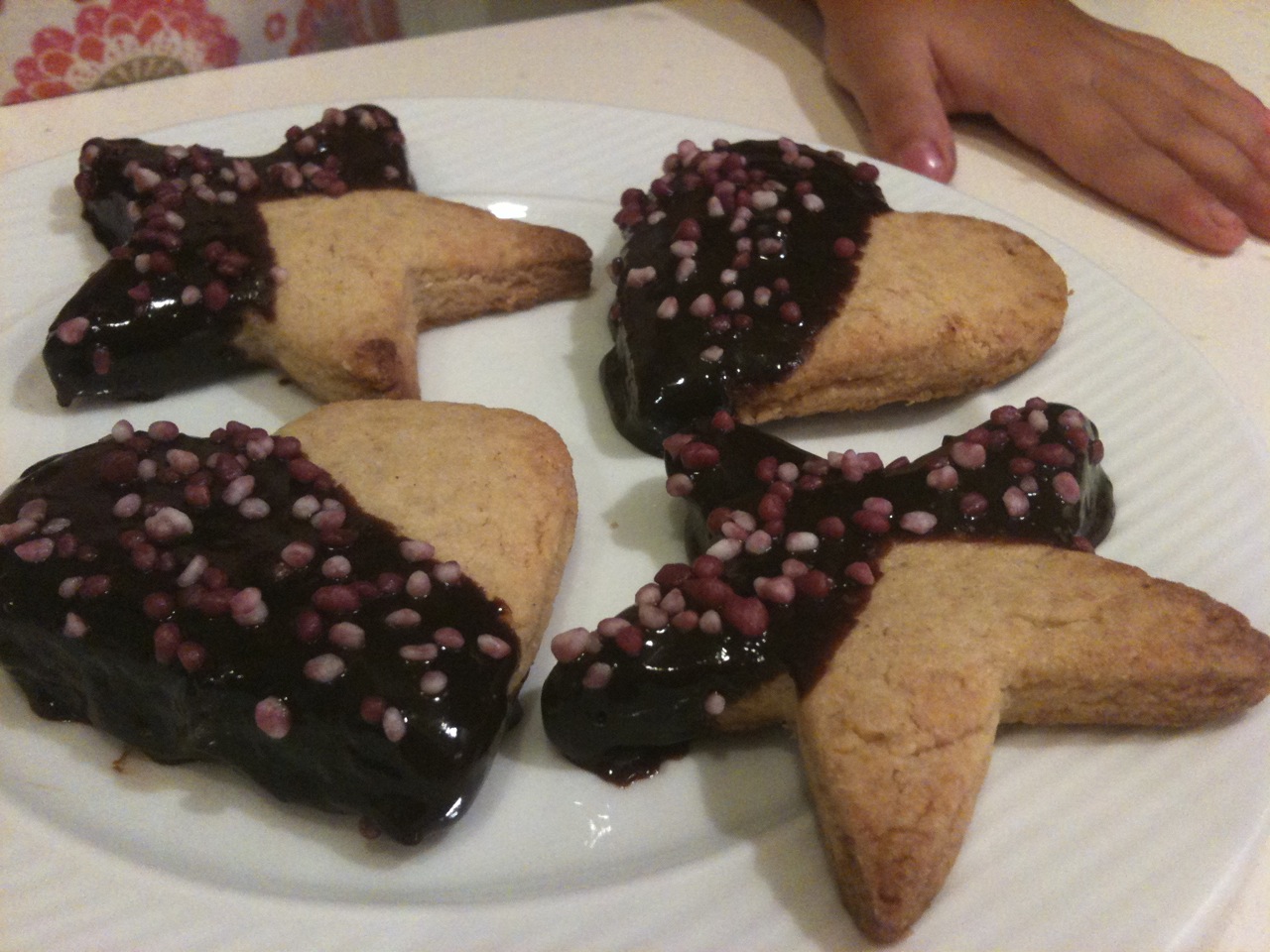
There are days when Maya absolutely refuses to eat, we are lucky to get her to eat 3 tablespoons of food the entire day. On rare occasions, Maya has a good appetite and though she still would not spoon the food herself, at least she doesn’t fight us when we feed her. Generally, mealtimes are incredibly stressful and frustrating. The photo above is one of those rare times where the girls are happy to not only eat, but also feed themselves. Though that’s mainly because their beloved cousin Abang Imron is there to eat with them. We found that having a friend or cousin to dine with helps to encourage them to eat along. Though during those occasions we usually run out of food, as I am so used to cooking small portions for the girls’ small appetites, other people’s kids usually eat a lot more. But I always happy to have the girls’ little friends over, we love having them come over to play and eat with the girls.

I am thankful everyday that we are one of the few lucky ones in the Autism world to have recovered our daughter. The ABA therapy, GFCF diet and tons of supplements have brought us to this point where Maya is in a mainstream school, with lots of friends and activities and no longer requiring additional support or therapies. To most people, they see a typical 5 year old girl and our life is a vast difference compared to even a year ago. However, her feeding issue is still something we struggle with everyday. I won’t even go into the GI disorders, food intolerance, metabolic and mitochondrial issues that each girl presents. We desperately want our girls to be healthy, but how can they be healthy if they can’t eat?

Apart from continually trying to address their myriad of health issues, we’ve tried the method of “let her starve, if she’s hungry enough she will eat”, that failed spectacularly. We try to do family mealtimes, we tried sitting in front of the tv or lots of toys or arts and crafts projects in the hopes that they are distracted enough and will sit long enough that we can spoon some food into them. This has worked the best for us. We often do the chasing around the house with a spoon, that worked for a while though it would take us 1 hour to feed her. By the way, Yasmin is the same. We too struggle with feeding her, though her weight is acceptable and she’s not skinny like Maya. However, obviously her metabolism is different to her sister. Yasmin was an extremely good eater ever since we weaned her onto solids at 6 months. The difference between her and Maya was amazing, Maya who has always hated to eat since the beginning. However, Yasmin lost her appetite and refused to eat after her bout with Rotavirus infection. She also started to present many Autistic features and had many behavioural and developmental issues. But that’s another story. The infection impacted her gastrointestinal system is myriad ways. Till now, Yasmin is a poor eater though marginally better than Maya at times.

At school, Maya would eat a bit though a couple of times she has gotten agitated and even got a bit teary when the teachers insisted she finishes her food. When I questioned Maya, she said that she didn’t want to eat the big plate of food. I asked the teacher about it, they said that she was given the same amount of food as all her other classmates. They insist in a very kind manner that the kids finish their meals, though majority of the kids don’t need to be reminded and many request for 2nd helpings. The teacher and I worked out that Maya should be given a much smaller portion so as not to overwhelm her. And though the teachers should gently encourage her to eat, it shouldn’t get to the point where Maya would get over anxious and stressed out.

Remember, this is a girl who is well-behaved, compliant, attentive and friendly at school, a student who adores her teachers, has lots of friends, joins in every activity and has lots of fun in school. It is very clear to us that eating is a huge issue for Maya, even bigger than we initially thought. Though kudos to Maya, she sits at the table with her classmates every day, tucks her napkin in her collar, feeds herself albeit only a few bites and stays seated until everyone is done. She’ll happily tell me what she had for lunch, how much or how little she ate, which friend ate a lot, who liked to eat what etc. Most days, the teachers manage to encourage her to eat, though usually she only eats a very small portion. The only thing she adamantly refuses to eat in school is porridge. Also known as congee, a staple in most Malaysian kids diet. It’s Porridge Day once a week, so the school cook will kindly cook rice instead specially for her.  

Both girls are extremely poor eaters, I cannot emphasize enough how bad their feeding issue is. Most Autism kids I know are big eaters.Though I know a few kids with really severe feeding issues, much worse than Maya’s; it still doesn’t take away the monumental struggle we face every day feeding the girls.  And we struggle with this 3 times a day, every single day for the past 4.5 years…… They are extremely picky eaters, Maya will give a tentative lick of every food before hand. They are so picky that when at a birthday party, the girls were monumentally dismayed that the gorgeous birthday cake turned out to be a jelly cake. Made of agar-agar, in Malaysia is it common to buy these beautifully decorated cakes made of the firm jelly. And the kind mother of the birthday girl, quickly offered a 2nd cake she had in the fridge. We insisted she didn’t go to the trouble, as it was a brand new unopened cake presented as a special gift from a friend to them. I felt sorry for the mum because the girls spat the cake out immediately once they realised it was a carrot cake. We apologised profusely, but they were very kind friends and were extremely gracious about it.

Their appetite has improved quite a bit ever since we worked on some of their gastrointestinal issues. But even then, it is still a struggle. This is a long hard road till their gut is healed. Though we now live in the privileged Land of the Recovered, we do get reminded that we are recent arrivals and that we have to work hard to ensure that our Visa isn’t revoked. By maintaining the diet and supplements, we enjoy a lovely life with Maya. Maya no longer has Autism, for the moment I am certain she will not regress. However, we have been advised that puberty will bring an onslaught of other issues, however we will deal with it when the time comes,

We no longer enforce the GFCF diet as strictly as we used to do. After 2.5 years on a strict diet, we chose to loosen the reins now. At home, we still maintain the diet. However when we go out, the girls are allowed to eat gluten and casein, provided they
get a healthy dose of DPP-IV digestive enzymes. We usually take the girls out to eat at most twice a week. The girls would happily eat cakes, cookies, chocolate ice cream or their ultimate current favourite, croissants all day long if given a choice. Maybe, just maybe they’ll have a sandwich. But they are not interested in any other food at all. At home, we still struggle to feed them. I can’t count the many times we’ve had plates of food kicked out of our hands and pushed off the table, food scattered all over us, the furniture and the floor. Though now most times the girls have learnt to politely refuse the food rather than kicking at it. Progress comes in small steps indeed. By sheer hard work, tons of reinforcers and immense patience, between the nanny and I we still manage to feed them rice, many varieties of vegetables, chicken, fish and beef and a very limited range of other GFCF meals that the girls would tolerate.

But when we go out, the girls refuse to eat a proper meal. Even McDonalds’ cheeseburgers and fries or even pizza are pushed away! These are foods that most kids adore. How’s that for feeding disorder? We cook healthy delicious meals everyday, often we even cook 2 different meals as both girls have very distinct preferences on what they will eat. The only consensus is the Malaysian staple Chicken Rice, this is the only food that both girls will willingly eat, provided they feel like eating of course. And the only healthy food that Maya would willingly eat, even demand is avocados. She eats them straight or mashed with minced garlic and lemon juice ala guacamole. Avocados are an imported luxury food, it’s expensive and can be hard to find in Kuala Lumpur, but we are happy for the added expense of this nutrient-dense fruit in Maya’s diet. This was all due to Paul, how he got her to eat and like avocados still amazes me.

The girls very rarely want to eat proper food, though they can eat gluten loaded snacks like a champion anytime of the day. They are just not good eaters. It hurts Paul and I to the core when we see other kids tucking into their meals with gusto, even asking for 2nd and 3rd helpings. We marvel at those little kids’ voracious appetite, they eat everything and at times the parents can’t keep up with their demands for food. The many times we hear a parent say “My kid just won’t stop eating! He eats all the time!” And Paul and I always bite our tongue, though in our hearts, we are screaming “I wish our girls would eat!!”

When we go out to eat as a family, we usually eat in Asian restaurants or food courts. Someplace we can always order a rice dish or a chicken rice. If sufficiently motivated, we do get them to eat a small bowl each. The maximum we could get the girls to eat was half a chicken rice plate. Though usually a quarter is the norm. But eating in strange, new or interesting places is hard for the girls, they are too excited or too anxious to sit passively and eat or be fed. Though now, they are extremely well behaved when going out, getting them to eat in public is an immense challenge. However, this is a luxury for us, for the past 3 years we very rarely took the girls to eat out, or even go out in crowded places. It would have been too much of a nightmare. Most of the time, Paul would wolf down his food, while the nanny and I desperately try to keep the girls under control, then it was my turn to gobble up my food while Paul took over. Most of the time, I only got to eat half my food before we had to make a quick exit. How I still remained fat is still a mystery. And 99% of the time, the girls could never hang on long enough for the nanny to eat. We usually had to get take-away for her. Our long suffering, ever amazing nanny has learnt to eat as and when she can, because most days, neither she nor I get to eat lunch until 4pm. We always joke about some day we’ll buy her a lobster dinner…..  

When we go to people’s houses or private events, the girls refuse to eat. They may make a show of having a plate of rice and a piece of chicken in front of them, but it would remain untouched. At times, the girls would allow me to put plain white rice only, refusing to even have ANY thing else on the plate. But yet again, the rice would just be swished around the plate, not a single bite eaten. And if the host served Briyani rice, or any rice that is not white, it will be rejected outright. They won’t even go near roasts, pies, pastas, noodles, soups, casseroles and most other foods, Asian or Western. Most people when seeing the girls’ plate are usually horrified. Remarks like “Nasi putih saja??” i.e. “White rice only?” are common. I get looks of disbelief and derision, we can just hear them thinking no wonder the kids don’t eat because the mother doesn’t feed them anything etc. Most of the time, I just shrug, too tired to explain their feeding issues to people who don’t have a clue that there exist children who does not like to eat.

I could make a big show of heaping their plates with lots of protein and vegetables, just to show what a good mum I am.  Though I know all that precious food would just go to waste. In Asian culture, food is sacred and to waste food is sacrilege. I can even make a big fuss of feeding them, even though other kids their age are happily feeding themselves with gusto, not needing their parents to spoon-feed them.  I learn from experience to just let it be. To add a piece of vegetable on Yasmin’s plate in public would usually result in screaming tantrums. To insist that Maya have a spoonful of the delicious food that the host has cooked, “Just one bite darling, just taste a little bit, it’s really yummy, see your friends are eating it etc”, hasn’t helped. And it only gets worse, because people though well-meaning, starts to get in on the act, thinking that they can reason with a previously Autistic 5 year old. Though Maya has lost all her Autistic features, with her long history of chronic GI disorder, oral sensory issues, feeding disorder and anxiety with strangers amongst other things……Guys, you’re just making it worse. Just BACK OFF. You do not want to witness how shockingly violent and long drawn out reaction this can cause. It will be distressing to my kids, you and all your guests. I certainly do not want you to see this side of our life.

I have never ever expected for our hosts to provide a GFCF option for our kids, though many are kind enough to offer. And some are kind enough to make sure no forbidden desserts are served in case of temptation. That is incredibly thoughtful of you, but we would not hold your responsible for our dietary choices. We KNOW the girls can spot a cake or a cookie a mile away. We know that every time we step out of our home, there will be temptation everywhere. Though I do know some parents when invited to dinner at someone’s home, then act with indignation when there is no GFCF option for their child and demands that the host provide one now. Autism Biomed kids are either on the GFCF diet, some are also on a diet free from soy, egg, corn, sugar, additives, preservatives, MSG, artificial sweeteners and colouring. A few are on the Specific Carbohydrate Diet or the Low-Salicylates Diet. Duh, did you inform the hostess before hand of your child’s dietary requirements? Most hosts are gracious enough to oblige, though many don’t understand what the GFCF diet is and infractions usually occur. I certainly don’t expect my friends to know off-hand my kids’ diet du jour. How about be grateful people still invite you and your Autistic child to the party, so act like a mum and pack a meal from home. You cannot expect others to be responsible for YOUR child’s dietary needs, that’s your job.

We ALWAYS pack our own snacks. We usually feed them before we go out anyway. At times, I even pack a full meal complete with little bowls and cutlery just in case we could coax the girls to eat when we’re out. We are immensely grateful to be invited, especially by close friends and family who have seen first hand just how challenging our kids are. Most people never inv
ited us over again or even come over to our place after witnessing an ‘episode’. Though most of those episodes though shocking to those who do not live with Autism, were pretty mild in comparison.

When the girls are sick with the cold, flu or fever, which is often, their appetite really takes a dive. This is an especially hard time for us not just dealing with the illness, but trying to get them to eat. When we feed them at home, we also smuggle in supplements. We mix a bit of supplements into every mouthful. So when they are sick and lose their appetite, it usually is a precursor to a few days of non-compliance, tantrums and anxiety at home. When Maya misses a few days of supplements, some old behaviors will come back depending on which supplements she misses. Recently she was moody, refuses to wear clothes and grinds her teeth at night because she missed several days worth of 5HTP, TMG and calcium. Though Maya continues to behave well and act typical in school and when going out, at home she would fall apart. Most people don’t realize the heroic and almost violent effort it took Paul, me and the nanny to get Maya dressed and out the door every single day this week.

My kitchen is always fully stocked with organic vegetables and many varieties of fruits. I’m a creative cook, I constantly try many recipes and I make sure that there are always at least 2 meal choices on any given day. I even have back-up meals that I’ve cooked previously and keep in the freezer, ready to be defrosted in case of emergencies. Yet what do the girls do? They keep looking in the fridge and all the cabinets for “special snacks”. They beg, yes BEG for real bread, for cookies, for cakes and ice cream. It’s heartbreaking to see Maya moaning that she’s hungry, yet she would not eat the meals we offer her. She would rather starve herself and hold out for the gluten and chocolates that she craves. Visions of a a future anorexic Maya holds fear in my heart.

We do get the well-meaning lecture on how we should expand their repertoire of foods, that if they were offered more choices, more yummy cooking than mine, take them to a fruit shop and let them choose all the fruits they want and they will then want to eat the fruits, offers to cook their delicious vegetable soup that  they swear other picky kids absolutely loved etc. I’ve heard them all. And they all worked diddly squat. We have always agonized over the girls’ feeding issue, but the worry has grown in the past few months. Ironically it grew the more often we participated in activities that normal families do ie. go to parties, get invited out to weddings, kenduri, lunch, tea and dinner. Things that we couldn’t do in the past because of Autism. By being able to take the girls out often (something we are immensely grateful for) it has amplified their feeding issues. Having them sit side by side with another child who has a healthy appetite every single time we go out has magnified the severity of their feeding disorder. How ironic that the social life we dreamt of for so long would also bring a whole new heightened sense of worries.

Even in Autism land, majority of the kids I know are good eaters. They’ll eat anything and lots of it. There is even jealousy amongst Autism families, I for one am guilty of the envy I feel when I hear a friend’s Autistic child loves to eat. But in the whole scheme of things, I’ll gladly take normal, typical, recovered-from-Autism life with feeding issues compared to the isolated world of Autism, where Maya’s feeding issues were minuscule compared to the other debilitating features of Autism. In May, Dr James Partington, the renowed expert in ABA and Verbal Behavior Approach did an amazing presentation in Hong Kong and Singapore. I attended both conferences. He mentioned using food reinforcers during therapy, citing that this works very well because “What kid doesn’t like food?” Obviously he has never met my kids.

So yes, next time you see us in public and my girls either gorge on cakes or they eat nothing at all, please know that it hurts us to see our girls eating nothing yet your child eating healthy foods, even vegetables and fruits. We definitely don’t hate your guts for it, congratulations on a job well done. We are envious and a little be sad. Please understand that some children with chronic gastrointestinal disease and metabolic issues have severe feeding disorders. Be assured that we do feed them healthy food at home, they have been known to eat broccoli and spinach too.  But for now, eating will remain a private occasion for the girls. I don’t know how long it will take us to heal our children’s bodies, but we are doing all we can. We hope that one day, Maya will discover the joys of food and have a healthy attitude towards eating. So if you happen to see a harassed mum in the Pavillion food court desperately trying to shovel chicken rice into her 2 little girls, that’s probably me.


>Farewell Holland, Ciao Italy…..

>

You may probably have read Welcome to Holland, a beautiful piece written by a parent with a child with Autism. Read it here. Yes, I expected Italy but I landed in Holland instead. But after living in Holland for many years and experienced all the joy AND sadness that is Holland, we look forward to an adventure in Italy again.

It is up to each parent to decide how they wish to treat their child’s Autism diagnosis. No one ever expected to have Autism in their lives, how we choose to treat it or not is a very personal decision. We can neither preach nor cast judgement on them. Every child with Autism is different, each family’s ability to deal with it varies. Even Autism parents are guilty of being judgmental of other Autism parents, in fact even more so. I too am guilty of being judgemental, though I remind myself to refrain from judging others.  However, should someone come to you for help or advice, be generous with your spirit and encouragement, if not your time, money or effort.

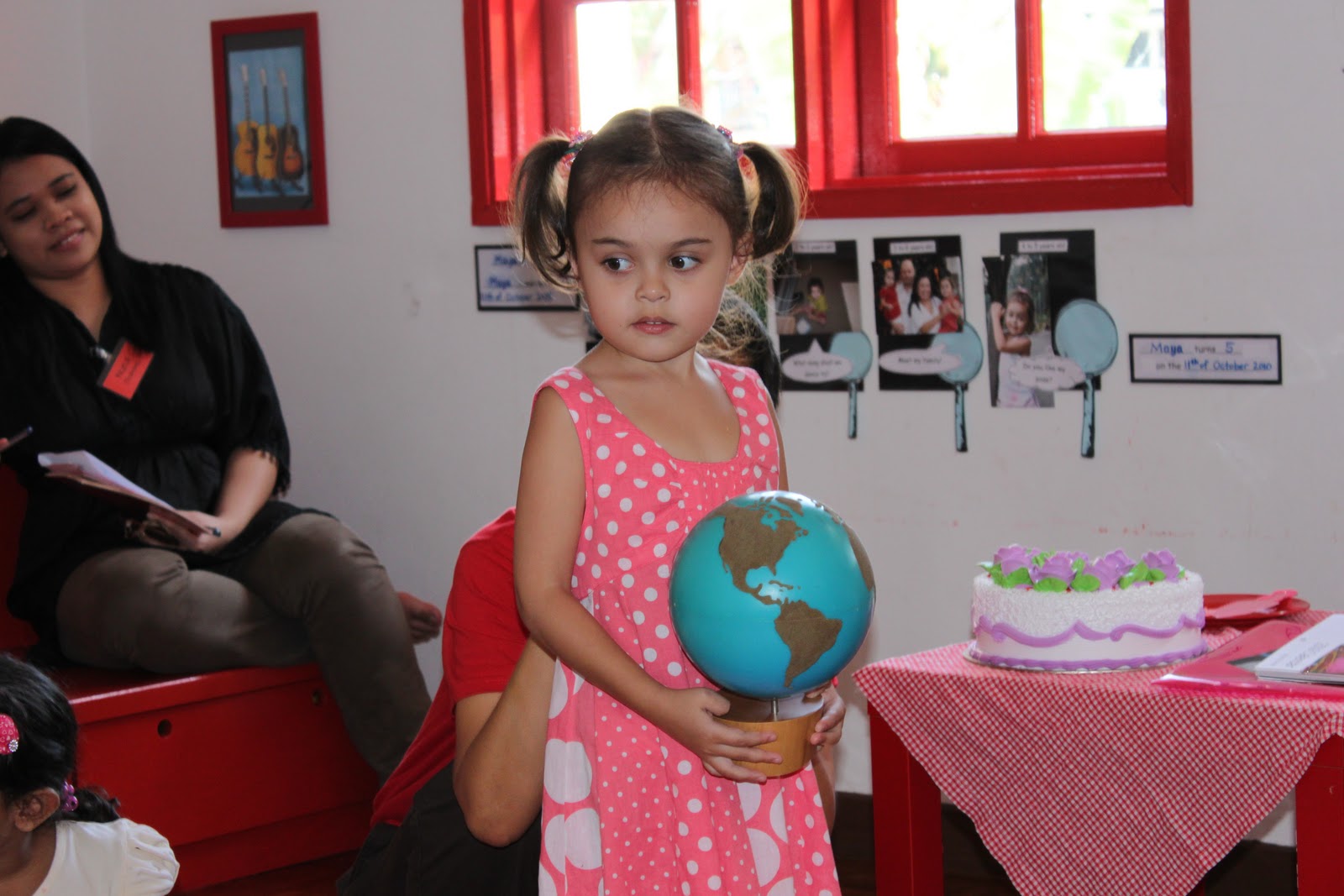
Maya turned 5 years old a month ago. Her life is drastically different compared to even 1 year ago. Maya goes to a normal kindergarten, she enjoys school very much and has lots of friends. The teachers have never once remarked anything different about Maya compared to her classmates. Except that she is very eloquent, has great imagination and is a very poor eater. She gets invited to lots of birthday parties, where before we were never invited anywhere because of her Autism. She has lots of playmates, she even makes friends very quickly and easily when meeting new children at parties, the park or playground. Maya also goes to ballet class twice a week and her teacher even recommended she start preparing for formal examinations based on the Royal Academy of Ballet curriculum. Maya also goes to a Jazz dance class once a week which she greatly enjoys.

We go out for family outings often, last weekend we had tea at a fancy hotel with a live jazz band and singer. Maya loves music especially live music and she was mesmerized by the beautiful singer. The girls were perfectly behaved and we had a great time. This was something we could never imagine doing a year ago. Maya would be screaming and rolling on the floor because the acoustics and visual stimulation would be too much for her to bear. Instead, we were the perfectly normal family with 2 well behaved little girls. Maya also loved going on the carousel and was thrilled to go to Sunway Lagoon a few weeks back.

A couple of weeks ago, right after Jazz dance class, we went to visit Dr Rina who had just arrived in Kuala Lumpur. It was a social visit just to say hi and catch up with her. Maya greeted Dr Rina at her hotel and they immediately started playing together. It was funny to see her playing hide and seek and laughing with her doctor. Maya also said that it was time for her annual check-up and showed her sore toe to the doctor. She was smiling and telling stories and had fun visiting her ‘friend’. After the visit, Maya and I had dinner with Paul and his friend at the fancy Rama V restaurant. It was quite late for Maya to be out, but she was perfectly well-behaved, she was polite and even made conversation with Uncle Anthony, someone she had never met before. It was a long demanding day for a 5 year old, but Maya did us proud.

Maya loves going on holidays, she also loves staying in hotels. When we asked her what she would prefer for her birthday, we asked if she wanted to go on holiday or have a birthday party in KL, she replied that she wanted to have a birthday party at the Hard Rock Hotel in Penang! Unfortunately, we couldn’t afford to do that, so we had a small party for her at a kid’s day spa in KL with manicure, pedicures and hairdos for her and her friends. Maya was thrilled.

We still continue with the GFCF diet at home however we are not as strict as we used to be. After 2.5 years on the diet, Maya can tolerate some casein and gluten, though too much in excess tends to lead to some tantrums, meltdowns and non-compliance. She is on a range of supplements that she still requires such as Vitamin B6, C, cod liver oil, probiotics, culturelle, s.boulardii, TMG, 5HTP, MB12 shots, calcium, magnesium, zinc, biotin, Transfer Factor and Epsom Salt baths. A few months ago, we introduce Vitamin D3, a month later we started DMSA chelation and the next month we introduced LDN cream (Low Dose Naltrexone). Within 2-3 days of chelation, her gross and fine motor skills improved, within 1 week of LDN, we noticed Maya was much nicer, affectionate and more sociable. Hopefully, it will help with her immune regulation too.

A few days ago, we did another round of blood tests with our local paediatrician. Because we were doing chelation, we needed to monitor her health and needed to do regular CBC, renal and liver  function test. Though we do chelation with Dr Erwin, our local paediatrician is always willing to help with monitoring her health and do the necessary tests when required. I am extremely grateful for the support and understanding of Dr Nur Atiqah and most especially, for keeping an open mind and receptive to biomed. Though she herself is a not a biomed doctor, as a paediatric GI specialist she is well aware of the GI and immunological issues that children with Autism have. I held Maya while the lab technician quickly and efficiently drew her blood. Maya of course cried, but calmed down soon enough. It was just me, Maya and the lab technician and it was over in 2 minutes. What a trouper Maya is.

She still gets colds and flus like any other child going to kindergarten, but they are less frequent, less serious and she usually recovers faster compared to before. We still wish we could do more in improving her immune function. Due to the colds and flus, our chelation protocol is extremely slow as we obviously could not go ahead with chelation whenever she was sick. We still consult with Dr Erwin Kay, we have been consulting him every month without fail since April 2009. But a couple of months ago, he was so pleased with how far the girls have come that he said that I can ease back and consult him only once every 2 months. And that’s just mainly for follow ups as we are doing chelation and it needs to be monitored. I still feel odd not to see him every month and I feel that I am losing his guidance, though he has always and will still be there for us whenever we need him.

As you know, I am never one to ease the throttle, I believe in going full-speed at most times. I look forward to speaking in Bangkok on 25-27th November. I am honoured to be invited as one of the parents presenting on our children’s recovery at the Integrative Care for Autism Spectrum Disorders Conference 2010. Dr Jeff Bradstreet is the keynote speaker and I always learn so much whenever I see him present. See here for more information on the conference . I hope to see you in Bangkok.

Maya continues to progress and improve even to this day. Her reading is amazing, her writing skills are improving, her language and behavior are like a typical 5 year old. Her coordination in dance classes is better, she can follow the choreogra
phy and pays attention to the dance teacher. Her Mandarin and Bahasa Malaysia vocabulary is growing every week. She has lots of friends, her socialization skills have improved tremendously. Her range of emotions, feelings and communication skills have come a long way indeed. She plays with her sister and we are starting to notice more big sister behavior as we always tell her that she must take care of her little sister. At times, the sisters squabble and fight, but there are more giggles and laughter too. As a proud mama, I can’t help but gush about how incredible my daughter is. At times, I write about the challenges we face with Autism and the treatments we did. But this is me remembering and appreciating my daughter as she is now. She makes me proud ever single day. During our Autism days, every morning I would wake up asking myself if this was going to be a good day or a bad day. Most days were incredibly bad days then.

People used to ask us how Maya is doing, and now it is nice not having to lie for a change whenever we say “She’s doing fine, thanks for asking!” Before, it was just easier to say “She’s fine” rather than explain that she’s still autistic, she still tantrums, we haven’t slept for days, she bit her toes until it bled and she banged her head on the floor again and again. But, we still appreciate the concern….

Nowadays, we still face the normal challenges and stress that any family and parents have. We still worry about our kids health, their future, the state of our minuscule savings, paying the bills, their education, dealing with illnesses and many more. We still have to stretch our dollar to afford the necessities. But now our home is full of happiness and laughter. Without Autism in our lives for the past few years, we would not have appreciated how privileged our life is. Now, every day is a good day….

So though we detoured into Holland, we are back on track in Italy. We look forward to getting Maya acquainted with her Malaysian and Australian heritage. Maya has already shown her love for travel, following in the footsteps of both Paul and I. We both love traveling, long before we met each other and settled down to have a family. And we are pleased to see that Maya too has gotten the travel bug. Maya is excited to go back to Sydney for Christmas. The last time we went back was more than 2 years ago. Since then, we could not afford the time nor the money as all our resources went towards recovering Maya. She keeps on talking about Christmas in Sydney and seeing all her family and friends there. The world is for her to explore, we will keep cheering her on however far she chooses to go…. Selamat Hari Raya Haji and Happy Eid to all, maaf zahir batin.

>Sitting On A Tack….

>”If you are sitting on a tack it takes a lot of Risperdal to make it feel better. The appropriate treatment for tack-sitting is tack removal. If you are sitting on two tacks, removing one does not produce a fifty-percent improvement”. Dr Sidney Baker MD

You can also choose to train your child to sit still on a tack by doing months of behavioral therapy. But he will still be in pain.

It’s been 2y5m since the day Maya was diagnosed with Autism. It’s also been 2y5m since we put Maya on the gluten and casein-free diet. And 1y9m since we starting on our biomedical journey with supplements and Biomed doctors. I’m am forever grateful that our choices and decisions thus far has lead us down the path to recovery. Managed recovery for Maya was more than we could ever hope for. When first getting the diagnosis and then deciding what therapies and treatments to choose, we agonize whether it is the right choice for our children. We spend hours on research, ask the advice of doctors, professionals and other parents. But ultimately, it is our decision what we choose to do.

However, at some point, we need to stop doing research and instead apply it. The only way we can determine fully if a treatment or therapy will work for our child is to actually do it. I spent months researching on biomed, now looking back, so many wasted months. I did not need to know everything there was to know about Biomed in order to start it. Luckily, the decision to do the GFCF diet was immediate for Paul and I. We changed Maya’s diet the day she got her autism diagnosis. Right or wrong, we wanted to do something RIGHT NOW. Though the medical community keep telling us that chances of improvement is better the earlier we start intervention, but it usually takes us months just to get a diagnosis and assessment. And more months before we can start behavioral, speech or occupational therapy. But the diet was something that we can start now. Lucky for us, we saw immediate improvement.

I disagree with the current consensus that Autism is a psychiatric disorder. Because Autism manifests itself as primarily a behavioral disorder, many people tend to overlook just how unhealthy our kids are. Our kids don’t only have Autistic behaviors, there are also many physical and medical issues that are brushed aside. Many kids with Autism exhibit hypotonia, low muscle tone, inability to walk well, dyspraxia, low energy levels, some kids I know can’t even last 5 minutes before having to lie down. This to me screams out zinc and CoQ10 deficiencies at the very least.

Some kids have severe feeding issues, refusal to eat, addiction to certain foods especially cheese and milk, reflux, bloating, gassiness, diarhhia and constipation to name a few. In a neuro-typical child, the most obvious conclusion is that this is a patient with either food allergies or intolerance and gastrointestinal issues and the parents would whisk their kid to a GI specialist immediately. But when you bring in a child with Autism to a pediatrician telling them of constipation, they are told that “oh, it’s just Autism” or worse saying that the child is purposefully refusing to poop. Reality check here people, a human being, old or young is not able to mentally will himself to hold on to a bowel movement, especially not for 2 weeks! You should try it sometime, see how far you can go without a bowel movement and see how pleasant you feel during that time.

They are not pooping not because they are Autistic, defiant or trying to exert control over the parents, they are not pooping because they are medically and physically not able to. Constipation is a common malady in Autism, it could be due to many reasons. Food intolerance, inflammation, impacted stool, motility issues, yeast overgrowth,lack of digestive enzymes, Vitamin C and magnesium just to name a few. How many times have I heard “my child is not pooping because he purposefully doesn’t want to”. Have you ever considered that he is not able to? That his stool is so incredibly hard and large that it is agonizing every time he does a bowel movement? That he has been chronically constipated for so long that his bowels are chockful of impacted stool. I have seen Yasmin’s abdominal x-rays, she was literally full of shit! She was so severely constipated that it actually caused diarhhia, known as spurious diarhhia. No wonder she was acting so horribly, her tummy and bowels was in agony. I have dug out rock hard poop out of Maya’s bottom with my fingers, they were as hard as rocks! In light of this, do you STILL feel that she didn’t have a bowel movement for 5 days because it’s a behavioral issue?

If this is your child, go straight to a biomed doctor or a pediatric GI specialist right away. Don’t take Autism as an excuse, if you are constipated for 5 days, you too will act and feel horrible. Laxatives and enemas may be required, but remember that these are temporary solutions just to relieve the symptoms. You need to address the root cause of why he was constipated in the first place. We do get comments such as giving prune juice and my personal favorite “eat more fruits”. Gastrointestinal disease in Autism is a very well known fact. It goes beyond mere prune juice, fruits and more fiber. Plus, many ASD kids refuse to eat fruits and many have salicylates issue so they need to do a fruit-free diet. Maya and Yasmin was only finally able to toilet train and no longer needed to wear diapers after I addressed their health issues.

Many children with Autism have sleep issues such as inability to go to sleep easily, not able to stay asleep for long, the sleep period is too short or my personal favorite, waking up in the middle of the night. They usually wake up for 2-3 hours before going back to sleep, a few just stay quiet or play quietly. But some cry and scream for hours. And some babble, sing and laugh. For parents of children with sleep issues, you know what I mean. Our kids wake up at night every single night for months, some even years. Yes, I have been there and this was by far one of the most challenging part of our lives. Dealing with Autistic behaviors during the day time was bad enough, but having to deal with it from 2-5am every single night for 1 year was too much for any parent to bear. I still get chills down my spine when I recall hearing Maya laughing maniacally in the dark for hours on end.

Please see my previous blogs on sleep issues, the possible root causes and treatments that may help. It is treatable, if your doctor tells you “it’s just Autism” and there’s nothing he can do, then see a Biomed doctor. If your behavioral therapist says that it’s a behavioral issue and to treat it with behavioral therapy, well…. You are most welcome to spend many many nights sleeping with all the therapists in your child’s bedroom, see how far you can get. Biomed doctors understand these things, sleep disorder is treatable.

Some kids have eye stimming such as looking out of the corner of their eyes. For many kids, this is easily treatable with cod liver oil and/or Vitamin A. But please consult a Biomed doctor before undergoing Vitamin A therapy, it can lead to toxicity. Not every child requires additional Vitamin A, most cod liver oils contains Vitamin A and this is usually adequate for our kids.

If your child grinds his teeth or keeps poking their eyes, then it’s usually related to calcium deficiency. Drinking more cow’s milk or formula is not the answer, you need calcium supplementation. Also, cow’s milk is not suitable for our kids. A dentist will say teeth grinding is caused by stress, but seriously, a 3 year old kid with stress? Try some calcium and you’ll notice a difference in a few days.

Children who are always getting sick or has been on antibiotics many times, well, you have to wonder about their immune system. So do kids who NEVER seem to get sick. We are not looking to boost the immune system, we want to have a BALANCED immune system. Most ASD kids have dysregulated immune system or immune dysfunction. Vita
min D, probiotics, zinc and cod liver oil are some of the basic nutritional support for healthy immunological balance. There are many other supplements to address immune dysfunction, but it is child specific.

If your kids have been on frequent antibiotics, you must give him additional probiotics supplement. Remember, antibiotics kills bad AND good flora. The probiotics in yoghurt or yoghurt drinks are not recommended, it only gives very low amounts of good bacterias, it’s not multi-strain and most contain tons of sugar, flavorings and preservatives and not to mention casein. Frequent antibiotic usage also brings to mind yeast overgrowth, when there are no good flora present in the gut, yeast and other opportunistic organisms proliferate. Whenever I bring up the subject of yeast overgrowth with a local doctor, they give me the ‘fungus exists in our bodies naturally etc” speech. Yes, we know that, but we are talking about yeast infections or fungal overgrowth here. It is a well-known fact that yeast infections causes physical discomfort and emotional imbalance.

And when you finally manage to convince them to do the yeast test, and upon finding a positive result, some doctors even refuse to do antifungal treatment! Citing again that fungus exists in our bodies. So why is there a yeast test available in our local labs anyway? If you still won’t treat a positive fungal test, when do you ever choose to treat one? Some argue because the amount is low. Well, if it is positive, that means the amount is far larger than what is considered the acceptable control levels of yeast in the body right? Many doctors have no qualms prescribing antibiotics, but they give me a 1 hour lecture if I request for a yeast test or for antifungals.

Many parents new to Biomed, especially the ones who do not consult with a biomed doctor insist on giving Super Nu Thera. However, many children do not tolerate SNT well. Mainly because it is a multivitamin and mineral combo, many kids require specific nutrients at specific dosages. Thus a combo multivit is not suitable. I much prefer single B6 or P5P formulations. I heard that Kirkman Labs will phase out SNT eventually.

Children who are always licking things, this is usually a sign of mineral deficiencies. In biomedical, we give individual calcium, zinc and magnesium supplements. Maya stopped licking everything after 2 weeks on zinc. Yasmin stopped knocking and patting things with her hands and knuckles after a few weeks on all the minerals.

Maya stopped tiptoeing when we treated her yeast overgrowth. Yasmin only stopped tiptoeing after addressing here chronic diarhhia. Don’t even get me started on aggressive behavior due to bacterial and anaerobic bacterial infections. The improvements we see after treating infections are enormous. Our kids have nutritional deficiencies, immune dysfunction, multiple infections, neurotoxins, abnormal biochemical imbalances, metabolic issues and many more.

If a doctor gives you a lecture of how the GFCF diet or Biomed doesn’t work, I guarantee you that he or she has never been trained in biomed treatments, that they know even less than you do about Biomed. I bet the doctor has never ever recommended a patient to do the diet nor vitamins and minerals supplements. Instead, check how often that doctor prescribes mind-numbing psychotic pharmaceutical medications. I’m sure there are children where the diet and supplements did not help them and only the drugs will help. However, you will never know if your child will be the one to improve or even recover on Biomed unless you try it. Before you go straight to the pharmaceutical medications, try everything. If I listened to the 20 doctors who told me Autism is untreatable and that I should plan for my daughter’s future by putting her in a home for the disabled, I shudder to think how far gone Maya would be now. You have heard the horror stories of the abuse and even murder that goes on in these homes.

Autism is treatable. No matter how old your child is, you can always improve the quality of his life. As Dr Sidney Baker said, remove the tacks.

>The Milky Way….

>

When we first started on the GFCF diet 2.5 years ago, the choice for rice milk in Kuala Lumpur was extremely limited. We could only find Pacific Rice Milk, and only in certain expatriate supermarkets. The price at RM10.90 per 1 litre box was very high, at that time Maya drank more than 1 litre of milk a day. So we calculated that we spent at least RM327 per month on just milk alone. However, some children have medical conditions that require them to be on specialised infant formulas, the price of their formulas are pretty costly too. Yes, milk is a big topic for us. Some parents are fortunate enough that their Autistic child is old enough to no longer drink milk, however many of us have young children who still demand milk from a bottle. 
Eliminating casein is extremely beneficial to a child with Autism, ADHD, even Asthma and Allergies. There are many research and reports supporting the GFCF diet, please see here http://gfcf-diet.talkaboutcuringautism.org/dietary-research-in-asd.htm Also, check out http://www.talkaboutcuringautism.org, there is a huge repository of information on the GFCF diet.  There are many studies and report repudiating the efficacy of the GFCF diet in Autism, but there are equally just as many studies proving the effectiveness. It is child specific, some kids show improvement on the diet, some don’t. However, it is worth your while to try the diet for a few months 100% at least once. 
Many parents when first hearing about the gluten and casein intolerance, they mentioned that their child tested negative for milk allergies. This usually refers to the standard IgE mediated allergy to milk, usually lactose in milk. Yes, most of ASD kids test negative, so did my daughters. However, in Autism, we are referring to IgG mediated intolerance to casein ie. the proteins in milk. Many many children tested very high intolerance to casein in their IgG intolerance test. Before you rush off and demand the IgG test for your child, take note that most mainstream doctors are not aware of this test as it is not available in local labs. I suggest you consult with a biomedical doctor. Be prepared to do the diet, otherwise it is a waste of time and money to do the IgG test and when the report comes back positive, you still don’t want to do the diet. Don’t do the test if you are not prepared to do the work! Some kids test no or very low intolerance to casein and gluten, however they are still recommended to do the diet and observe for any clinical improvements. There are many other immunological implications to consider when an ASD child tests low intolerance.
Better yet, start the diet and observe for any improvements within the next 1 month. Casein takes 3 weeks to leave the body, however many biomed doctors say that you will not notice any improvements until at least 3-6 months. But, each child is unique. Maya showed improvement within 1 week, a few children finally slept through the night within the first 1 week of the GFCF diet. Some children show improved eye contact, less tantrums and mood swings, improved bowel function, even reduction in eczema and rashes within a few days. Some children don’t seem to show any improvements even months later. But some report that when they reintroduced casein, they notice some regression. Please see here for some success stories on the diet  http://www.gfcfdiet.com/successstories.htm  However, Autism is a complex disorder. Not every child will show the same amount of progress just by eliminating reactive foods. For some kids, eliminating casein and gluten is nothing short of miraculous, for other kids diet is not their main issue.
When we’re talking about Autism, you have to take into account the staggering cost of behavioral therapy, special diet, supplements, consultations and many more. The added cost of expensive milk is another burden we face. Yes, Autism is insanely costly, most families cannot afford to treat their special-needs child. Many of our kids mine included, were addicted to cow’s milk or traditional milk formulas. The purpose of introducing rice milk is purely as a substitute to wean them off dairy and casein. Rice milk in itself or rice in general doesn’t give us the same amount of nutrients that normal milk provides, it’s basically empty calories. But many children can tolerate and digest rice well, though some kids who require the Specific Carbohydrate Diet would need to drink Almond or Hazelnut Milk. One parent I know had to source for Quinoa milk as their child was intolerant to rice, almonds and hazelnut. However, hopefully as our child’s addiction to casein tapers off and when they are old enough to no longer need milk from a bottle, we can look forward to a day without buying rice milk. 
One of the main concerns for parents when first eliminating milk, cheese and butter from their child’s diet is the lack of calcium. But, it’s really not a big deal because firstly, dairy milk is not the only source of calcium in a healthy balanced diet. Many Asian cultures do not have dairy cows or rear goats for milk, so where do their calcium intake comes from? In biomedical intervention, it is a standard practice to give Calcium supplementation anyway. Even for adults and children who eat and drink dairy milk products regularly, some like our ASD children experience malabsorption. Meaning, they are not absorbing the nutrients into their body. One of the main reasons for teeth grinding at night is calcium deficiency. So parents, take note. Even though we give our girls Rice Milk Enriched with Calcium, they still receive 1000mg of Calcium Powder by Kirkman’s Labs daily.
Back in the days when first starting the GFCF diet, we were limited to only 1 choice. Stock was extremely limited as well. My husband and I would scour the city looking for Rice Milk, we would also print out photos and info of certain brands of milk we wanted our favourite supermarket to bring in. We wanted to try other brands that tasted better, were creamier, had added calcium and organic. We also wanted to try Almond and Hazelnut milk. 
Gradually, more choices were available. Some we liked such as Aussie Dreams Pure Harvest Organic Rice Milk Calcium Enriched. This was slightly creamier compared to Pacific and we liked that it had added calcium, though for some kids it may not be suitable as the calcium was derived from seaweed sources.  
Some amazing parents take the effort to make home-made rice milk themselves. You can
even make home-made almond milk if you prefer. But when I looked at the cost of buying raw almonds, it would end up being more expensive and much more time consuming to make my own almond milk. However, the cost for rice milk may be more economical. You can find many recipe variations easily on the Net, however I personally do not have the time or patience to perfect the formulation to the right consistency that my girls would like. Also, you would need to make it daily, and I do prefer the convenience of having prepackaged rice milk. 
At the moment, I have 4 types of milk at home. Having used Aussie Dreams Pure Harvest Organic Rice Milk Enriched with Calcium, we are now trying to rotate to Australia’s Own Organic. Personally, I try to use Organic whenever possible. I also bought some Hazelnut Milk primarily for cooking and baking, I love the slight nutty taste. I also stocked up on small packs of Rice Dream Vanilla Rice Milk whenever I’m at Brown Rice Paradise in Singapore. These little 8oz packs come in handy when going out, I don’t have to worry about keeping it chilled and I can just pour it into the bottle whenever needed.
Yes, they are still within the RM10-RM13 per litre range, however many resourceful parents buy in bulk directly from the distributor and get additional discounts. Some like me, I still prefer to buy from my local retailer, I have a standard order and they are happy to give us a small discount. This worked out better for us as the shop is conveniently close to our home. If we buy direct from the distributor even at wholesale prices, their warehouses are usually so far away from where I live. We would have to drive at least 45 minutes one-way just to get there. When you add up the 1.5 hour drive, the petrol, the tolls and traffic, the discount was just not attractive for us. Though I understand some distributors offer free delivery if you order RM300 and above. I also prefer not to buy in bulk, whenever I buy in too large an amount, that’s when my girls decide that they no longer like that particular brand of milk. Go figure.
Now, there are many choices available in Kuala Lumpur alone. All of the milks shown here are available in either Village Grocer in Bangsar Village 1, Cold Storage Solaris or Cold Storage Bangsar Shopping Centre. Body Basics in BSC and some Vitacare pharmacies carries rice milk too.  Since I don’t buy in bulk from the distributors, I don’t have their contact details. But, be proactive and get the best prices you can. 
I came across Harvey Fresh Lactose Free Milk. Please take note that this is cow milk where the lactose has been extracted. Lactose is the sugars in milk, lactose-free milk doesn’t equate to casein-free. Casein is the protein in milk, in ASD kids, we need to eliminate casein rather than lactose. Casein is present in all products derived from cows or goat’s milk. So in this instance, Lactose Free Milk is not suitable for a child on the GFCF diet. Take note that many ASD children cannot tolerate soy milk, soya bean milk or anything soy-derived. Also, Oat Milk is not suitable. Though it is casein-free, oats are not recommended for the gluten-free diet. Goats milk is slightly lower in casein proteins compared to cows milk, however it is not suitable for the GFCF diet. 
In Hong Kong, I love to shop at Little Giant, the choices there are amazing. I love the GFCF canned whipped cream and especially MimicCream, a GFCF cream substitute made of almonds and cashewnuts. I use them for creamy soups, desserts and other recipes that requires cream. In a pinch, I have used coconut cream at times. Little Giant also carries EcoMilk Powdered Rice Milk. They can deliver overseas, please contact them directly for details  http://www.littlegiant.com.hk/en_index.php
In Singapore, you can find GFCF ice cream at Market Place Supermarket in Tanglin Mall. Rice Dreams brand has chocolate and vanilla ice creams, it is not as creamy  as typical ice cream. The Tofutti Vanilla ice cream is the best GFCF ice cream I’ve tasted so far. Please take note that many packaged and frozen foods do contain soy proteins, additives and preservatives. Depending on your child’s dietary requirements, packaged and frozen foods should be consumed in moderation. 
At the risk of sounding like a broken record, please take note that most children will refuse to drink rice milk when given whole for the first time. The taste and lack of creaminess is obvious. So, the key here is gradual transition- mix 1/4 rice milk  + 3/4 regular milk/formula. Once he is used to the taste, gradually adjust the mix eg. 1/2 rice milk + 1/2 regular milk. Over 2 weeks, most parents can successfully wean their child fully off dairy milk. Some kids with very sensitive taste buds needs to go even slower. A parent said that she had to mix 1/8 rice milk + 7/8 regular milk and change the ratio every 4 days. But with patience and perseverance, she managed to fully convert to rice milk within 3-4 weeks. Yes, during the transition period, they will reject the bottle at times. Yes, you will end up like me crying over spilt expensive milk. And some kids will experience withdrawal symptoms. But, please try, consistency and patience is the key.
Now in KL, you can find Pacific Rice Milk (Original & Vanilla), Pacific Almond Milk, Pacific Hazelnut Milk, Aussie Dreams Pure Harvest Rice Milk (Original & Calcium Enriched), Rice Dreams (Vanilla & Chocolate, Australia’s Own Organic Rice Milk and Freedom Foods So Natural Rice Milk. We are so spoilt for choice now, what a big difference to 2 years ago. Doing the GFCF diet is no longer as difficult as it used to be

>What To Expect During Your First Biomed Consult

>As part of our Autism journey, we have met many people especially in the medical and special education field. Some have been incredibly helpful, many were not. And because Autism is such a complex disorder, we often have to resort to second opinions. So, like most Autism parents here, we have had many many consults with doctors and other professionals. Preparing for a 1st consult is important, not only do we sit together to discuss our child, we are also trying to size up the person sitting across from you, whether this is the right person to guide you in the journey towards recovering your child. 

Apart from medical degrees and other professional diplomas, we also base it on their bedside manner, how they treat our child and us, whether they are respectful or condescending, if they have the right attitude, whether they think they know best and disregard the parents’ opinions. Most of the time, the professional that listens to the parents are usually the best for us. A plethora of degrees and certifications doesn’t impress us as much as willingness to listen and learn, being open minded and considerate. They don’t have to be my best friend, but they have to be willing to work together with me. I don’t want someone to steamroll and override me, neither do I want someone who will blindly follow my wishes and not contribute to the occasion. Though we are not medical experts, we are the experts where our children are concerned. We know our child best and a good doctor will listen and take into account your opinions and your views. 

For some reason, we have consulted with a total of 6 biomed doctors in the 2 years since we implemented an intensive biomedical treatment for our 2 girls. Not to mention countless other professionals including mainstream medical doctors, naturopaths, homeopaths, psychiatrists and psychologists, behavioral specialist and special educators.

When seeing a new Biomed doctor for the 1st consult, I would prepare the following to ensure that we get the most out of the time provided. Most consults are 1 hour though some doctors require even up to 1.5 hour to 2 hours for the first consult. Though some parents initially balk at the seemingly long time for a consult, I usually find that it’s never enough. Most parents are used to very quick doctor’s visits, ranging from 5-15 minutes. Usually, the wait in the waiting room is usually 5 times longer than the actual consult! The irony is, when observing other patients in a pediatrician’s waiting room, the parents and child gets swished in and out within 10 minutes with either vaccination shot or antibiotics. Whereas if we come in and mention that we would like to put my child on the GFCF diet or do a simple fungal infection test, we get lectured by the doctor for an entire hour!

For the first consult, you must bring your child along. It usually involves a thorough discussion of the patient and family history. His symptoms and behaviors, medical history such as vaccinations, diseases, chronic medical issues and any hospitalizations. The doctor will also ask you about the pregnancy and birth. I advise you to bring all medical and psychological tests done just in case the doctor might find it useful. During the first consult, the doctor also conducts clinical/physical examination, what they look for depends on what issues are suspected during the course of the discussion. Time is also required to obtain test samples, discussing treatment options, how to prioritize treatments, regarding supplements dosages and how to go forward.

Some parents prefer to let the doctor lead the session, satisfied to answer any question posed to them. Other parents come armed with a long list of their own questions to ask the doctor. Though it may seem that the 1 hour consult is a long time, we need to use the time wisely. I suggest you do some reading up beforehand so that we don’t waste the time with simple questions such as “What is Gluten? What is Casein? Can my child eat this or that?” Also, reconsider some of the questions you may have, think whether the foreign doctor would really know much about certain obscure traditional herbs or whether a certain local dish is suitable for your child.   

Do prepare a list of questions beforehand in case you forget. Communicate to the doctor your priorities, for us it was sleep and constipation, for others it was speech, for some it was aggressive behavior. Don’t forget to bring pen and notebook or, as I do, my trusty iPad to jot down my notes. During consults when my husband is not able to attend, I can easily email the notes to him. I frequently refer back to these notes later on.  

The clinic will probably provide an ice pack for chilled supplements if any. But if you are not going straight back to your hotel room afterwards, or you are facing a long drive back to your home or you are flying back, I suggest bringing an insulated bag for the chilled supplements just in case of delays.

Some parents buy more than 20 supplements (which I do not recommend) thinking that they can save on a trip and delay the next consult, but in the end, the plan usually backfires. Some parents insists on getting more supplements from the doctor, thinking more is better. For me, I prefer to buy only enough supplements that I think I can safely introduce or implement within the time frame before the next consult. On average, 6-7 supplements for the first consult is a comfortable figure for me, however this is highly subjective. Some doctors do not supply any supplements at all, some parents prefer not to buy from the doctor.   

Remember, please introduce each supplement slowly, keep track with a daily log, in case of side effects or unsuitability, you can quickly identify which supplements caused it. When first starting with Biomed, go cautious. We cannot predict which supplements will backfire on a child, some kids have trouble even on vitamin C, cod liver oil or probiotics, these are all basic supplements. Starting at half or even a quarter dose, I would slowly increase the amount every 3 days. However, some parents prefer to give all at once and later should any unbearable side-effects occur, they will deal with it when and if it comes. It is up to you how you wish to introduce new supplements. However, when it comes to medications eg pharmaceutical non-natutral antifungals, antibiotics, antimicrobial or antivirals, then it’s recommended to straightaway go to the full dosage.

Please check beforehand if the doctor accepts credit card payment or only cash. The consult is generally 1 hour, but check beforehand how long is the first consult going to be. I would add an additional 20-30 minutes to collect test samples if required as well as checking the supplements given and verifying the price or dosage. I suggest bringing toys, game consoles, drinks and snacks or even portable DVD players to occupy your child during the consult as well as during the trip.

Typically, the doctor would recommend several tests. However, this is not a definitive list as each child is unique, thus tests would depend on the child’s unique issues. If cost is an issue, you can ask the doctor on staggering the tests perhaps, prioritizing the ones recommended to do first etc. Also, different doctors have different preferences on what tests are required. These are the list of the common 4 tests required; however some doctors may request for additional tests depending on the child’s needs;

Basic 4 tests-  
1. IgG Food Intolerance Test- this is a bloodspot, requires a prick on the finger
2. Comprehensive Stool Analysis- stool sample.  
3. Organic Acid Test- commonly referred to as OATS test, need first morning urine sample 
4. Hair Analysis- hair cut from the roots, minimum 1 inch long

Additional tests depending on child and doctor’s practice-
1. Urine Prophyrin- urine sample, do not expose to light
2. Blood tests – Complete Blood Count, Kidney & liver function, IgE etc.

There are ot
her tests required, but generally these are usually done at a much later stage when you are ready to implement Tier 2 and Tier 3 protocols.   

Some kids are not toilet trained or non-compliant. Some kids can’t urinate or poo poo on demand so I suggest you bring urine and stool samples with you. Please collect the samples at home, bring 2 x urine, 1 x stool. Bring 1 urine sample for OATS from first morning void, if it’s too diluted it may be rejected. In separate container 1 urine taken in the dark, anytime is fine. Cover this container in foil, do not expose to light in case you need to do urine prophyrin test. For stool test sample, you must stop antibiotics, probiotics, antifungal, digestive enzyme 1 week prior. If  there’s not enough time, inform the doctor and bring the complete test kit home and send it to the lab directly from home. Make sure samples are not contaminated eg stool in urine. Please fill all containers till full just in case. 

Samples must not be more than 3 days old. Place in sterile containers (get from local clinic or labs) and keep in the fridge. Transport it in insulated bag with ice pack. Otherwise, get the complete test kit from the clinic, fill it up at home and courier to the labs directly. If so, you must explain to the nurse you are sending it yourself to USA from Malaysia or your country. Otherwise they won’t give you the complete test kit which also includes the customs declaration form. The Hair Analysis requires hair to be 1 inch long minimum. Please wash hair the day before with organic shampoo, as you don’t want the hair to be contaminated from chemicals, thus skewing the results. The blood draw may be required in some cases eg the doctor will advise to do kidney and liver profile test for kids with suspected liver damage. 

If your child is not already on the GFCF diet, be prepared to do so as the doctor will definitely ask you to start it asap. Most doctors also recommend to go soy-free and egg-free too, even before the test results come out. In fact, you can start it now. Discuss with your doctor how often you are expected to consult and if you need to bring your child to each consultation. Some doctors prefer to see you every month, some prefer every 2 months. Commit to seeing the doctor regularly for consults, include the trip expenses into your budget. By showing your commitment to the doctor and to his protocol, the doctor too will in turn show you his commitment, often trying harder and harder for your child. I strongly suggest getting a 2nd opinion at least once a year. However, it is too soon to decide to change to a new doctor after just 1 consult. Usually, I suggest 2-3 months to see whether his protocol is suited with your child before you decide to change doctors, unless of course you have very strong reasons to dislike him or her.  

I hope this helps in preparation to seeing a Biomed doctor for the first time. The information above is mostly relevant to the current Biomed practice in Malaysia, Singapore and Indonesia. The first consult is usually the most stressful I find. Even after doing many consults, I still need time to prepare before each and every consult, wanting to make the most of my face to face time with the doctor. I have learnt from each and every biomed doctor I consulted with. I wish you and your child all the best and hope that you find the consult fruitful.

>Dumb Advice and More…..

>

This is a collection of the dumb advice we’ve been given, ‘famous quotes’ that left me reeling from the sheer thoughtlessness and ignorance , my observations on Autism and how I view life differently now…..
On Trying to Get a Diagnosis for Autism
Upon grudgingly admitting that Maya has many Autistic features, one famous child psychiatrist advised us to feed our daughter more ikan bilis (local dried anchovies)
The doctor who confirmed Maya’s diagnosis of moderate Autism charged us RM10,000 for a bunch of useless mainstream medical tests and took 6 vials of blood. At the next consult, she charged us a further RM500 to tell us that all the test results were normal and to give her cod liver oil. 
It must have been bewildering to the psychologist when she told us Maya has Autism, my response seemed almost happy. In a way, it was a relief.  For some parents, it may have come as a complete shock. But I had known for 4 months already based on my own research, but everyone dismissed me as a neurotic mother. It was a relief to know that Maya wasn’t behaving the way she was because of my bad parenting or because she was a naughty child. There was a good reason why she behaved the way she did and why I struggled so horrifically as a parent. You know what I mean.
Someone said “But she’s only MILD Autism right? That’s why she’s ok now” By the way, not that it was any of your business, but if I ever showed you her psychological evaluations and reports, Maya was diagnosed with Moderate Autism. However, in these reports, the diagnosis falls into 3 categories- Non-Autistic Range, Mild to Moderate Autism and Severe Autism. So yes, Maya fell within the Mild to Moderate range. But if she scored just 2 points higher, she would have been in the Severe Autism range. She was definitely not Mild. How I wish…..
When my hubby told someone that Maya had Autism, the response was “Congratulations! She’ll be a math genius!”
When we mentioned that our child was Autistic, the response was “Oh, how lovely….” She thought we said Artistic, we didn’t bother to correct her.
Soon after receiving Maya’s distressing Organic Acid Test results, I shared the report with someone. I tried to show that Maya has many medical conditions that needs to be addressed. The response was “She’s still young”
When trying to find out what was wrong with Maya and daring to broach the subject of Autism, the pediatrician triumphantly said “See? She’s not Autistic, she looked me in the eye just now!” Yes, Maya did look at him in the eye for about 2 seconds. But the other 43 minutes we were in the doctor’s office, Maya was shrieking, scripting, grunting and petrified.
Someone admitted to us that they thought Maya was Autistic and misbehaving because Paul and I were bad parents.
Trying to Live A Normal Life
Having to turn down a birthday party invite at a noisy kids’ play gym full of whooshing hydraulic sounds and loud guns firing little balls like a cannon, I tried to explain Maya’s Autism and auditory processing disorder. The parent said “Well, she can stay on the other side of the gym where it’s not as noisy”. She didn’t understand the sheer torture of auditory and sensorial assaults  being in that environment is for Maya.  Certain noises at certain decibels are unbearable to Maya, standing on the other side of the room doesn’t help. I accept that most people don’t understand about this condition, but I shouldn’t have to apologise for my child’s Autism.
When commiserating with a friend who just learned that her child MAY be susceptible to a medical disorder later on in life, she said “Oh it’s ok for you, it’s just Autism. You get to do some special education and she’ll be all right soon enough. But this is serious”. Hmmm, is this a competition on whose child has the more serious diagnosis? 3 years later, her child is still normal and has no health issues at all. 
When Maya was younger, Paul slipped out that I was scared to be left alone with her. The self-righteous condescending response I got was “Hmmm, I took care of my 2 kids all by myself with no help at all” Well congratulations lady for being Mother of the Year. I was so angered by what I perceived as Paul’s betrayal, that he had exposed my deepest darkest fears. How could a mother ever admit to anyone that she was scared of her own child? Of being left alone with her own baby? 
We have been shushed at and shouted at  by strangers because they thought our kids were naughty, misbehaved or that we were just bad parents. Not to mention the countless stares and tsk tsk tsks….
You ever notice how freely parents talk about their child’s diagnosis, deficits and disabilities in front of their kids? They have Autism, they are not deaf. If someone discussed your faults right in front of you, imagine how embarrassing that is?
An entire planeload of passengers and flight attendants were struck dumb by Maya’s non-stop screaming for 2.5 hours and how ineffective we were at disciplining our child. People from the plane remembered us days after and came up to talk to us to give us parenting advice.
It pisses us off when we go out without our children trying to pretend we’re still a normal couple, yet other people wants to discuss Autism and showing their concern. It also pisses us off when other people don’t broach the subject of Autism at all and continue on like normal, as if they don’t care. To my friends, I’m sorry……
On Recovery
When asked why we still do biomed even though I “claim” Maya is recovered, I explained that it’s for health reasons. And that if she eats too much gluten and casein or if she misses her supplements for more than a week, then we notice some regression. Not that she regresses back into Autism, but we would notice some quirkiness or inappropriate behaviors. The sceptical response was “Oh, so I guess that’s what you mean by  recovered”. Hmmm, how many recovered kids do YOU know?
Have you heard of the term “managed recovery”? That means your child has lost the Autism diagnosis, however still needs additional support in terms of diet, supplements and perhaps educational therapy. 
There are many kids with asthma, diabetes, allergies and other medical conditions that are considered normal. They have special diets, take medications or supplements. But yet you won’t accept tha
t my child is ‘normal’ because she’s still on the GFCF diet and still needs cod liver oil and Vitamin C?
Did you know that recently Maya not only tested within the Non-Autistic Range, she scored higher than the average score of a typical child? She’s better functioning and more intelligent than her classmates. Yet a mainstream kindergarten teacher took malicious delight in reporting to me all of Maya’s deficits in class. When right across the room, another classmate sits crying every single day while yet another child is totally non-verbal. 
Yes, one of Maya’s previous classmates in a Montessori kindergarten is non-verbal, but the school was ok with it. And yet they say Maya needs additional support and is not “normal”? Not only that, they asked for Maya’s shadow whom I pay out of my own pocket, to also aide other kids who need extra help? Either the school needs to increase the number of teachers because their staff can’t cope, or you ask their parents to pay for a shadow aide for their own child.
When hearing about how much Maya has progressed, someone said “Oh, she wasn’t really Autistic to begin with”. I mean, do you seriously think that I would make this up? That I willingly put a label on my daughter? Even before she officially received the Autism diagnosis, friends and family knew Maya as the “difficult child” being the most polite thing they dared say to my face. 
When Maya started to show significant progress after years of hard work, someone said “See, who said she was stupid?” Errr…..no one did, but apparently you did
Stretching The Dollar for Autism Treatments
Others think that we’re rich, thus we’re able to afford ABA and biomedical. But I still live in the same small apartment for the past 6 years. Other people are buying new houses  which are 3 times the size of my apartment.
My husband is Australian, we have family who would love to see us in Australia, we can’t even afford to have a holiday back to my husband and daughters’ birthplace.  But you have a holiday with the entire family there and yet you claim to not have enough money for biomedical treatments for your child’s health? 
You rock up in a chauffeur-driven luxury car and say that you can’t do biomed because it’s expensive? I downgraded my nice car to a smaller cheaper car with less airbags. We still only have the 1 car. Yet, both husband AND wife drive European luxury cars, some have 3 cars.
Treating Maya’s Autism was a necessity for us, not a luxury that we chose to afford or not. But we did chose to sacrifice many luxuries in order to afford her treatment, we chose to prioritise that over all else.
We did not get any financial assistance at all, not from the government benefits, insurance or entitlements. In other countries, behavioural therapy is provided to families for FREE for 2 years, they get subsidies and assistance. Yet they still moan about the long waiting lists and other expenses. Do you not realise what a privilege that is?
On Bowel Movements
Maya did a legendary poo that left both Paul and I leaving a posh 5 star hotel clad in a freebie sarong and towels. We changed her nappy in the bathroom, between her screaming and thrashing about, we were so filthy we had to put our clothes in a plastic bag. Luckily we managed to get a free sarong and towel from the spa.
I don’t think it’s freaky that I have an awesome collection of photos of the girls’ poos. That it’s now second nature for me to whip out my iPhone or iPad and show the doctor a photo of it. 
I’m fascinated by other parents’ stories of their children’s bowel movements. 
On Blood Draws
Maya’s first blood draw for mainstream medical testing took 6 adults to hold her down. Maya screamed and screamed, I lay down on the bed desperately to hold on to Maya while she trashed and struggled. Paul could barely even look. The doctor squeezed drop after drop of blood, it took 1 hour. The entire day care ward of the hospital was shellshocked by the violence of it all.
Maya’s second blood draw, which was for biomed was in the doctor’s office, just  Maya, the doctor, Paul and me. By the 2nd vial, Paul got nauseous. The doctor took 4 vials of blood, by the end Paul was about to faint, turned white and squatted on the floor. 
Maya’s 3rd and 4th blood draw, it took barely 3 minutes. Maya recovered after 5 minutes, especially when Daddy gave her an illicit chocolate treat.
Maya’s 6th blood draw, it was just Maya, me and the lab technician. That was an awesome day.
On Autism Movies
Autism movies pisses me off. They always get me angry, incredibly sad and they are usually non-productive to me. The lack of real info on the treatments enrages me, they only show happy smiling high-functioning kids during ABA sessions. But never show the ones where behavioural therapy did diddly-squat. The Autism parents filmed all look so freaking happy, nothing like how I usually look like most days- exhausted, hopeless and full of despair.
After watching Temple Grandin describing the 3 types of Autistic geniuses and savants in the movie A Mother’s Courage, I asked my husband which category does Maya fall into? He said the loveliest thing “She’s none of them. I don’t want her to be a genius at something. That means that she is still Autistic and we have failed”
Autism movies gets me all worked up and super critical of these documentaries more than any high-budget Hollywood blockbuster. 
In Autism movies, do you ever notice how much junk food the kids eat, the nasty packaged foods the mums buy, how they load grocery carts with boxed, canned or frozen foods? How you don’t see a single fresh green vegetable bought or served? I know many children with Autism have severe feeding issues, both my kids are like that, so yes I do know how hard it is. But if you keep buying them junk food, they will keep eating them. The kids will tantrum over any little thing anyway, so why not let them tantrum over not getting their daily fix of Dori
tos and Coca Cola?
In an Autism movie, a mum with a grown adult son with Autism offers coffee to him. He didn’t ask for it, he didn’t tantrum to get the coffee, she ASKED him if he wanted coffee. When he didn’t respond, she asked him again and again!! Hello, ever heard of the effect of caffeine on the neurological function?
About GFCF Diet and Biomedical Intervention
Ever notice how most parents freely and unquestionably give antibiotics and panadol even when unnecessarily prescribed by their doctors? Yet when asked to take antifungals which the kids desperately need or remove gluten and casein from their diet, they ask 100 questions? 
Apparently it’s ok to feed our kids junk food, soft drinks and candy. But we are censured for feeding them healthy, nutritious, organic meals which are gluten and casein free. 
The GFCF diet is apparently unproven. But neither have they been disproven.
The GFCF diet is not an Autism treatment, it is a dietary intervention for people who have tested positive for multiple food intolerances. It may not work for every child, but it works for mine. So it really doesn’t matter to me when tv networks and newspapers report that they are useless. I know of many studies and reports on how ABA is the ONLY scientifically proven treatment for Autism, but I also know of many children where ABA didn’t work at all. 
As many studies there are that prove vaccinations does NOT cause Autism, there are just as many studies proving that they DO. If you would only look……
If vaccinations are safe, why is there a special Vaccine Court? 
Though many have failed in their lawsuits against pharmaceutical companies and governments for vaccine-induced injury, there are also many cases where the families are awarded damages.
Why bother to treat Autism with biomedical intervention and diet? After all, Autism is caused by genetics, and genetic diseases are incurable right? Hmmm, only 10% of Autism cases are purely genetics. What about the other 90%? 
Even if you are convinced that your child’s Autism is caused by genetics, doesn’t mean that everything is genetics. Are bacterial, fungal and viral infections genetics? Are vitamin deficiencies genetics? Are chronic constipation and diarrhoea genetic? Are neurotoxicity genetic? 
Genetics is a convenient label to fall back on when refusing to treat your child’s underlying medical issues. It’s just an excuse when you refuse to see that your child needs more than just neuro-psychotic drugs.
Biomedical doctors gets censured or sued all the time. So do mainstream doctors. That’s why they have massive insurance coverage for medical malpractice. Look it up. 
Dr Anju Usman and Dr Dan Rossignol, the equivalent to Grammy nominees of the biomed rockstar doctors, are being sued right this minute. Dr Steve Edelson was sued by parents as well. Fast forward several years, he is now the Director of the Autism Research Institute. 
I have met many doctors who do everything by the book and never gotten sued or under fire by the medical authorities. Yet, these are the doctors who have contributed the least to my child.
Just because my child had Autism, does not mean I know all there is to know about Autism. Do your own research.
As you can see, Autism affects families in many ways. Much of the devastation left by Autism is unseen, unheard and unpleasant. A lot of resentment, anger and fear resides in the soul of Autism parents everywhere. But I wouldn’t have changed it for the world, those words only made us stronger…….

>Do You Still Think It Was Easy?

>

Other parents of children with Autism remark on how easy it was for us to recover Maya. They say that everything I did worked well for her. They compare their 6 month or 1 year journey and the little progress they have made with their son, to Maya’s progress. I feel that they belittle Maya’s extraordinary effort when they say that it was so easy for us. That we managed to resolve every issue so easily. 
Hmmm, did you notice that within that 2 years between diagnosis and recovery, I consulted 6, yes count ’em, SIX biomed doctors in Singapore, Indonesia, Australia, United Kingdom and USA at great expense? That I faithfully travelled to Singapore every single month to consult with our primary doctor? That I NEVER EVER missed a consult? That I email and communicate with him and my other doctors on a weekly basis? That I made sure I got a 2nd opinion consult every 3 months? I badgered and harassed my doctors to try new treatments and supplements even though they said it was useless. You don’t know that I spend 2 hours on a phone consult at night with my DAN doctor in the USA? That I stay up till 3am to answer emails from supplement companies so that I don’t delay my supplement orders and shipments any longer than necessary? 
I didn’t rely on just 1 doctor or just 1 lousy book to guide me in my journey. I attended 2 DAN Conferences in the US (that’s a 23 hour flight, 1 week of absence from the family and several thousand ringgit of sacrifice) and several other Autism conferences in other countries. I wished I could afford to attend the Autism One conference in Chicago or the MINDD Conference in Australia, but we couldn’t afford that.  I stalked and cornered respected doctors, biochemists and famous Autism parents and bombarded them with questions. I stood in line for ages silently wishing the parent in front of me would stop monopolizing the well-known Autism expert, just so that I could ask just 1 question? I looked like a tart sitting at the hotel bar chatting up compounding pharmacists and vendors just so I could wrangle an express delivery for DMSA and MB12 without a prescription. I stayed up till 2am talking to other parents I befriended there even though I was reeling from serious jet lag and had a gruelling day of medical conferences to attend the next morning. Do you still think it was easy?
You have no idea of the time, money and effort it took trying to cook gluten-free and casein-free meals that my girls would eat. In the first 8 months of doing the diet, I didn’t know a single person in Malaysia that was doing the diet. I badgered shopkeepers and distributors to bring more GFCF foodstuffs, there was just 1 brand of rice milk when I first started, even then the stock was extremely limited. I knew of no one in my country doing biomedical then. I was flying blind and solo here. Did you know that I was so desperate to get some comrade-in-arms for biomedical that I had to start my own biomedical support group? I was scared no one would join. I initially started the group so that I could learn from other parents in Malaysia, but every one had barely just started biomed at that time and instead looked to ME for advice. Me, who myself knew very very little at that time. I’m proud to say that now, I have many Malaysian biomed friends and that I learn from them.
I basically shut down my social life so that my entire time revolves towards recovering Maya. That I have lost many many friends because of my single-minded tunnel-vision in treating Autism, my inability to give my attention to their inane inconsequential conversations, my tendency to turn every conversation back to Autism, yeast overgrowth and immune dysfunction. We had to turn down invitations out with friends and family because it would have ended in disaster for everyone. That the raw pain and anguish was sometimes too much that I can’t bear being around other normal happy families. That it physically hurt when I see their healthy normal kids playing, yet my child is screaming in the corner. Do you still think it was easy?
I devoured every book, website and forum available on Autism treatments. I stayed up till the early hours of the morning researching and reviewing Maya’s treatment plan. I dedicated at least 3 hours every single day to just research and reading up on Autism. I spend ridiculous amounts on express courier and delivery just so that Maya could get that supplement immediately. I spent an insane amount of money we barely have, digging into our savings because we spent more than Paul’s income every month. I spent a staggering RM10,000 on ABA treatments every month and an average of RM2000 every month on consults, supplements and testing. And that’s not including the cost of organic and imported GFCF food and cleaning products, the cost of the conferences, books and materials. That for every 1 supplement that gave us Wows, there were 5 others that either didn’t do anything or worse, caused immense regression. And in between all that, for every 1 step forward Maya took, she also took 2 steps backwards. 
So just because in my blog, I write more about the success and triumphs, doesn’t mean there wasn’t any failures or deep hurt.  You are not privy to my reality, you do not live my life. You have no clue what my family and I go through every day. It’s just that I chose not to share it with you. I choose not to tell you of every time I cried, I would hide in the closet or lock myself in the bathroom while I sobbed my heart out alone. Just because you read my blog does not mean that you know me. So yes, if you choose to see it that way, yes it was pretty darn easy.
It is not a comparison on who spends the most on Autism treatments. It’s not a contest on who attended more conferences, of who has the consulted the most number of doctors. Going to a conference or having the best doctor does not guarantee you a recovery, it’s what you do with what you have that makes the difference. It’s the effort that you put into it, the attitude you have when you go throughout this journey. On how well you treat others who only seek to help you, on the basic civilities of saying a simple thank you when someone takes time out of their busy life to give you a piece of advice. 
Don’t compare your child with others, some kids improve tremendously on just the GFCF diet and a bit of cod liver oil. Some kids receive 40 hours of ABA for 3 years, full-on biomedical including chelation and IVIG, yet the progress is sadly very slow. I too get consumed by the green-eyed monster, the envy I feel when I hear a child improved immensely on just a few hours of ABA, or the child who recovered because his mother fed him peeled almonds. There will always be legendary stories, but there are also many many failures.There are no guarantees. But you still have to try. Some parents expect to receive a checklist called Things To Do When Your Child Is Diagnosed With Autism. I’m sorry my friend, it doesn’t work that way. 
Don’t make your child’s Autism as an excuse for your behavior. Everyone believes that they are entitled to special treatment. How many times have I heard the phrase “But my child is Autistic!” Yes, I know that. But so was my child, so are the many other families I know. These parents who
I am proud to call my friends do this for the very same reasons that I do this. Remember that I do this out of my own time and my own money, often without my husband’s approval. He believes that I do not get the thanks I deserve, I’m sorry to say that at low moments, I agree with him. But know this, I do not do this for you. I do this for your child. For every rude or hurtful comments I get, I choose to swallow the pain and the pride because I don’t want your child to suffer because of your ignorance or rudeness. Do you think it is easy to forgive the thoughtless comments and inadvertently rude remarks? I guess I’m a good actress, that I made it look and sound so easy. But it wasn’t……..
When Maya was diagnosed, I made a pact with God. That he would help me recover my child. In turn, I will try to help other children. It is very telling that Maya started to improve and progress faster when I too started to help other families. Though my efforts are woefully inadequate compared to some inspiring parents I know, my contributions are sincere. Whether I have helped to make a difference, I don’t know. But somehow, the more I helped other families, the better Maya got. Even though Paul was complaining that I took too much time helping others and apparently neglecting my own kids, Maya still kept on improving. So, for those who think that they don’t have the time to help, know this. God will help you when you help others too. Somehow, the universe works in mysterious ways. A very good friend of mine who herself does an immense amount of charity work for Autism, said the same thing too. The more she helped other families, even at the expense of having less time for her own child with Autism, somehow he too improved. Never forget the power of karma. Good things come to those who help others.
Luck had nothing to do with it, though I try and try unsuccessfully to be humble. But we shed blood, sweat and tears to get where we are now. Maya worked so hard to get where she is. She is an extraordinary girl, who went through extraordinary measures to get to Recovery. And she will still have many challenges coming in the future, together we will get through it together. 
Recovery is not guaranteed, even if you do all these and more. I have friends who are extraordinary mothers, they make the earth spin and the valleys rock with their resilience, persistence and tenacity. You know who you are, I am proud to be your friend. So, do you still think it was easy?

>GFCF Butter Cookies

>

This is a basic cookie recipe that is very versatile. It is gluten-free, casein-free, soy-free and egg-free. I can only find Ogran Gluten-Free Flour and Red Bob’s Mills Gluten-Free Multi-Purpose Baking Flour in KL, either one of these are fine. However, personally I prefer to use Red Bob’s GF flour when baking as it doesn’t contain rice or corn flour. I have tried using Ogran GFCF flour and Red Bob’s Mill GF flour, both taste great but with slight difference and when I didn’t have enough flour, i’ve even used 1/2 each and it still turns out great.

For casein-free margarine, my favorite in Nutelex. I have also tried using other brands, it still works fine though Nutelex tastes closest to real butter. I have yet to experiment with Xylitol as a substitute for sugar, but feel free to try.

I make this often with both my girls, they love being part of the process. There’s lots of messes and squabbles, but there’s also lots of fun and laughter too. They help to spoon the sugar and Nutelex into measuring cups. They learn to sieve the flour, they spoon the cookie mixture into their own plastic bags and place it in the fridge themselves. They each have their own tiny rolling pins. I give them a bowl of flour each to sprinkle liberally on the work surface, on the dough and rolling pin and they are very good at it too. They choose their own cookie cutters and make sure they dip it into flour before cutting it. And decorating with the rainbow sprinkles are strictly their job. It’s a lot of fun and the girls really appreciate the home-baked goodies, especially when it’s their own creation.

As you can see below, I have listed down several variations of decorating the cookies.  The options are endless. just use your imagination. Give your kids free reign, don’t worry about the mess. Don’t stress out about the kids ruining the cookies, somehow it always works out. A lot of our baking comes out wonky and lopsided and looks like the Sprinkles Fairy threw up on it, but they are always, always appreciated.  I always give lots of encouragement and praises, I take photos during the baking as well as the completed cookies. They also take great pride when we go to a neighbours’ or friends’ houses to share their goodies. The girls and I will go through recipe books or websites and choose what to make.

I call these Butter Cookies even though technically there is no butter. It was originally based on my experiments with the typical Butter and Sugar Cookie recipes. However, I have reduced the amount of sugar to the point where it still retains the yummy cookie flavor without being too sweet. I have tried reducing the amount of sugar to only 1/2 cup but I found that didn’t work so well. These cookies are yummy eaten plain or decorated, especially when freshly baked. It can be stored in an airtight container for 1 week.

Butter Cookies- gluten-free, casein-free, soy-free, egg-free

Makes 24 large cookies

Ingredients

1 cup (226 grams) Nuttelex or dairy-free margarine

2/3 cup (135 grams) granulated white sugar

1 teaspoon vanilla extract

2 1/4 cups (295 grams) GFCF Flour

1 large egg or 1 heaped teaspoon Ogran Egg Replacer

3/4 teaspoon Xantham Gum (optional)

1/4 teaspoon salt

Extra gfcf flour for rolling

Extra sugar for sprinkling (optional)

Instructions

Heat oven to 180 degrees celsius/ 350 degrees farenheit

1. Sieve flour, xantham gum and egg replacer in bowl. Add salt.
2. In separate mixing bowl or cake mixer, cream the margarine and sugar until light and fluffy
3. Add vanilla, mix briefly
4. Add the flour mix and mix until fully incorporated
5. Spoon the mixture into plastic bag, and chill in freezer for 20 minutes.
6. Once chilled, roll out the dough with rolling pin to 0.5cm thickness. Dough is quite soft and sticky so sprinkle liberal amounts of gfcf flour on work surface, dough and rolling pin.
7. Dip cookie cutter into flour then cut out shapes. Place on baking tray lined with baking paper.
8. Sprinkle the cookies with sugar (optional)
9. Chill the cut out cookie tray in freezer for 10 minutes (optional)
10. Bake in oven for 20-25 minutes until golden.

Remove from tray immediately and cool on rack. Keep in airtight container once cooled.

To Decorate:

Option 1- Chocolate Dip
Melt dairy-free chocolate in a pot on low heat on the stove. Add 1-2 tablespoons rice, almond or hazelnut milk until thinned to desired consistency (optional). Add 1 teaspoon margerine so that it dries to a shiny finish (optional), mix well. While chocolate is still hot, dip the cookies halfway into the melted chocolate. If the chocolate thickens, reheat it and add a bit more milk until it reaches the desired consistency. Top with colourful sprinkles or crushed peanuts. Leave to cool on rack. Once dry, keep in airtight container in the refrigerator, store layered over baking paper.

Option 2- Sugar Glaze
Add 2 cups icing sugar and 1/4 cup hot water in a pot on the stove. On low heat, stir the sugar until melted. Add 2 tablespoons rice, almond or hazelnut milk, this makes the icing opaque. Mix well. Take off the heat. Add desired food coloring. Dip the top of the cookies into the glaze, sprinkle with decorations if desired. Leave to cool on rack. If the icing hardens, reheat it and add a bit more milk until reaching the desired consistency.

Option 3- Snow White
Sieve icing sugar on cooled cookies. Omit Step 8. Alternative, finely grind 1 stick of cinnamon with 4 tablespoons of icing sugar. Sieve the cinnamon sugar over the cookies.

Option 4- Thumbprint Jammies
Replace Step 6, 7 and 8. Roll dough into little balls. Make a little indentation in the centre with your thumb. Roll the balls into crushed nuts (walnuts, almonds, pecans or pistachios) Spoon a little jam into the centre. Bake as usual.

Option 5-  Cherry Tops
Replace Step 6, 7 and 8. Roll dough into balls, roll into crushed nuts or tinned dessicated coconut. Top it with a halved glazed cherry instead of jam. Bake as usual.

Option 6- Rainbow Cookies
After Step 4, add 1/4 cup of colorful sprinkles into mixture and mix. Follow the rest of the recipe. Alternatively, at Step 8, sprinkle the cut out cookies with colorful sprinkles.

Option 7- Vanilla Gingerbread Men
Cut with a Gingerbread Man cookie cutter, place M&Ms, dairy-free chocolate bits or GFCF appropriate candy as the buttons and eyes. Follow the rest of the recipe. Alternatively, after baking use piping gel to decorate buttons and eyes.

Happy baking!

>Communication Shutdown 1 Nov 2010

>

WHAT IS COMMUNICATION SHUTDOWN?

It’s a global initiative to raise much-needed funds for autism groups in over 40 countries. By shutting down social networks for one day on November 1, we hope to encourage a greater understanding of people with autism who find social communication a challenge.
To join, simply make a donation to receive a CHAPP (charity app). The CHAPP spreads the word, gives a shutdown badge to wear online and adds your picture to a global mosaic of supporters, next to the celebs.

Click here to donate and receive your CHAPP Communication Shutdown for Autism

>Piano recitals and Bicycle Rides

>

A couple of months ago, Maya started to play the piano. Paul had taught her to play Twinkle Twinkle Little Star and she caught on very quickly. Based on those basic notes, she then taught herself how to play other songs. She doesn’t play one-fingered, instead she has good fingering technique. She taught herself to play Farmer in the Dell, Baa Baa Black Sheep, Mary Had A Little Lamb and other songs. She would play and sing along, even in different keys and even uses the minor keys.

That same week, she also started riding her bicycle. We had bought her a bike a year ago as her 4th birthday present. Though genuinely excited, she could never figure out how to pedal. We got tired of pushing her on the bike and she soon lost interest. We weren’t sure whether she had such low muscle tone that she didn’t have the strength to push the pedal hard enough, or whether she wasn’t able to coordinate her limbs and senses to pedal or she was simply too young to ride. However, we knew many children younger than her who were able to pedal and ride a bike. After some time, the bike was kept forgotten collecting dust. Until she suddenly expressed an interest in the bike again. We dusted off the bike, Maya hopped on and started pedaling like she’s been doing it all her life.

Initially, we thought that it was a coincidence. That she was finally at the appropriate age to learn these new skills and physiologically old enough to master these skills. After all, I myself learnt to play the piano when I was 4 years old. But I had formal piano lessons then, whereas Maya did not. And it wasn’t as if we had been teaching Maya to pedal, we had forgotten we even had the bike.

That week was also coincidentally our first round of DMSA chelation. Yes, it was ironic that we started chelation AFTER Maya officially recovered from Autism. Throughout her biomedical journey, we had to prioritize her treatments based on her most pressing issues. So, finally we got to the point when we were ready for chelation. We had been doing the prep work prior to chelation the 2 months before, prepping her body by adjusting her mineral levels, testing for her current Red Blood Cells Minerals levels, testing for her kidney and liver function, Urine Prophyrins test for heavy metals body burden levels, then doing the pre and post challenge test to make sure that the dosage was right and that we got a good excretion rate. Once the results were back, everything looked good and our doctor gave us the green light for our first round of DMSA.

We saw the doctor a couple of weeks after we completed the first round of DMSA and he asked whether we saw any improvements in Maya. Paul and I explained that it was hard to tell if there was any because Maya was just remarkable all the time, every single day. We said that either there were either no improvements from it or any gains that were made was too small to notice. But we did mention about Maya’s piano playing and bike riding which occurred within the first few days of the DMSA round. Our doctor immediately said that it’s probably the chelation which has brought on this new burst of coordination in her gross and fine motor skills. But Paul and I said that it was just a coincidence.

We put his remarks aside, thinking that he was just searching for improvements when there was none to be had. After all, most parents only report improvements from chelation after several rounds, usually after 12 rounds. This was only our 1st round.

However, a conversation with a friend later that week changed my mind. I casually mentioned that we had just done our first round of DMSA. He had started chelation for his son a few weeks earlier. And I laughingly told him about how the doctor was pressing me for some sort of positive response to the chelation, even though it was too soon to tell. His next words stopped me cold- he said that his son started to ride the bicycle right after his first round of DMSA. He said that something just ‘clicked’ in his son and his coordination finally kicked in. Apparently, he had been trying to teach his son to ride the bicycle for ages before that, but he just couldn’t seem to grasp how to pedal. He is convinced that chelation was the catalyst.

I then told him about Maya’s piano playing and riding the bicycle. So, even after all these years, it was nice to be reminded again of how Biomed is helping us realize Maya’s full potential. Sorry we doubted you Doc.

We had only done 2 rounds when Maya experienced fierce Candida flare-up. As you know, yeast tends to flare-up during chelation. Maya started to exhibit Candida symptoms again and as she was due to start in a new kindergarten so we chose to postpone chelation for a while. We wanted to deal with the yeast first so that Maya could start school at her best. We have dealt with yeast many times, so yet another flare up doesn’t bring about the same anxiety and stress as it used to. A round of natural antifungals did the trick and we are now on to our 3rd round. We started chelation quite late by most standards, our methods still are slow and steady. But it has served us well.

Yesterday, I heard Maya singing a new song, it sounded very much like the first refrain from Rihanna and T.I.’s song Live Your Life. Maya was going “Maaa ya Hii, Maa ya ho, maaya hii, maaa ya ha aa”. I asked her what song she was singing and where she heard it. She said “I heard it on the radio” I have never played any of Rihanna’s music with Maya before, so I knew she didn’t pick it up from home. Then I asked her where did she hear the radio, she replied “At baby Rekha’s house”. Now I remember, we went to a birthday party at Rekha’s house 4 weeks back. They played pass the parcel and they played pop songs for it. And yes, Rihanna was playing that night. It was a fun and noisy party that went on until quite late. The music was blaring, there were many children and adults, lots of activity and mayhem. A year ago, we couldn’t even contemplate going to the party, the sensorial overload would have been too much for Maya to bear. Not only did she fully participate in all the games, she had lots of fun and didn’t even require Mum to accompany her. How far we have come.

Not only was I continuously amazed at Maya’s memory, she also has perfect pitch. Maya has never sang that song before to our knowledge since the party, neither has she heard it since. However only the night before she had her first DMSA dose for the 3rd round of chelation. She’s had her 2nd dose last night, let’s see what other nice surprises Maya has in store for us today. Am I grasping at coincidences? Maybe. But I am seeing wonderful improvements every day. We are looking forward to more piano recitals, impromptu arias and bicycle rides……

>Heart Full of Courage…..

>

Due to several reasons, we chose to move Maya to yet another kindergarten, her 3rd mainstream Kindy so far. This time around, we decided not to have a shadow aide to assist her in the first few weeks of the new school. More importantly, we chose not to inform the school of Maya’s history and diagnosis. We did not want the new school to have any preconceptions of Maya and we wanted to see if Maya could fully integrate into the new school without any special help. We were warned that moving Maya so soon to a 3rd school and without any shadow aide was a terrible idea. Against all professional opinions, we chose to do it our way, as usual. 
The last few weeks in her previous school, I had told Maya that soon she’ll be going to another new school for big girls. Soon she’ll be saying goodbye to her current school and she’ll make some new friends at the new school. Kids being kids, she took it all in stride. Yes, she understood what I told her. I had driven past the new school a couple of times to show her the new school. We had a little farewell party at her previous school on the last day of school. She said goodbye to all her teachers and friends and everyone gave her a big hug. It was hard to say goodbye yet again, however we felt that this was for the best. 
Both girls are now in the same school, finally. It was a relief to drop them off and pick them up from the same school, no more driving to 2 different locations everyday. Both girls now are on the same school holiday schedules, we used to have 1 girl in school and the other girl at home for holidays. We couldn’t go on family holidays as both schools were on differing schedules. It was easier for us logistically as well as in other ways. 
We brought Maya and Yasmin in for the first day of the school term in early September. There were scores of other students starting their 1st day in school too and other new parents. We introduced them to the principle and their own homeroom teachers. Then both the girls went to their respective classrooms with their teachers. Maya is in the older class with other 5-6 year olds and Yasmin in the 3-4 year old class. Paul and I hung around for the next half hour to observe both girls. By then, both girls were fully settled in their class and participating in the day’s activities. I said goodbye to Maya and told her that we’ll be back to pick her up at the end of the school day. She said bye and turned her attention back to her task. Paul and I stayed nearby the school, in case we got an emergency call from the principle. We were anxious and worried, after all, we just left our 4.5 year old and 3.5 year old daughters in a brand new school after only 30 minutes.  I worried that Maya would be anxious in the new environment, new teachers, new classmates and strange schedule. As usual, Maya surpassed our expectations.
When we came to pick them up, Maya and Yasmin were both smiling and beaming. Both girls told us of the happy things they did that day, Maya more eloquently than Yasmin. From the 2nd day onwards, we dropped them off at the school gate and we didn’t need to stay.
A few weeks before starting her new school, Maya was experiencing slight regression due to Candida overgrowth. She was a bit unfocused, her eye contact deteriorated and at times her echolalia would return. She also tended to talk on and on, not noticing that her classmates were no longer paying attention, she would go off on a tangent and ramble off the topic. We put her on a course of anti-fungals and hoped that it would be resolved before she started her new school. I wanted her to be at her best in the hopes that it made it easier for her to navigate the new social challenges that a new school demanded. 
I also told Maya that when she’s in class, we should be quiet. We should not talk unless the teacher talks to us first. We should pay attention in class and do our work. I wasn’t sure whether she understood the lesson I was trying to teach her, but I hoped some of it would sink in. 2 weeks ago, Paul and I requested a meeting with the girls’ teachers. The school explained that it wasn’t time yet for the usual progress review, but we insisted. They very kindly accommodated us. We sat down with the principle and Maya’s homeroom teacher, they explained that she is a bit quiet in class, she has made friends with all the girls and she already has a best friend. They also remarked that she is very eloquent. The teacher noticed that Maya has very firm likes and dislikes when it comes to food during lunchtime, refusing soft, mushy porridge and doesn’t want to eat fruits. I explained that Maya has always been a picky eater and requested that they continue to encourage her to expand her food choices. However, most lunchtimes, she happily sits with her classmates at the table and eat the same foods served in school.
The teacher also said that Maya needed to be reminded to finish her worksheet, not to hand it over before it’s completed. We asked if other children were able to complete their worksheet without prompting, and the teacher and principle assured us that all the other students were the same as Maya. All the kids needed to be prompted to do their work correctly and to complete the task. Phew, I was worried there for a moment. Maya’s favourite subjects are Music class and gym. She loves doing science experiments and her Mandarin articulation is excellent. Maya joins in every activity and completes every task required. Her handwriting isn’t great but her reading is above her age level. Overall, the teacher is very pleased with Maya and didn’t have any issues to bring to our attention except for her refusal to eat porridge and fruits.
Maya turned 5 years old last week. So we had a little birthday celebration for Maya in school. The school has a birthday ritual called the Birthday Walk. The birthday girl walks around the globe the number of times as her age. The parent will show some photos and tell her classmates of her life. I had brought in a birthday cake and the teachers helped to put up some photos to show her class.  Maya was very proud to hold the globe and walk around. She blew out the candles and cut her cake. She also told her classmates and teachers about each and every photo. She is a great little speaker, her teachers told me later on how great her speech was. Her classmates were very nice kids, Maya was part of a clique of girls and played well with each other. It was heartening to see how well Maya was doing. 
I noticed several other kids in Maya and Yasmin’s class who still needed either their mum or nanny to be present in school and kids who would cry for their parents after being dropped off. I thought that I would have to be at the school for at least a few more weeks before Maya was comfortable being on her own. I expected the teacher and principle to talk to us of any p
roblems with Maya. She seems to be just like any other student there. 
We were told that we were pushing her too hard, that Maya was not ready for another new school, that she was not ready to be in school without a shadow aide, that Maya will experience terrible regression, anxiety and failures. As usual, they underestimate just how high Maya can soar.  My daughter is brave and intelligent, her heart is full of courage.  She bravely takes up every new challenge and obstacles in her path, she conquered Autism. She continues to conquer every social challenge and sensorial assault till this day.  Her strength and resilience is humbling. She makes me proud of her every single day. 

>The Autism File

>

I look forward to receiving my latest edition of the Autism File Magazine every quarter. This is my favourite publication. I have stopped buying fashion and gossip magazines a long time ago in an effort to save more money towards my girls treatment. After all, who has time to read them right? But I have been a subscriber to the Autism File for the past 2 years and will continue to do so.

The Autism File is the most comprehensive Autism publication, it has been in circulation since 1999. The founder Polly Tommey is a mother of a child with Autism. Apart from raising a special needs child, she is the editior-in-chief for the magazine. She has made governments and organisations sit up and take notice. She is an Autism activist and campaigner, whatever she says is worth listening to.

The Autism File is written by parents, doctors, consultants, teachers and others in the field of Autism. Every edition contains the latest information on Autism treatments; unlike other publications which centres primarily on therapies and teaching strategies, the Autism File articles includes biomedical, diet and nutrition, various education, physical and holistic therapies, scientific studies, life skills, perspectives of a child or adult with Autism and many more.

Most Autism resources concentrate on the behavioral aspects of Autism, however there is a dearth of information relating to their unique medical and physiological issues. Where else would you find such a great article such as Treating the Common Cold and Flu: Special Considerations for ADHD, ADD and ASD. Please read it here
http://www.autismfile.com/Library/Documents/AutismFile_US30-KGould.pdf

This article entitled Anesthesia and the Autistic Child was especially helpful when we were facing endoscopy for Yasmin. Even though she does not have Autism, she shares many of the medical conditions that Maya and other ASD children have. You can read it here  http://www.autismfile.com/Library/Documents/AutismFile_US33_Rankin.pdf

I urge everyone to write and submit a chapter to the Autism Mothers Book. They accept chapters written by mothers, please see here for the guidelines for submission  http://www.autismfile.com/Library/Documents/AutismMothersChapter.pdf    Hopefully we will see more writings and chapters from Asia. Be a fan of the Autism File on Facebook here  http://www.facebook.com/autismfile.mothers

The magazine has given me many insights and information on the topic close to my heart. It has helped me in more ways than Polly will ever know. You can subscribe to the quarterly magazine at this link http://www.autismfile.com/Subscribe/ and then click on Order Online. For non-UK or non-USA residents, please choose the UK edition, then click on the UK Overseas option. This is for the Global edition. Yes, they deliver to Malaysia and I receive each and every edition. Happy reading everyone!

10 Valuable Lessons For Autism Parents: A Journey Of Grace And Dignity

Featured

I am a mother of 2 children who are now recovered from autism. In my journey of healing and recovering them, I learnt that anything is possible. As a mother and autism advocate, I share with you some valuable lessons I learnt in my journey.

When both my daughters were diagnosed with autism, in the midst of my grief, I had to pick myself up and figure out a way to help my children. What do I do, where do I go, how do I start? For families who have just received the autism diagnosis, believe in HOPE. Without hope, you have already lost the fight before you’ve even begun. Always believe that our children can improve and even recover.

autism

1. Attitude is everything

How you respond to something will determine your outcome. If you choose to walk down this path full of fear, anger, hate, scepticism, negativity, sorrow, or jealousy, expect to receive the same in return.

The first few months after my daughter received the autism diagnosis, I lived in a life ruled by fear. Fear of the future, fear of the unknown, fear of taking risks, fear of making the wrong decisions, fear of whether I can do what it takes to help my child. A life led by fear is not healthy. It also stops you from moving forward.  It was a lonely, scary journey.

I realised that this is not helping my child at all. The fear is still there, it will never go away I think. However, the difference is, I no longer let the fear stop me from doing what is best for my child.

You’ve probably heard of the law of attraction. The philosophy of ‘like attracts like’ is extremely powerful. If you have a lousy attitude, chances are, no one is clamouring to help you and your child. More often than not, you will meet resistance and hostility.

Reset your attitude, you will be surprised to how much more you will receive in return. There is an infinite amount of love, hope and positivity in the universe. You just have to reset your frequency to tune in to that positive abundance.

2. Fill your space with positivity

Surround yourself with positive, supportive and encouraging people. These are the ones who will stay with you along the way and cheer you on. Don’t waste your precious time and energy on negative people who will only hold you back and make you feel worthless. They will drag you down instead of helping you up.

To the ones who make you angry or say hurtful things, just smile and walk away. Don’t scream at others. Screaming doesn’t help the situation, it only makes things worse. If you have done wrong, apologise.

Fighting only zaps your energy. Don’t fight in front of your children, they can hear you and remember what you said. Autistic children are not deaf. Don’t forget to hug and kiss your child. Even if you think they’re not listening, always tell them how proud you are of them. Love them and kiss them everyday, this is better than any therapy or medication. Don’t forget to surround your child’s space with positivity too. They need it.

Always treat your therapists, service providers and medical professionals with respect. They are there to help your child. Always pay them on time. Consistently paying them late is a sign of disrespect and lack of character on your part. Being rude or mean to them is just cultivating negative emotions. Surely you don’t want your child to be treated or taught by people full of anger and resentment right?

Choose hope and positivity. Expect this to be a journey full of challenges and pitfalls. But also expect pleasant surprises and wonderful progress. Autism never stops, it never takes a day off, it never gives us a break. Our children live in autism 24 hours a day. Always treat our children with kindness and respect, we can only guess how it feels to live in their bodies.

Trust me, it’s easier and happier to travel this journey when you fill your inner space with positivity and surround yourself with the right people.


3. You are what you eat!

Clean up your child’s diet immediately and focus on healthy, nutrient-dense foods. My daughter responded positively to the GFCF diet. Within the first week of the diet, she spoke her first word!

I went gluten-free, casein-free, soy-free and egg-free. Omit all gluten (wheat, oats, rye, barley) and casein (cow and goat milk-based products, milk, yoghurt, cheese, butter) I stopped soy too because soy’s biochemical properties are very similar to casein, plus majority of autism kids test very high intolerance to soy. Most ASD kids also have very high intolerance, if not allergies, to eggs.

Incorporate nutrient dense foods in your family’s diet. Go organic and GMO-free if possible. Choose grass-fed, free-range, antibiotic-free meats. Very important to reduce or stop processed, packaged foods and drinks that contains preservatives, colorings, flavorings, artificial sweetener, caffeine. Stay away from sugar and high fructose corn syrup. These really affect our kids and behavior!

Do the diet 100%. Yes, there are other kids eating junk food and bread in front of your child. Your child WILL try to eat forbidden foods. Yes, other family members don’t want to follow the diet. Yes, grandparents will smuggle a bit of ice cream in. There will be transgressions, it happens. Start the diet again. Find a way to make it work. Eventually, the diet becomes 2nd nature.

4. Autism is medical

Many children with autism suffer from gastrointestinal issues, oxidative stress, nutritional deficiencies, immune dysregulation, inflammation, allergies, chronic infections, and disorders resulting from environmental toxins.

Treat the underlying medical illness, a healthy body means a healthy mind. If your child has chronic constipation, diarrhea, unable to eat, frequent infections and illness, do not make autism an excuse not to treat your child. Not everything in autism is behavioral, some are medical conditions that needs medical treatment. Every child deserves good health, autism or not. Everyone deserves good health and medical treatment during illness, whether they are young or old.

Make an appointment with a biomedical doctor. They will help you address the underlying medical issues that are common in our children. Click here for Biomed Doctors. There are other treatments that are highly beneficial for children with autism and ADHD, including homeopathy, osteopathy, cranial sacral therapy, essential oils, to name a few. Please consult with a medical doctor or a healthcare professional to manage your child’s treatment.

5. Finding the right therapy and school

There are many types of therapies that are beneficial for our kids. In my opinion, any therapy you choose should be intensive, consistent, preferably 1 on 1 therapy. For many children who are new to diagnosis, larger student to teacher ratio may not be suitable initially. It is important to invest in a good quality therapy or therapies that are consistent, frequent and conducted by trained professionals. Choose therapies that are targeted at addressing your child’s needs. The therapy should adapt to suit your child, not the other way round.

Remember, early intervention is key! I did 1:1 ABA therapy (Applied Behavior Analysis) for my daughter, and I can’t recommend it enough. When she was first diagnosed, I did home based ABA, 15 hours of therapy a week. By the time she was 3 years old, I changed to centre-based ABA, with 30 hours a week of therapy. That made a HUGE difference in her progress. There are pros for home-based as well as centre-based therapy. Ultimately, I chose centre-based therapy as there were many more benefits compared to home-based therapy for my daughter.

Doing home-based therapy was fine for a while, but after some time, I found many aspects of her development were not addressed enough if I kept her home all the time. Centre-based therapy helped with social-skills, generalisation, flexibility and also is a gentle transition to a mainstream school environment. Also, on the plus side, she had access to many more variety of toys, reinforcers and games at the school. And there were lots of therapists and other children there to play with.

I am the co-founder of Brightstars, it is a holistic school for children with autism, ADHD and learning challenges. I set up the school with my 2 good friends who are also mothers of children with autism. We have always dreamt of a school that had all the best therapies and programs that we felt were most beneficial to special-needs school. We dreamt of a school that focuses on quality rather than quantity. A school with a 1 to 1 student to therapist ratio. A school filled with the best, brightest and most compassionate therapists ever. A school that was sensory-friendly, quiet and calm. Most kids with autism find noisy and busy schools a sensory nightmare. So we put great thought in the design of the school. I wanted a school that was comfortable, friendly and fun. Most importantly, I wanted a school where each child can reach their fullest potential.

Brightstars incorporates a comprehensive curriculum with a 1 to 1 student to therapist ratio. Each child receives an individual education plan (IEP), ABA therapy, occupational therapy, sensory integration therapy, music therapy, Autism Movement Therapy, social skills playgroup, school readiness program, and more! To find out more about Brightstars – Life Skills For Exceptional Kids click here www.brightstars.my 

6. Get connected

Get connected, get educated, start surfing – join the KL Biomed FB Group to connect with other parents who are doing nutritional approach, biomedical treatments and various therapies.  Don’t forget to check out The Thinking Moms’ Revolution and connect with them on Facebook. Get acquainted with other parents, they will be your main source of support on this often long and lonely journey.

Remember, you are not alone.

7. Take care of yourself

Take care of your physical, mental and emotional health. Don’t be afraid to ask for help. Don’t forget to eat well, get enough sleep, exercise and eat healthy. By taking care of my health, I was more equipped to handle the stress and rigours of special-needs parenting. I could do more for my child when I myself was healthy.

Don’t forget to nourish your soul- go for a massage, go to a salon for a hair wash, go for a swim, go to the cinema, walk in the park, have an afternoon nap or  go for a coffee with a friend. Try to do something just for yourself once a week. Without you, you child will not improve.

I take supplements, eat healthy, try to exercise and I make personal time for myself regularly. I feel all the better to face the challenges that autism throws at me everyday. Not everyone will have the resources to afford this, not everyone is blessed with helpful family members or friends who can share the burden and give us the break we need. As far as autism parents go, I am extremely lucky indeed and I count my blessings. Manage your resources wisely, however little we may have.

It is hard to strive for recovery when the mum is in deep depression and under extreme stress, the goalpost seems further away when we feel bleak, dejected and pessimistic.

If you are married, take care of your relationship. You are not the only one grieving, your spouse is too. Along the way, you will lose your sense of humour. Try to regain that, you will need it. Have patience. Learn to forgive.

Don’t forget to pray. Only pray for good things. Worrying is praying for bad things. So, pray for good things. Set realistic goals. Give yourself small challenges. Don’t sweat the small stuff, look at the big picture. Celebrate the victories, small or big. Mourn the losses, but pick yourself up and keep going to the next level.

8. Focus on what you CAN do, not what you CAN’T do

I always tell parents to focus on what they can do. Don’t focus on the things that you cannot do. Focusing on the things that you don’t have, can’t do, can’t afford etc, is a waste of time and energy. Instead, put your energy into the positive actions that you can do TODAY.


9. Set realistic expectations

Be realistic in your expectations. There is no miracle cure, no magic pill, no one size fits all when it comes to autism. It takes hard work, perseverance and TIME for our kids to improve. Expecting a child with 3 years worth of speech delays, behavioural issues and sensory disorders to improve drastically within just 6 months of therapy and treatment is unrealistic. You cannot catch up with years of delays in just a few short months. Anyone who promises you miracles cures or instant results, be wary.

Think big, aim high. Don’t underestimate your special child, you might just be pleasantly surprised. Don’t let anybody hold you or your child back.

10. Forgive yourself

It is not your fault. Your child’s autism was not caused by bad parenting. Blaming yourself only brings you down. Ultimately, you need to move on. Don’t waste your time on guilt, it is counter-productive. It’s not helping your child.

Remember to go through this journey with grace and dignity. Our children are voiceless, it is up to us to speak up for them. Don’t forget why we do this, out of love for our children. A smile goes a long way, a thank you even longer. Don’t forget those who have helped you along the way, pay it forward in the hopes that you too can help the next new parent that comes your way.

~ Marissa aka Spectrum Mum


>Integrative Medicine for ASD & ADHD in Bangkok 25-27 November 2010

>

Integrative Medicine for Autism Spectrum and Attention Deficit Hyperactivity Disorders: New Emerging Hope- Bangkok, Thailand November 25-27, 2010

Conference Program

Thursday, November 25th 2010

“New Insight of Cathophysiology of ASD & ADHD”

08.00-08.30 Registration and coffee

08.30-08.45 Welcome and Introduction to Child Integrative Wellness Center at TRIA and ASD Awareness Project– Prof. Nithi Mahanonda, M.D.


08.45-09.15 ASD in Thailand and Asia

09.15-10.00 Pathophysiology of ASD ; Prof. Michael Maes, M.D.

10.00-10.30 Coffee break and exhibition

10.30-11.15 “How to detect these kids as early as possible” Suvimol Jivamonkol, M.D.


11.15-12.00 The Role of Heavy Metal Exposure in ASD and ADHD: An Emerging Cause; Dr. Jeff Bradstreet M.D., MD(H), FAAFP

12.00-12.30 Q&A

12.30-13.30 Lunch and Workshop on Integrative Medicine in ASD; TRIA

13.30-15.00 Neuroimmune System and Seizures: their role in ASD Dr. Jeff Bradstreet M.D

15.00-15.30 Coffee break and exhibition


15.30-16.30 Newly Recognised Biomarkers in ASD and ADHD: Role for early diagnosis

16.30-17.30 Allergy, Nutrition and detoxification in ASD – TRIA

17.30-18.00 Q&A


Friday, November 26th 2010

“Integrated Approaches for ASD- Optimising the Outcomes”.

08.30-09.30 Research on Behavioral effects of Hyperbaric Oxygen Treatment on 100 Children with Autism in Thailand, Suriya Na Nagara M.D. and Mayuree Sampanthavivat, M.D.

09.30-10.30 Roles of Inner Power Energy Therapy in ASD – TRIA

10.30-11.00 Coffee break and exhibition

11.00-12.00 The Critical Role of Gut in Autism and ADHD Symptoms: Plans for Recovery Dr. Jeff Bradstreet M.D.

12.00-12.30 Q&A

12.30-13.30 Lunch and parent workshop with parents of recovery children; Ms. Donna Schmidt (Singapore), Marissa Bagshaw (Malaysia) and Elina Panggabean (Indonesia)

13.30-14.30 Psychotheraphy for ASD kids : Importance of Family Approach; Boon Prakob M.D. (Child Psychiatrist)

14.30-15.30 Behavioral therapy vs Energy Therapy (HEG) ;

15.30-16.00 Coffee break and exhibition

16.00-17.00 Chiropractor, Accupuncture and Stem Cell Therapy In Autism : There is no single best treatment; TRIA

17.00-17.30 Future research in ASD : The Light at the End of The Tunnel; Dr. Jeff Bradstreet M.D.

17.30-18.00 Q&A

18.00-18.30 Conclusion and Closing Address Prof. Nithi Mahanonda M.D., Piyanuj Ruckpanich, M.D


Public Seminar and Exhibition : 27 – 28 November @ Piyavate Hospital 

27 November- Morning session : Open to Academics and Parents

09.00 Marking the Opening of ASD Seminar & Exhibition on M Floor

10.00 Latest Approaches in ASD cases by Dr. Jeff Bradstreet M.D.

10.30 Wrap-up of 2-day Academic Conference by Dr. Suvimol

11.45 Q & A

12.00 Lunch break

13.30 Mother Forum sharing experience of how to raise ASD children successfully 


15.30 Q & A 


16.00 End

28 November 2010

“Workshops for Kids and Parents to Inspire”


An exhibition “- The Power of Love ” sharing by various families raising their ASD children
will be displayed for the whole week. Plus necessary info about ASD and early detection.

* Conference schedule and topics are su
bject to change


Private consultation with Dr.Bradstreet plus : 27 Nov ( afternoon )
to 30 Nov (please confirm asap) Limited only

The Tria Integrative Wellness is Anti-Aging and Wellness Center located in the heart of Bangkok, Thailand. Tria accomadates to multiple areas of your health, such as the Elemental, Structural, and the Emotional. For further information please see www.triaintegrativewellness.com.

Autism, Glutathione and Star Wars…


star-wars-yoda-movieStar Wars – a sci-fi movie series with a cult fan following. Darth Vader, Jedi Knights, Yoda, Luke Skywalker and Princess Leia are the central characters.

Autism – the fastest growing developmental disorder in the world. 1 in 45 children are diagnosed with autism. A person with autism face challenges in speech and communication, behavioural issues and socialisation. Many people with autism also present many health challenges such as food sensitivities, digestive issues, impaired detoxification, nutritional deficiencies and more.

Glutathione – pronounced “glue-te-thai-on”. A powerful antioxidant.

So what does autism, glutathione and Star Wars have to do with each other you ask?
In her book Healing Our Autistic Children – A Medical Plan for Restoring your Child’s Health, Dr Julie Buckley calls most antioxidants the Jedi Knights in the metabolic sense. However, she calls glutathione Yoda. As many Star Wars fans know, Yoda is the legendary Grand Master of the Jedi Order and can do many wondrous things.  My Star Wars fan hubby was duly impressed with the analogy. As he would put it, glutathione is Yoda whilst MB12 is Obi-Wan Kenobi. To date, we haven’t decided what Luke Skywalker is…….

By now, most of us have read and heard about the importance of glutathione. Glutathione levels is something that most biomedical doctors are concerned about. Glutathione (GSH) is a powerful antioxidant, it is the key detoxificator in our body.  It plays a fundamental role in numerous biochemical and metabolic functions. Most chapters in biomedical books or topics in biomed conference stresses the importance of glutathione. Children with autism either have too little of it or the subset of kids who do have adequate levels of glutathione are not utilizing it into the proper detox pathway, instead it goes on to be utilized for other functions. Some children also have adequate levels of GSH, but their toxin load is so high that it’s just not enough. Most children on the autism spectrum need glutathione support, either by supplementing it directly or by enabling the body to produce more. Oxidative stress, damage from heavy metals, immunological and metabolic disorders are common culprits of lowered glutathione production and depletion. Glutathione is a topic close to our hearts namely due to the heavy metal and environmental toxin load that is commonly found in our kids and the high need for an efficient detox and methylation pathway.

According to her OATS (Organic Acid Test), my eldest daughter Mei had impaired detox markers and low levels of glutathione. Our second round of OATs done a year later showed marked improvement overall. This also commensurate with better cognitive function, enhanced skill sets, reduced behavioral challenges, improved fine and gross motor skill, age appropriate language skills and immense reduction in Autistic traits overall.

We raised Mei’s glutathione levels directly by transdermal lotions as well as supplementing with N-Acetyl Cysteine (NAC). NAC is the precursor to glutathione, it is commonly prescribed by biomed doctors. A small subset of children don’t do well on NAC as it does have a tendency to increase yeast. In some children, it tends to raise their sulfur levels. For us, we did not experience any obvious side effect from NAC. Even though it is known to cause yeast flare-ups, it wasn’t a big deal for us because we were constantly battling yeast anyway, so what’s a little bit more yeast right? Our biomed doctor put both my girls, Mei and Min Min on NAC almost immediately, we used it for 1.5 years. We no longer use it now as Mei’s glutathione levels are fine.

Supplementing Glutathione
Depending on your child’s unique health issues, there are several methods of supplementing GSH- oral, transdermal, suppository and intravenous;

1. Oral glutathione supplement is used widely, however it may affect the gut and cause yeast overgrowth. It is also not as well absorbed compared to other types of supplementing GSH. All of my biomed doctors did not recommend oral GSH for both my daughters due to their own unique issues.

2. Transdermal ie. creams are quite popular because it is easy to administer and relatively affordable.  Glutathione lotions are easily available from many supplement providers. I have tried over the counter as well as specially compounded, personally I don’t see any obvious difference, but I do like trying different brands and rotate. For my 2nd daughter Min MIn, her American biomed doctor ordered a compounded glutathione lotion from a well-respected speciality compounding pharmacy. The compounded glutathione came in a double vial, with an activator as well as the glutathione. Many believe that the activator enables better absorption. It is slightly more expensive, you do need ask your doctor to order it specially for you.

3. Suppository- this is a popular choice amongst some biomed doctors in Asia. It is more readily absorbed and comes in higher dosages. These need to be prescribed and specially ordered compounding pharmacies. These can be quite expensive, they have a short shelf life, dosage is according to body weight and frequency is usually once a week. Some children do well with glutathione suppositories and some do not. We were quite excited to try this out, unfortunately Mei had a negative reaction almost immediately after administering it. Within 1 hour, her temperature shot up to 40 degrees Celcius. I believe it was just too much for her. Lesson learnt. I don’t think it is possible to predict which child will react well to them, we can only try and observe. Some children who are doing chelation (heavy metal detox) also use specially compounded DMSA suppository combined with glutathione.  It is interesting to note that glutathione suppositories are not popular in most countries. 

4. Intravenous (IV) glutathione is a popular choice in certain countries such as the USA. At some clinics, patients can receive intraveneous glutathione infusions. This provides the best absorption, however the potency or effectiveness is for a shorter period I believe.

Glutathione Inducers
I spoke to the legendary Dr Sidney Baker about other forms of glutathione supplementation. I explained that IV glutathione is not available in many parts of Asia. I asked which was better, transdermal or suppository? Dr Baker replied that in his opinion, he much preferred inducers of glutathione rather than supplementing it. He highly recommended N-Acetyl Cystein. He also mentioned that several foods also helps with glutathione production.  Broccoli sprout extract, turmeric, curcumin (an extract of turmeric), Vitamin D, dark chocolates, most foods with strong or interesting taste are said to be glutathione inducers.
One biomed doctor gave me a quick tip to determine whether we had adequate glutathione levels- if your urine does not smell strongly after eating asparagus, this may be a sign that you do not have adequate levels of glutathione. Thus, if you eat asparagus and afterwards your urine stinks, then your liver and detox system is probably fine. However, this is not a definitive test, merely a simplistic DIY self-evaluation. Some people can still have adequate levels of glutathione yet are not utilising it metabolically.


What To Expect
When we supplement with glutathione, it works on a more cellular level. Increasing the body’s glutathione levels either by supplementing it directly or by inducing better production by NAC or food inducers will improve the detox function. However we do not expect to see any behavioral improvements or reduction in autistic traits. The basic principle is that more glutathione is needed to detox effectively, a better detox function enables the body to flush our toxins, a body with less toxic burden is healthier, a healthy body equals healthy mind.
Glutathione is not an autism treatment per se, ultimately it seeks to lower the toxic levels in our bodies, thus enabling better health for our children. It is important to remember how crucial glutathione production is in our biomedical treatment protocol. Treating oxidative stress, lowering the toxic burden and improving the nutritional status also helps towards glutathione production.
What Affects Glutathione Levels?
Panadol (paracetamol) or commonly known as Tylenol in the USA, decreases glutathione levels markedly. Judicious use of Tylenol should be observed, however we need to keep in mind how it affects glutathione. On occasions when you do need to use Tylenol, it is best to remember to keep glutathione levels up. On the other hand, ibuprofen is another popular choice for fever or pain management. Ibuprofen does not decrease glutathione levels. However, with any pharmaceutical drug, there are also other issues to consider when deciding which medication to use.
My children and I have not used any fever medications for several years now. I prefer to support the body during times of illness with homeopathic remedies, essential oils, healing foods, herbal and natural remedies.
Many babies and young children are advised to give Tylenol before or after a vaccination shot. Being the concerned parents that we are, we wanted to save our kids the pain of the injection. Unfortunately, now we know that by giving Tylenol, the glutathione levels drop drastically, right smack during the time when our babies need them the most. By reducing the glutathione levels, our kids are left with very little detox support. Right when they are hit with the multiple viruses and heavy metal load.
Many children receive vaccinations as well as Tylenol almost simultaneously, and yet never end up with autism or other vaccine-induced injuries or disorders. However, these are the genetically and physically lucky ones who have better metabolic, mitochondrial and detox function and is able to take the multiple hits that vaccinations give. There are many causes for autism. Vaccinations, viruses, Lyme disease, environmental toxins and pollutants, pesticides, GMOs, genetics, food allergies, GI disorders, mitochondrial and metabolic disorders to name a few. For my children, glutathione support is important metabolically and played a part in their recovery from autism.


We only tried the glutathione suppository once, Mei did not react well to it, so I continued with the lotion. I used glutathione lotion on Mei and Min Min every night for 1.5 years, the girls love their nightly massages before bedtime. They were calmer due to the gentle, soothing strokes and we make it a special moment between mother and daughter.


Keep the glutathione levels up guys! We all need a little bit of Yoda in our lives. We’ll be eating asparagus, broccoli sprouts and turmeric for dinner with dark chocolates for dessert tonight followed by the Star Wars movie marathon:-) May the Force be with you……


About Spectrum Mum in Malaysia – Marissa is a mother of 2 children who are recovered from autism. She is the co-founder of Brightstars – Life Skills for Exceptional Kids, a holistic school for children with autism, ADHD and learning challenges in Kuala Lumpur. Marissa is the co-author of Autism Beyond The Spectrum and Vice-President of The Thinking Moms’ Revolution, an autism advocacy movement based in the USA. In 2009, she founded KL Biomed, a support network for parents with children affected by autism and related disorders in Malaysia and neighbouring countries in Asia. Marissa is a blogger, autism advocate,  passionate about nutrition and natural health. Her blog Spectrum Mum In Malaysia is inspired by her children’s journey and experience in recovering from autism. She lives in Kuala Lumpur, Malaysia.