>Prioritizing Treatment

>

Children with Autism Spectrum Disorder and other related disorders usually present a variety of underlying medical issues. Food intolerance, nutritional deficiencies, impaired detoxification, metabolic disorders, multiple infections, mitochondrial dysfunction, inflammation, oxidative stress, leaky gut, high toxic load, damage caused by heavy metals, immune dysregulation, multiple gut issues, blockages in neurological pathways and dysfunction in multiple biochemical pathways to name a few. Both my daughters have a combination of the issues I listed above in differing severity. And they each have a unique treatment plan and different sets of priorities. By addressing all these issues, we find that our children’s behavior, cognition and attention improve as well as a reduction in Autistic behaviors in Maya.

There is no 1-size-fits-all protocol in biomed, both my girls are unique and presents a different set of challenges. In view of the many issues to address, I prefer to work with a trusted DAN doctor who can provide an intensive and comprehensive treatment plan.

Due to the many issues that needs to be addressed, it makes sense that there is no 1 cure-all pill either. Commonly, we end up with 20-25 supplements a day! However, this list of supplements is ever revolving, the supplements and dosage may change according to which protocols are implemented and how we prioritize it. And we definitely do not start on all 20 supplements straight away. Each child has a different set of supplements and priorities, depending on clinical observations, historical findings, test results and parents’ feedback. Please consult with a trusted DAN practitioner as well as do your own research on this.

I usually introduce only 1 new supplement a week. In my personal experience, this seems to be the best method for my two girls. Some children are able to start and tolerate new supplements quickly, however going slow and steady has been most effective for us. Whenever we introduce too many new supplements at a faster pace, we usually experience intolerable side-effects and sometimes regression. This would eventually slow down the progress because we would then need more time to adjust the protocol and wait for the side-effects to subside. I would start with a lower dosage, perhaps 1/2 or even 1/4 depending on which supplement. And every 3 days I will increase the dosage slightly. Our child needs to get used to the taste and texture of the supplements. Some of them tastes horrible, also most children with ASD have very sensitive taste buds due to their sensory issues. Their body also needs time to build up tolerance to the full dosage. Most importantly, we need to observe for any improvements, side-effects and regression. Please remember that when taking any supplements, it causes changes in their body. Preferably good changes. However, we are not able to accurately predict how a child will react to a supplement or treatment until we try it.

I prefer to only purchase 3-4 new supplements per month. Because this is the maximum number of new things that I can try on my girls safely. Her reaction, whether good or bad, will determine the next course of action. Her reaction will give you a clue as to what the next step or protocol you should start. All of Maya’s positive reaction to a treatment gave me and my doctor further clues as to what works best for Maya. All of the negative reaction such as intolerable side-effects or regression gave us clues for other underlying issues she may have that we were not able to detect earlier.

Most children undergoing intensive biomedical intervention may end up taking 25 supplement eventually, however I would not buy all 25 at a time. This is counter-productive, because the list of supplements may vary. The next batch of supplements you add on will depend on your child’s reaction to certain supplements. You will need to work closely with your DAN doctor and provide him with regular updates. However, if you have already purchased all 25 supplements, and you are not sure what to start with, please consult your doctor. Please discuss with other parents and learn from their experience. Sign up to the KL Biomed forum, there you can post queries as well as learn from previous posts by other members.

When we first realized the extent of the damage and underlying medical conditions that we needed to address with Maya, our first questions was where do we start? How do we start? How do we prioritize which supplements or protocols to start with? We have several DAN doctors who provide crucial guidance and sets down the protocols, however it is still my responsibility to ensure that we execute it well.

With both my girls, I started by putting them on the GFCF diet. Then I introduced the basic supplements one by one. For the first 2-3 months of biomed, I started my girls on basic gut and nutritional supplements. Such as Vitamin C, B6 & B Vitamins formulations, calcium, magnesium, zinc, probiotics, 2 types of digestive enzymes, cod liver oil, epsom salt baths and L-Glutathione lotion. The sequence and order would differ according to each girl’s unique issues. After we have safely implemented those basic 12 supplements, only then were we ready to start other protocols. In my personal opinion, anti-fungals and anti-virals should not be implemented until you are in Month 3. I needed to have the basic s
upplements in place first, as this prepares the body for future treatments. If you don’t have a solid foundation, you may find that you are not fully optimizing the supplements and may not achieve the desired results. If you do not lay down a proper foundation, you may find that certain Tier 2 or Tier 3 treatments may have either no effect or worse, present an adverse effect instead. The first 2-3 months is crucial, the GFCF diet and 1st Tier supplements lays the ground-work for future more intensive protocols. Future protocols that use Tier 2 and 3 supplements includes anti-fungal, anti-bacterial, anti-viral, methylation products, amino acid supplementation, mitochondrial products, leaky gut protocol, detoxification, chelation and others.

I research each and every single supplement before I give it to my girls. I double check that the ingredients are safe and the dosage is correct. I also make sure that it is appropriate for this stage of my child’s treatment. We want to make sure that we maximize the benefits of these costly supplements, making sure which supplement can be safely taken with which. And which ones should be taken far apart from the other. Some supplements should be taken together as it provides a synergistic reaction. Some supplements should be taken separately, as one may cancel out the other. Or worse, react badly with each other.

Today, Maya takes 23 supplements, 1 injection, 1 bath and 2 lotions every day. This comes up to 30 capsules, 1 and 1/2 teaspoon of powdered formulation, 10ml of liquid, 2 grams of cream and 1 cup of Epsom Salts daily. If you lined up every capsule, it would be a very long line indeed. And Yasmin has 20 supplements, 1 injection, 2 creams and 1 bath a day. This comes up to 26 capsules & tablets, 10ml of oral liquid supplements, 1 teaspoon of various powdered formulations, 2 grams of transdermal cream and 1 cup of Epsom Salts. That’s a lot of supplements to take. And it requires constant effort to ensure that both girls take them all. Because a majority of the supplements are included in their milk bottles, we sometimes feel like we’re a bartender, always mixing different cocktails every day. My husband pretends that he’s Tom Cruise in the movie Cocktail. He sure knows how to shake a milk bottle…..


>ATEC Score

>

The Autism Treatment Evaluation Checklist (ATEC) was designed for parents, therapists and doctors to evaluate a child’s response to a treatment. It is also commonly used by parents as a tool to track the progress of their child.
I have done this several times for Maya. This was a good way to track Maya’s progress, it gave me actual scores of where Maya was at that moment. The tests scores can range from 0 to 180. The higher the score, the more impaired the subject. A score of 0 indicates a child who is indistinguishable from other neuro-typical children. If you are concerned about the accuracy of the scoring, you may choose to have others such as therapists, spouse or someone close to the child do the ATEC. You can then compare the scores.
The ATEC is not meant as a diagnostic tool. In order to do a comprehensive assessment and obtain a diagnosis for your child, please contact a healthcare professional. You may do the ATEC evaluation online at http://www.autism.com/ari/atec/atec-online.htm
Maya’s ATEC scores was 100 in February 09, 35 in July 09 and 25 in December 09. Both Paul and I did this separately and we both came up to pretty much the same score. Please see below for Maya’s ATEC scores;

ATEC

Feb 09

Jul 09

Dec 09

Speech / Language / Communication

15

n/a

0

Sociability

22

n/a

3

Sensory /

Cognitive Awareness

22

n/a

2

Health / Physical /

Behavior

41

n/a

20

Total

100

35

25

I am overjoyed at the scores. We will continue with biomedical treatments and ABA. However, early next year we will place Maya in a typical kindergarden with a shadow. She will gradually increase her attendance from part-time to full-time. We hope that Maya will integrate well and will no longer need a shadow. How long we will need to continue with ABA remains to be seen.
From 100 down to 25 within 10 months is amazing indeed. Today, Maya is a much happier and joyful girl compared to last year. Who knows what next year will bring, but I’m sure Maya will continue and progress. We’re on the road to Recovery. She is my Warrior Princess.

>The Year That Was…..

>
Coming up to the new year, I get very introspective of the past events in this last 12 months. Instead of coming up with new year’s resolutions, I choose to remember the highlights and achievements of 2009.


1 week ago, we went to a little girl’s birthday party. Previously, Maya had the most intense fear of birthday candles. Birthday parties were always a nightmare, she would cry and scream at the crowds. Whether it’s her own birthday or going to other children’s birthday parties. Previously, Maya had never blown out the candles on her own birthday cake, ever. Last week, for the very first time in her life, she blew out the candles on the cake on behalf of the birthday girl.

Last year, Maya couldn’t even make a simple 1 word request. She would instead cry or tantrum and we would have to figure out what it was she wanted. The progress in 2008 was very slow. She eventually managed to make 2 word requests. “More milk”, “Chocolate cookies” and “Daddy fix” by the end of last year. However, this year, her language and communication skills have made a huge leap. She can now talk in 9 word sentences. She can talk in 3 back to back sentences. And she has proper chats with us with back and forth conversation. Her pronounciation and articulation is at the level of a 7 year old. She can articulate her needs and feelings at age appropriate level. She made 1 1/2 years progress in speech within 7 months, her therapists, doctors and us are all amazed.

She has lost many of the stims and behaviors typically seen when she was initially diagnosed with Autism. She no longer walks on tip toes, the echolalia has stopped and she has very few tantrums. She is now able to tolerate loud noises and strange places. There is less fear of strangers and she is able to play with other children. We can take her to other people’s houses or to social events without her having a complete meltdown. She is able to concentrate and finish a task. She is no longer hyperactive. When going out, she doesn’t run away but stays close to me. Some of the behaviors relating to sensory processing issues have reduced, she no longer mouths and lick objects. She can also tolerate loud noises such as a busy airport or the sound of construction work.

Maya’s sweet nature is now showing through. She is very polite and has beautiful manners. She says please and thank you and is very affectionate. Maya is gentle and caring. She can now have short conversations on the telephone. She can grip a pencil properly now and able to make age appropriate drawings. She is currently learning how to write the alphabet and learning to read. She can spell and write her name. She can count to 100. She learnt how to drink from a straw 4 months ago and is now able to feed herself with a spoon. She can now hold a cup and drink by herself without spilling it. We finally managed to toilet train her when she turned 4 years old. And she requests nicely to go to the bathroom and so far has only had 2 accidents. After a life-long phobia, she can now tolerate taking medicine from a syringe.

She has learnt how to play simple games on the computer and able to use the keyboard and mouse properly. She has learnt many card games such as Uno, Snap and Happy Families. Uno is her favourite game and she’s pretty good at it too. She can play simple board games too. Maya now enjoys playing with her sister Yasmin. These days, the 2 girls are happy to play together and make up little games to play. She has learnt to appreciate and understand so much more now; previously when we went to the zoo, she would be concentrating hard on the toy she’s holding and not aware of the animals in front of her. Now, she loves going to the zoo, night safari, butterfly park and bird parks. Her eye contact previously was fleeting, it was very hard to get her attention. She had a very short attention span and seemed to be lost in her own world. Her awareness and cognition has improved immensely. Previously we’d be calling her name and she would not respond. Now, whenever we call her, she says “Yes, Mummy” and looks us in the eye.

She has some very girly interests now; princesses, ponies, fairies, mermaids, ice skating, baking cookies, castles, flower gardens, tea parties, wedding gowns and other pink sparkly things are her absolute favorites.

We struggled with daily chores like getting her dressed, wearing shoes, going to school and learning to toilet-train. It was a struggle every day getting her dressed. She would tantrum whenever she had to wear clothes. She also had an obsession with ballet tutus and would insist wearing it every day. She then developed a fancy to wearing princessy dresses and would wear it even to bed. She preferred wearing sleeveless string tops and skirts. She hated wearing pyjamas. Now she wears only the softest prettiest nightgowns I can buy.

Certain key supplements and biomedical treatment made a big impact in certain behaviors and skills. Once we started her on TMG in October, she started tolerating wearing tshirts and pants without any fuss at all. TMG also helped her with toilet training. Her language and cognition made the biggest progress the moment we started her on MB12 shots in July 2009. She started making 1 word requests the first week of starting the GFCF diet. Her hyperactivity and constant climbing and jumping stopped once we started her on anti-fungal treatment. She used to scratch her bottom and bite her toenails, that stopped once we addressed the skin and toe fungal infections.

She used to cry every time we dropped her off at school for the first 3 months. Now, she absolutely loves school. Music class is her favourite subject and she loves doing Arts and Crafts. Previously, going out with her was an ordeal. Now, she is a joy to be with and behaves well. We can now take her shopping, to friends house and to many other places with very little stress.

Recently I asked her what she did in school. She replied “I played Uno!” What else did you do I asked. “I did Arts and Crafts. And music class with Ms Phoebe!” What did you sing in music class? “Hannah Montana! Hannah Montana has an acoustic guitar! Miley Cyrus is a girl. ” Then I asked what she had for lunch. “I eat chicken…… not sausages.” When I checked with her teacher the next day, the teacher confirmed that all of the above were correct. The teacher also said that Maya had chicken f
or lunch yesterday, but she had sausages the previous day.

We baked christmas cookies and cakes recently. Maya said “Mummy, what are you cooking? You’re a good chef Mummy. I am a waiter!” She loves helping me in the kitchen. She helps to stir the batter, brush margerine on the cake tins, places the muffin paper cups into the tin, spoons the batter into the cups. Then she gets to decorate them anyway she likes. There’s lots of rainbow sprinkles, silver balls, sugar flowers and chocolate buttons.

A couple of weeks ago, Paul and I were in our room. Maya came in dressed in her current favorite white dress and wearing a little wedding veil on her head. She said “Look mummy, I’m a wedding girl!” I asked her who she wanted to marry, is it Prince Charming? And Maya said “No, I’m going to marry Daddy!”. I had a sudden flash forward then; I could picture in my mind Maya walking down the aisle and getting married. Someday, my little girl will grow up and fall in love, get married, have children of her own and lead a happy life. We are very proud of her indeed.

When we first received Maya’s diagnosis, we despaired that we may not be able to help our child. Our main concern was the mistaken belief that Malaysia may not have the resources and services compared to other developed countries. We felt pressured to move to Australia, the UK or USA. It took a little bit more effort, but we managed to overcome any challenges that came our way. Being a Malaysian and living in Malaysia did not stop me from helping my child. It wasn’t easy, but nothing in Autism is easy. Malaysia Boleh!

A combination of intensive biomedical as well as intensive ABA has shown us tremendous results. When we first started ABA, we were warned that ABA will turn our child into a robot. That her speech and behavior modification will be stilted and robotic. We were told that ABA methods were unnatural, that it was like training a dog. When we first started biomedical interventions, mainstream medical doctors would try to discourage us from it. Claiming that it’s unproven, it’s nonsense, that we’re wasting our money, that it will not help at all. How wrong they are…… We experienced utmost kindness, patience and dedication with our ABA team. ABA has shaped her skills and abilities. Maya’s speech is very natural, she is full of joy and life. She is certainly not a robot. Biomedical treatment has made amazing improvements in Maya’s health and behavior. We would not have achieved such rapid progress with ABA without the help of biomedical treatments. These two interventions complimented each other.

We couldn’t have done this without the help of our hardworking ABA therapists, our DAN doctors and the support of family and friends. Although 2009 has been an incredibly challenging and stressful year, it has also brought us much satisfaction and happiness. We feel that we have our daughter back, that she is no longer lost in Autism. Maya is not yet Recovered from Autism, however we truly believe that soon she will lose the ASD diagnosis. It’s so close I can smell it. We are on the way to Recovery and we hope that next year be filled with more love and joy. Happy New Year!


>Sleep Issues

>
Sleep issues are a common problem in children with ASD. Lack of sleep, late bedtimes, difficulty falling asleep, night terrors, recurrent night awakenings, laughing or talking when waking up at night, light sleeper, broken sleep, insufficient sleep hours according to age-appropriate levels, prolonged daytime napping especially for children older than 4 years old perhaps and other common sleep issues. This affects the child’s development and behavior. Sleep issues also affect siblings who share a room. Subsequently, parents are also affected by the continuous nights of broken sleep. Broken or lack of sleep in adults can lead to depression, irritability, stress, affects our ability to cope and think, it affects our work, home and life in general.

Maya had sleep issues from the day she was born. A newborn usually sleeps 20 to 22 hours a day, Maya was awake for 12 hours a day for the first 3 weeks of her life. During the day she would fall asleep for 20 minutes than wake up howling and screaming. An hour later she would sleep for another 15 mintues and so on all day long. She would wake up every hour at night to be fed until she was 2 months old, it improved slightly as she grew older. We would take 1 hour just to get her to sleep, by rocking and cradling non-stop. She managed to go to sleep by herself and sleep through the night when she was 1 years old, this lasted for 12 months. A whole year of uninterrupted sleep for Paul and I, however during the day we still had to deal with her increasingly difficult behavior.
However, the night terrors and broken sleep started when she was 2 years old. She would alternate between inconsolable crying and screaming one night, and the next night she would wake up at 2am talking and singing to herself in the dark till 5am. We tried many techniques to get her back to sleep such as giving her more milk, changing nappy, rocking and cuddling, then not giving her milk in case it reinforced her sleep awakenings etc but nothing worked. This pattern continued pretty much every night for the next 8 months. At this time, Maya was 2y8m – she was diagnosed with mild to moderate Autism Spectrum Disorder.
We immediately put her on the gluten-free and casein-free diet. Incidentally her sleep improved, she would sleep 12 hours straight. Though the night time talking and singing would recur at times. Only when we started treating her gut issues especially yeast treatments that she now sleeps well through the night. We also found out that the girls would wake up if the room was too hot or too cold. We also refined her diet further by eliminating IgG reactive foods including soy and eggs, reducing sugar, artificial flavorings including MSG and colorings. We reduced allergens and dust accumulating things in their bedroom, ripped up the filthy wall to wall carpeting, boarded up the old centralized air conditioning duct which was moldy and the thermostat control was broken, installed an air purifier and a new air conditioner. We used melatonin especially in the first few months of early biomed, it helped but only to a certain extent.
In biomedical circles, sleep issues in Autism are commonly related to diet and gut disorders. Treating sleep issues include the GFCF diet, reducing food sensitivities, probiotics, anti-fungal, magnesium, digestive enzymes, melatonin, treating any gut issues including inflammation, constipation and reflux. Constipation, allergens, yeast overgrowth, food intolerance and illness are common culprits. It would help to reduce stimulating activities such as boisterous play and watching tv just before bedtimes. Not eating too close to bedtimes may also help as well as more physical exercise during the day.
Melatonin will help regulate our sleep cycle, however this is only a temporary solution. It will only help to a certain extent, it is not a substitute for healing the underlying medical reasons for sleep issues such as GI disorders. All the melatonin in the world will not help a child to sleep if the child is experiencing stomach discomfort, tummy pains, yeast overgrowth or allergic reactions.
Yasmin slept well throughout until her bout with Rotavirus. Since then, her night awakenings have been constant. Since the girls now share a bedroom, this is affecting her sister’s sleep too. Her sleep has improved considerably since refining her diet together with gut treatments. Most importantly, we dealt with her recurrent bacterial infections as this affected her sleep and other aspects of her behavior. She has slept well for the past couple of weeks uninterrupted, but last night she was up from 2am-5am talking and singing. Looking back, we realized that yesterday we took her out for lunch but not Maya and perhaps the food was prepared with MSG or something that affected her. Usually the girls only eat home-cooked food. Hopefully she will be ok tonight.
In the past 1 year, both our girls have had several night awakenings, but we could always trace it back to either eating too much sugar, yeast overgrowth, constipation, bacterial infections, infractions in her diet or due to illness such as cold, flu and fever.

>KL Biomed Support Group 6/12/09

>

Dear Parents,

I would like to invite you to the upcoming KL Biomed Support Group. Rafidah has kindly volunteered to host the event again, the address and location map will be sent to you once you have confirmed your attendance.

Time: 10.00am – 12.00pm
Date: Sunday, 6th December 2009
Venue: Ara Damansara

The primary focus of this group is to share knowledge and provide support for parents who are already doing biomedical treatments or about to start biomedical intervention for Autism Spectrum Disorders and other related disorders. For the upcoming support group, we welcome feedback on suggested topics of discussion that you wish to discuss or share with the group. Please contact me directly on this. This support group is for adults only, all opinions and advice given from this group is based on our collective personal experience and should not be construed as medical advice.

Please rsvp to me latest by Friday 4th December 2009 by email at vmarisd@gmail.com. Kindly provide your name, name of partner if attending, phone number and email. I hope to see you there!

>16 Month Journey

>
This is our biomedical journey in the past 16 months – please see below for list of supplements that were added on as the months went by and the steps we took with our little girl.


June 2008 – Maya was diagnosed with mild to moderate Autism at 2 years 8 months. Implemented GFCF diet. Able to make occassional 1 word request within 1 week.

July – December 2008 – started home based ABA at 6 hours a week. Eventually this grew into 18 hours a week maximum by December. GFCF diet was refined over the next 6 months, but still included soy. Maya was able to make occassional 2 word request, less hyper and better mood. No other biomed intervention except GFCF diet.

January 2009 – Hospitalised with Rotavirus. Started center-based ABA for 30 hours per week. Change to rice milk, started Super Nu Thera, probiotics and Cod Liver Oil.

February – March 2009 – consulted with Dr Sundardas, he only required us to do hair analysis. Started calcium, zinc, 3 Billion CFU non-refrigerated probiotic, Nordic Naturals cod liver oil, Efalex, Intestamine, NTC Detox, Zeolite, digestive enzymes, ASD Plex, Super Nu Thera. Implemented the Blood Type Diet as per recommendation. After 2 1/2 months on his protocol and despite my insistence that we do more to address Maya’s unresolved gut issues, Dr S recommended we start on B12 shots instead. So we decided to change to another doctor as I feel that there were gaps in treatment for gut issues. Atec score of 78

April 2009 – consulted with Dr Erwin Kay. Asked us to do OATs, IgG and Comprehensive Stool Test. Dr Erwin accepted the previous hair test result. Revert back to basic GFCF diet, started supplements based on basic gut treatment with prebiotic, multi-species probiotic, lactobaccilus probiotic, melatonin, l-glutamine (for leaky gut, but later had to stop because of bad regression), super nu thera, cod liver oil.


May 09 – added on taurine, digestive enzyme, phenol assist, glutathione lotion, 1 month course of anti-fungal Diflucan, epsom salt bath, n-acetyl cysteine, zinc. Changed to organic food.


June 09 – started 2 week course of Cedax antibiotic, rotate probiotics to Kirkman’s Probio Gold, 2nd course of Fluconazole antifungal, added calcium/magnesium combo, vitamin C, vitamin E, Methyl B12 (every 2 days, adjusted dosage for next 1 month) and Ketaconazole cream for her itchy and flaky feet (2-3 weeks only). Replaced old carpeting and air conditioning in the girls’ bedroom. Removed all dust-collecting and mold-producing items and installed an air purifier.


July 09 – added on Interfase, sodium butyrate, MSM glucosamin cream, AminoPlex (all these 4 based on Dr Westaway’s consult and monitored by Dr Erwin. Eventually had to stop AminoPlex due to regression) more readjustment of dosage for existing supplements. Added Dual Detox and Valtrex anti-viral (eventually we had to give up on Valtrex because we couldn’t get Maya to take it), 2 month course of Nystatin, Candex, increase magnesium, s.boulardii, OSR (upon Dr Westaway’s consult, but product ordered and approved by Dr Erwin). Replaced all non-stick cookware, reduce microwave use and plastics.


August 09- We did additional tests for Essential Fatty Acids, Plasma Amino Acid and kidney and liver function. Changed to Zinc picolinate and Ester C (based on Dr Rina’s consult), change to separate Calcium and magnesium (not combined), magnesium sulfate cream, 2nd course of Cedax antibiotic, another course of Fluconazole (both girls at this time had recurring gastro issues with bacterial infections and colds & flu), change MB12 to daily shots, rotate probiotics to Klaire Labs Therbiotic complete. Only use organic and chemical free cleaning products for household cleaning as well as body care including shampoo and soaps.


September 09 – Added Culturelle and increased probiotics due to last month’s infections, gut issues and antibiotic use. Increase MB12 to 0.05, change from SNT to B6 P-5-P, change to Magnesium glycinate powder, rotate digestive enzyme with Trienza, added ViraStop, SAMe200, Folate Acid, and adjustment of supplements based on new test results. Psychological assesment shows great improvement across the board, Atec scores down to 30 from previous 78 in April 2009.


October 09 – Maya turns 4 years old. Added TMG (upon Dr Anthony Underwood’s consult), readjust MB12 to alternate days, change from Candex to Candidase, increase ViraStop dosage (very little change due to Dr Erwin being away) Replaced all milk bottles to BPA free.


Who knows what next month will bring. It is undeniable that Maya’s progress has been on fast track ever since we had Dr Erwin to guide us, we couldn’t have gotten this far without him.

>Natural Yeast Treatments

>

Yeast overgrowth leads to a host of behavioral problems common in children with Autism Spectrum Disorder. Nystatin and Diflucan are pharmaceutical anti-fungal treatments, they are effective in most children. However many parents are concerned about the long-term effects of these medication. Some children may not tolerate them well long-term due to kidney and liver function.
Not all children will have the same response to each anti-fungal. You may need to collaborate with a trusted doctor to provide an effective yeast protocol for your child. Some children may require several different anti-fungals taken one at a time or concurrently.
Natural Anti Fungals
There are many natural anti-fungal remedies, however the effectiveness may be child specific. See below where you can purchase them;

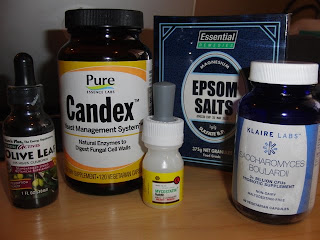
1. Candidase – these are enzymes that digest the cell walls of fungals. Buy from Back to Basics
2. Candex – same as above, just different brand. You can buy from Dr Erwin
3. Saccharomyces Boulardii – these are good yeast that attacks bad yeast. From Dr Erwin
4. Olive Leaf Extract – Vitakids Singapore
5. Oil of Oregano – very powerful anti-fungal and anti-viral properties. But very strong taste. Vitakids Singapore
6. Garlic extract – Vitakids Singapore

There are many others such as caprylic acid and grape seed extract (GSE) but I’m not sure where to get them.

Apart from choosing the appropriate anti-fungals, there are also other aspects of the treatment to be addressed. When implementing an effective anti-fungal treatment for your child, you should look at it as a whole. Killing the yeast is only one aspect of the yeast protocol. The anti-fungals are only as effective as the other aspects of your child’s treatment as a whole. Even the strongest anti-fungals will only work to a certain point if you don’t stop feeding the yeast. And yeast colonies will continue to thrive and return in certain favourable conditions. And if your body is not flushing out all the toxins released by killing the yeast and dead yeast cells effectively, it will remain in the body causing other behavioral issues. For my daughters, I try to address each aspect of yeast treatment;
1. Kill the yeast
2. Stop feeding the yeast
3. Discourage the yeast from returning
4. Detox
1. Killing The Yeast
This is where anti-fungals come in play, either pharmaceutical such as Nystatin or Diflucan, or natural remedies. Choosing which is best for your child requires some experimentation as well as the help of a trusted doctor. You may need to try several anti-fungals to find which works best for your child. Also, you may need more than just 1 anti-fungal. For some children, a combination works best for them. Again, you will need to experiment which combination works best.
2. Stop Feeding the Yeast
You need to reduce yeast-feeding foods especially sugar. All forms of sugar feeds yeast from honey, organic maple syrup to carbohydrates. It is up to you to decide on managing your child’s diet and which sugars you are willing to allow or reduce. Some children react favorably just by reducing sugary snacks, but some children may have to go so far as reducing fruits or most carbohydrates. Also, a good digestive enzyme to digest carbohydrate helps such as Kirkman’s Enzyme Complete with DPP-IV or TriEnza, you may want to add No Fenol or Phenol Assist as well.
3. Discourage the Yeast from Returning

Yeast colonies thrive in certain conditions, you will need to make your child’s body inhospitable and discourage yeast from growing. An altered PH balance such as an acidic gut environment is ideal for yeast-growth. Replenishing with lots of probiotics also leaves less room for the yeast to grow. A dysfunctional immune system will also contribute to yeast overgrowth. Regulating the immune system acts as a defense mechanism against various pathogens including bacterial, fungal and viral. Zinc and Vitamin C are important supplementation for the immune system.
4. Detox
When killing yeast it releases toxins, you need to ensure that the dead fungal cells and toxins are flushed out of the systtem. Address any constipation issues, daily bowel movement is important to ensure all toxins are removed from the body. Adequate magnesium helps with bowel movement. Epsom Salt baths or magnesium sulfate cream assists in the sulfation pathway, which is an important detoxification pathway in the body.

Die-Off Reaction
During die-off periods, our kids may experience headaches or bowel cramps. Which explains the behavioral problems such as hyperness, waking up at night talking and laughing, hyperness, cravings for sugar and carbs, irritability, crankiness and other reactions. For die-off reactions, Epsom Salt baths and activated charcoal will help. Also, reduce the anti-fungal dosage and increase it very slowly.

As some of you may know, we worked very closely with Dr Erwin to address Maya’s recurring yeast infections. We did 1 month course of Diflucan, followed by 3 months on Nystatin, followed by 1 month on Ketaconazole together with Candex 1 capsule in the morning and 2 capsules in the evening. We then added on S.Boulardii 1 capsule 3 times a day. Now, we are doing 1 capsule Candex morning and evening together with S.Boulardii 1 capsule 3 times daily. I am currently reducing the anti-fungals whilst observing for any more recurrent yeast flare ups.
Diet wise, I was not willing to forgo rice or gfcf bread so the Specific Carbohydrate Diet was not practical for us. A GFCF diet without sweet snacks, cakes, biscuits, sugary cereal, no fruit but still drinking very diluted juice was convenient and effective for us. We were on a strict `no cookies, sweets or cakes diet’ for 4 months, then we allowed it to once a month, and we saw yeast-like behavior flaring up again. Eventually the flare-ups has reduced and the girls are now able to tolerate sweet snacks 3 times a week with no problems.
Maya had a highly acidic gut, we were not able to address this because the supplement tasted horrible. But for both girls we give 50 Billion CFUs probiotics daily together with a pre-biotic. And supplement with Vitamin C and zinc for their immune system. We give Epsom Salt baths daily and apply Magnesium Sulfate cream for the sulfation pathway. Apply L-Glutathione lotion to replenish her glutathione levels which are essential for the detoxification pathway, magnesium for better bowel movement and chlorella for detox. It took us 6 months to finally address Maya’s recurrent yeast overgrowth. For now, I would consider Maya to be yeast-free. However for Yasmin, her recent course of antibiotics and recurring gastro issues requires a lot more time and effort to address her yeast overgrowth.

>How To Give Supplements

>
When doing biomedical intervention, it consists of multiple tablets, capsules and liquid supplements. The child has to take up to 20 different supplements a day, for some many more. And getting your young child to take it all is a herculean task, even more difficult when dealing with a child with Autism Spectrum Disorder. No amount of rationalizing, bribing, encouragement and begging would force our kids to open their mouths, and if they do, they end up spitting it in your face. Some children including Maya are so resistant to taking anything remotely suspicious, their long-term feeding issue makes taking supplements even harder. And I don’t blame her, those supplements tastes horrible!

When first starting biomedical, we had a really tough time with Maya. We found out very quickly that ‘tough love’ did not work with her whenever we forcefully fed her with the supplements. Apart from spitting, she would usually end up vomiting everything in her tummy, she would cry and rage for a long time.Because our girls are physiologically too young to be able to swallow capsules and tablets, we end up opening a capsule and dissolving it into milk or juice. Previously I would grind up tablets in my lesung tumbuk, however I have since found pill crushers which grinds it up into a very fine powder. We tried feeding the liquid supplements with a spoon, but that turned out to be a disaster too. She would knock the spoon out of our hand, precious supplements flying everywhere.
We experimented by mixing and hiding it in milk or juice. Tried different coloured sippy cups, drinking from a straw, only putting in 1 capsule into a big bottle of milk, hiding it in rice, mixing into peanut butter, mashed bananas, we tried everything. It took us a long time to find a groove; we now know which supplements are better tolerated taste wise in milk, which ones are better in juice. Maya is very sensitive to taste, she would refuse to drink the milk constantly when we added in supplements. We wasted so much money, milk and supplements down the drain. We would start very slowly, adding just 1 supplement to the milk, and at only a quarter of the dosage. We would then slowly build up the amount till she can tolerate the whole dosage. Then we would add on a 2nd supplement and start at 1/4 dosage. This worked very effectively for us, we can now add 3 to 4 supplements into 1 bottle of milk.
There are supplements that turns the milk pink or green, we would give these supplements in milk in the middle of the night while they are asleep. We also find that the girls are more tolerant of stronger tasting supplements when drinking it in milk when they are deeply asleep. We take turns to feed the girls their milk at midnight, for now this is what works for us.
I have melted precious organic gfcf chocolate, mix into some rice crispies for some crunch and add the supplements in. And chill them in tiny paper cups like candy. It worked beautifully for 1 day. The next day onwards she refused anymore chocolate. Because both the girls don’t like soft slimy food, I couldn’t try adding supplements to jelly. One desperate day, I mixed some of the more bitter supplements into ice cream – this worked the best! However, there are no GFCF ice cream available in Malaysia so the thought of giving Maya dairy-filled ice cream everyday went against our GFCF principles. I’m still considering buying an ice-cream maker, hopefully I can create a delicious homemade GFCF ice cream.
I bought a box of colorful straws and this worked wonders in getting Maya to drink the supplements mixed with juice in a cup. Everyday she would request for a particular colored straw and will happily drink the supplements. She may not drink it all in one go, we would still have to chase her around the house and coax her to drink it all up bit by bit. Slow but steady I say.
We enlisted the help of our wonderful ABA team to start a tolerance program for taking supplements with a syringe. We supplied the team with a large box of 5ml syringes and the team got to work. After a couple of months into the program, it seemed to me to be a complete waste of time and precious syringes. Maya would only tolerate taking water from a syringe if it was from a therapist, she refused to do it with us at home. It has now been 3 months since Maya started the program and this week we managed to give her supplements in a syringe! We have managed to give her 3 different types of supplements in a syringe, but there are still 20 more to go. Perhaps next year we will do a program to teach her to swallow tablets using ABA.
Maya has always had an intense fear of syringes, ever since very young. She would run away screaming whenever she saw a syringe, she would be so scared and agitated she was inconsolable. We still have to smuggle in supplements in milk bottles at midnight, however there has been great progress.
For any parent feeling frustrated trying to figure out how best to administer these many supplements, only know that the gains and benefits are enormous. Every precious supplement that you successfully manage to give your child is another step closer to improving his health and mind. By being creative, consistent and resilient, you will find what works best for your child.
Don’t feel discouraged, you can’t compare your child to Maya. Don’t compare your child to the neighbor’s son who learnt to swallow tablets at 4 years old. Don’t compare your child to your nephew who’s compliant and meekly takes any vitamin given to him. Each child has their own preferences, each child has their own diagnosis to battle with. Also remember that it took us 9 months to get to where we are now. It has been some time since Maya rejected a milk bottle complaining of the taste. I feel an enormous sense of pride for Maya, allowing us to put the much hated syringe in her mouth and swallowing those nasty tasting supplements. She is the one who has worked the hardest, her accomplishments and improvements are testimonial to her strong spirit and amazing strength.

>KL Biomed Support Group 10/10/09

>Dear Parents,


I would like to invite you to the upcoming KL Biomed Support Group. Rafidah has kindly volunteered to host the event, the address and location map will be sent to you once you have confirmed your attendance.

Time: 9.00am – 11.00am
Date: Saturday, 10th October 2009
Venue: Ara Damansara

The primary focus of this group is to share knowledge and provide support for parents who are already doing biomedical treatments or about to start biomedical intervention for Autism Spectrum Disorders. For the upcoming support group, we welcome feedback on suggested topics of discussion that you wish to discuss or share with the group. Please contact me directly on this. This support group is for adults only, all opinions and advice given from this group is based on our collective personal experience and should not be construed as medical advice.

Please rsvp to me latest by Thursday 8th October 2009 by email at vmarisd@gmail.com. Kindly provide your name, name of partner if attending, phone number and email. I hope to see you there!

>Maya's Progress

>
Having done a recent psychological evaluation, we are gratified to see on paper an accurate and comprehensive overview of Maya’s progress and how far she has come. Maya was diagnosed with Mild to Moderate Autism in June 2008. After over a year of early intervention, we have seen many improvements in Maya. Here are some of the details from her recent assessment compared to previous tests done.

Intelligence & Mental Development – Maya’s IQ is now 107 which falls within the Average range. 1 year ago, her IQ was 77 which indicated a Borderline score.
Auditory and Expressive Language – Maya is now communicating at her age appropriate level of 3 years 9 months at the time of the assessment. She has made 1 year and 2 months progress in her language ability in 7 months.
Adaptive Functioning – Maya’s level of communication, daily living skills, socialization and motor skills has increased overall to 88, which indicates Adequate Adaptive Functioning. 1 year ago, she scored 67 which is in the Low range of functioning with Mild Deficit.
Getting to where we are now has been tough, we have cried blood, sweat and tears and sunk in enormous amounts of money and resources. We have suffered many personal and professional setbacks, made sacrifices that no one else could understand except perhaps for another parent with a special needs child. The monetary cost, sleepless nights and emotional toll it took may never be recoverable.
Some people have asked us whether it was ABA or biomedical that made the difference for Maya. It was both. The biomedical treatments has healed and repaired some of the damage in Maya’s body. A healthy body is a healthy mind. This in turn allowed Maya’s mind to better concentrate, absorb and learn, making ABA more effective. Maya’s progress has been rapid in the past 9 months, which coincided with us intensifying her biomedical treatments as well as increasing her ABA hours. I do not know whether this is considered `normal progress’ or exceptional progress, however a combination of intensive ABA and intensive biomedical intervention is what works for now.
I am amazed at the strength and resilience of my daughter, she overcame all odds that came her way. She continues to struggle with many debilitating aspects of Autism, throughout it all her naturally sweet and gentle personality still shines through. The glowing assessment report couldn’t have come at a better time. Constantly battling Autism every single day has left us battered, weary and drained.
We celebrated the good news with a long overdue holiday in Phuket. Even though it was monsoon season there and rained continuously, we all had a wonderful time. The girls especially loved breakfast time with the baby elephants every morning. We still have a long road ahead, but at least we know that we’re heading in the right direction.

>Life After Diagnosis – 2nd Time Around

>
A lot can happen in 2 weeks; even though Yasmin’s diagnosis was not totally unexpected, the shock and grief for us is still as strong as it was with Maya. And for most parents in our situation, having 2 children on the Autism spectrum (though one is borderline) means that you don’t have the time to grieve. Now there’s 2 different sets of supplements to dole out everyday, both with different biomedical protocols and behavioral issues to deal with.

Because of the many colds and flu viruses running around, both girls have had to deal with fevers, colds, coughs and sometimes all 3 at once in the past 1 month. When sick, appetites has waned and suddenly they’re spitting up the supplements that they used to take obediently. Having missed up to 1 week’s worth of supplements has made a huge negative impact especially on Maya. Suddenly, from a girl who’s so sweet and well-behaved, Maya has regressed and showing some of the behaviors that we thought are long behind us. She is experiencing anxiety and non-compliance in school, starting to tantrum at home, a lot of climbing and jumping and meltdowns. By missing some of the key supplements, her yeast issues have come back amongst other things.
She now refuses to wear clothes, screaming whenever we try to dress her. At night she would strip off her pyjamas and at times even her nappy. Seeing our daughter curled up sleeping naked in bed, freezing because the air conditioning is on and she had thrown off the blankets, is a very disturbing image for Paul and I. The past 1 week, she has started to wake up at nights, wanting to play and sing for several hours. She would wake up tired and too sleepy to perform well at school.
After seeing Dr Rina, we immediately started Yasmin on her antibiotics, anti-fungal protocol and healing her gut issues. And for the first 10 days, we did not see any behavioral improvements in her, mostly due to the die-off reaction. We also noticed more repetitive behaviors in Yasmin such as opening and closing doors and drawers, a lot of patting and knocking and tiptoe walking. However, she started to sleep through the night, her appetite is really good now and she hasn’t had any constipation lately. In the past 3 days, we noticed that Yasmin is no longer cranky and upset. She is happy, calm and smiling. But the self-stimulatory behaviors are still there.
Needless to say, both Paul and I have not had a full night’s sleep for a long time. We are mentally and physically exhausted and the many worries running through our minds are too long a list. We are going through a particularly rough patch and we will get through this. Our focus now is to get Maya back on track on all her supplements, increasing her anti-fungal protocol and try to deal with the tantrums and behaviors with patience, grace and strength. I will try to look past Yasmin’s behaviors and stims, not to freeze in fear that with every tiptoe or knocking, that Yasmin will not get a little closer and cross the threshold that is Autism.
Both Maya and Yasmin are the biggest joy in our lives, we show them our love each and every day. They are blessed to have a father as wonderful as Paul. He is strength, patience and love. Amidst all the chaos and uncertainties that surrounds a family affected by Autism, he has been our rock. He is Warrior Dad.

>KL Biomed Forum

>There is now an active forum on Yahoo Group where Malaysian parents can post queries or information regarding biomedical intervention. KL Biomed is a forum for parents of children with Autism Spectrum Disorder who are doing biomedical intervention in Malaysia. Members can post questions to the groups and any member can reply. Group members are also welcome to post relevant materials and information with regards to biomedical.


This is a private group intended as a form of communication and sharing of knowledge with other parents. Any advice given in this forum is not to be construed as medical advice. So far, we have had many postings and queries relating to diets, medical testings, nutritional supplements and DAN treatments.


>Blood Draw

>
Recently we were in Singapore to do additional tests which requires a blood draw. Dr Erwin did a remarkable job, he found a vein quickly and managed to take 6 vials of blood within 10 minutes. Maya was of course very upset, she cried, screamed and struggled. I placed her sitting on my lap facing me, one arm placed on a cushion on the doctor’s desk and Paul held onto her wrist. I hugged her close to me trying to keep her still. Through her crying, Maya managed to say “Please don’t hurt me” , “Let me go” “I’m not sick” and “I need a band aid”. She was a little bit calmer during the 2nd half of the blood draw. She was still upset, but didn’t struggle much.

Unfortunately, by the time the 3rd vial was filling up, Paul started to turn a little white (yes, whiter than he already is) and he kept asking how many more vials was needed, whether we needed all that blood and on and on. Some blood managed to spill and seep through pass the needle and flowing down Maya’s arm by that time. Immediately once the doctor pulled out the needle, Paul rushed to the sink and washed his face. And while the doctor was cleaning Maya’s arm, Paul suddenly squatted down on the floor, breathing rapidly. The doctor was very concerned, he stopped patching Maya up and asked Paul if he was ok. Dr Erwin and I were sure that Paul was going to faint.
However, my heroic husband did not `pengsan’ but all that blood made him feel very queasy. The fear and concern he felt for his daughter was so great that he couldn’t hold on much longer. It took him sometime to recover from the ordeal, however Maya was up and running and forgot all about it 10 minutes later.
We did several tests which measured viral titers, red blood cells minerals test, fatty acids and many others. We are looking forward to receiving the test results so we can go further with Maya’s treatment. But for the moment, we are glad that the blood draw went well and we really hope it was worth all the pain and trauma. I am so proud of my big brave girl.

>All About Yasmin

>
My second daughter Yasmin is 2y5m, she was a happy easy-going baby, she fed well, slept through the night and pretty much a normal child. Her language and cognition is very good and she’s very affectionate. However, for the past 6 months we have noticed a gradual change in her behavior, she is often cranky, shows rigidity in behavior, uncontrollable at times and rarely smiles. Also, she started to have sleep problems, is now a very fussy and picky eater, chronic constipation and shows a lot of abdominal pain. We also noticed some stims such as tip toe walking, slight repetition in language and motion, always tapping and knocking on walls or furniture, she is always climbing on the arms of the sofa, straddling it while rocking her body and grinding her pelvis against it and we have noticed some eye stims recently.

However, throughout all this, her language and cognition has always been very good. But Paul also pointed out that we have not seen any developmental gains in the past few months, she is still at the same developmental level as she was 6 months ago. Because of what we went through with Maya, we also understand the genetic susceptibility of siblings getting the same condition. So we took steps to reduce the possibility of it; we put Yasmin on the GFCF diet for the past 9 months, she is also soy-free and egg-free. Her diet is organic and pretty much the same as it is for Maya. We did not give her the MMR however she did receive some vaccinations prior to it.
In January 2009, both girls were hospitalized for Rotavirus. Both Dr Erwin Kay and Dr Rina Adeline suspect that her regression was induced by the infectious and bacterial disease. There are many causes of Autism, we now believe that the Rotavirus tipped her over the edge. I also believe there she also contracted other countless bacterial and viral co-infections that were never tested, identified or treated for. We were on holiday in Phuket and Paul took the girls to play under the water sprinklers in the hotel garden. I kept asking them to stop because the water smelled putrid, plus the Thai gardeners kept shouting and gesturing at them to get away from the garden. We later found out that the filtration system is broken and water contaminated from the septic tank was used. Yeah, dumb but true. 2 days after we came back from Phuket, first Yasmin and then Maya was hospitalized. They were treated for Rotavirus, but it’s interesting to note that they were not tested for other types of infections or viruses, the doctor only tested for Rotavirus.
We did the IgG Food Intolerance test and the Comprehensive Stool Analysis. Her IgG levels are elevated with multiple food intolerance, she also has leaky gut, there are multiple bacterial infections, yeast overgrowth, digestive enzyme deficiencies, gut inflammation, oxidative stress and others. Her medical prognosis is chillingly similar to her sister’s, in fact some of her test results are worse than Maya’s.
Both DAN doctors confirmed that Yasmin is either borderline ASD or gradually declining towards the Autism Spectrum. We don’t know whether it will be Autism, ADHD or Aspergers, but I’m not waiting to find out. We are doing all we can to stop it now, starting with her gut issues. We have not done a psychological assessment, mostly because of time and financial constraints, but also we do not need a clinical psychologist to tell us what we already know. Also, some people including doctors are very quick to judge us as overly-worried parents because Yasmin’s language skills are amazing. And it’s unfair that because for the 5 minutes someone observes her, they come to the conclusion that she’s fine. As if that can be construed as a `qualified diagnosis’.
Yeah, but did they ever consider that during that 5 minutes, she is so engrossed with a new toy, chatting happily away, laughing and everyone is giving in to all her demands that she is not likely to throw a tantrum? No one else would know that it takes us such a long time to calm her down or redirect her when she’s in one of her tantrums and rages? No one else has to get her to stop humping the furniture, if they did then they’ll know that this is not `normal’ behavior. No one outside the family has ever experienced a night when she wakes up at 3am and wants to play for 3 hours. It’s come to point now that sadly, our officially-diagnosed ASD child Maya is so much easier and better behaved than Yasmin.
As parents, we shouldn’t let ourselves be blinded by Yasmin’s cleverness and precociousness. I could never avoid noticing some of her abdominal pain behaviors, she would insist on me holding her tummy, she would lean over tables and bed corners, pushing her tummy into it. I can’t help but notice that she is constipated for 5 days, her stools are always either very hard and pebbly or runny and soft. Her tummy is distended and she is extra irritable and cranky during constipation days. Her constant knocking and tapping is a sensory issue and also signs of calcium deficiency. Yes, a lot of her behaviors are considered normal 2 year old behaviors, but all together at once and there’s a sibling with ASD? Come on, I’m an Autism Warrior Worrier Mummy, you can’t fool me!

>4 DANs and Counting

>So far, Paul and I have seen 4 DAN doctors. All 4 are medical practitioners of varying backgrounds and specialties and they’ve all done different levels of Clinician’s Training with Defeat Autism Now!. And what we found is, every doctor have their own unique perspective, different sets of priorities, different treatment modalities and testing requirements. There is no better or worse, you choose a DAN doctor for your child based on certain criteria.

Qualification and DAN! certifications are not the most important criteria. I choose my doctor based on convenience, geographical location, testing methods, personal preferences for supplements, preferred testing labs and the doctor’s bedside manner. These are all important because you will have to build a close relationship based on trust and respect throughout this long journey.
Paul and I have consulted Dr Sundardas and Dr Erwin Kay in Singapore, Dr Rina Adeline in Indonesia and globe-trotting Dr Mark Westaway for Maya. We consulted Dr Erwin Kay and Dr Rina Adeline for my second daughter Yasmin.
Dr Sundardas is a Naturopath. We stayed with him for only 3 months because he did not address Maya’s gut issues, which I felt is a very important part of her treatment. He did not propose the IgG, Urine Organic Acids or Comprehensive Stool tests the entire time we saw him. His main area of concern with Maya is her heavy metals toxicity.
Dr Erwin Kay is our principle DAN practitioner, he is conservative in terms of testing and most importantly he really listens to our opinions. He orders his own test kits from ARI recommended labs and sells supplements from Kirkmans, Prothera and Klaire Labs. It is really convenient because I can do consult, testing and get supplements from him directly. He concentrates on Maya’s gut issues, nutritional supplementation and overall treatment.
I met Dr Mark Westaway at the DAN Conference in Atlanta in April 09. He is Australian, previously based in Brisbane. Then he worked in Breakspear Hospital in the UK. Recently he told us he will be based in the US because he was invited to do Autism research in Harvard. We never know where he’ll be next. So he may not be able to provide consultations for us very often. However, we still keep in touch via email. He only provides consultations, you will need to find supplements elsewhere. He will also give prescriptions when needed and you will need to purchase it from an Australian pharmacy. He doesn’t do testing either, he will just give you a list of tests he requires and his preferred labs but you have to contact those labs directly. His main area of focus with Maya includes biofilms and oxidative stress. He also stresses the importance of reducing EMFs (electro magnetic fields) around our children.
Dr Rina Adeline from Indonesia has been to the several DAN conference including the latest one. She has also done the advanced training with DAN. She requires her patients to do extensive tests, which you will have to do with an independent lab for blood draw. And you will need to find supplements from pharmacies and speciality shops. We have seen her only once however we plan on consulting with her occasionally every few months. Her main area of focus with Maya are viral infections and autoimmunity.
Maya has all the above issues (and more) and they all need to be addressed. It’s just a matter of professional interest and personal priorities which issues are to be addressed first and concentrated on. Some may find all these differing opinions confusing, however paul and I really appreciate each and every doctor we have met. We value 2nd opinions and each doctor gives us a fresh perspective as well as treatment options that may not have been available in another country.
On our next trip to Sydney, we plan on meeting one of the most respected biomedical doctor in Australia. Holistic and natural remedies are also very popular amongst Australians and we are curious how biomedical treatments there differ. We’ll keep you posted on what he has to say!